

Portland detectives spent years trying to build a case against a tagger named Bier. When they finally got a search warrant for his house, the graffiti case turned into a gun case.
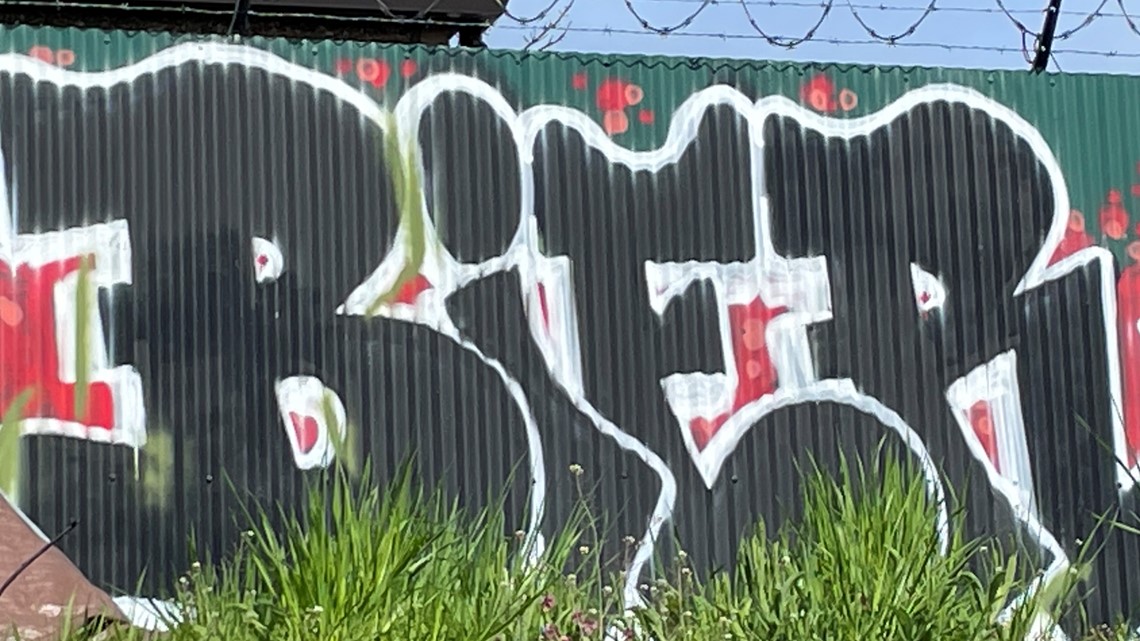
A tag on buildings across the metro
Jacob Abel Ramos, who tagged under the name "Bier," hit buildings across the Portland area for years. Prosecutors say he laid his tag directly over existing murals at Platinum Records Lights & Sound and at Salt & Straw's manufacturing kitchen in Southeast Portland back in 2022, and police also tied him to Firestone Complete Auto Care in Northeast Portland, whose owner told police the cleanup alone cost more than $1,000, according to KOIN. Deputy District Attorney Bijal Patel told reporters prosecutors saw a pattern in where Ramos struck: "They would specifically target these murals and essentially trash them." The name had been showing up on walls around Portland long enough that police tracked it across neighborhoods rather than one corridor, downtown, Southeast, Northeast, which is part of why building a case that would hold up at trial took years rather than months.
Fifty-one charges
In November 2025, a Multnomah County jury convicted Ramos, now 46, on 51 charges tied to the tagging spree: five counts of first-degree criminal mischief and 46 counts of second-degree criminal mischief, according to KOIN. Patel said afterward that Ramos "caused significant damage to community property and was particularly vindictive toward local artists and businesses." Convicting on that many counts takes documentation: photographs, matched paint, repeat locations, a pattern investigators could tie to one hand. That paper trail is also what let prosecutors argue for prison instead of probation.

The search warrant found a gun factory
Searching Ramos's garage, investigators found more than 60 partially used cans of spray paint, dozens of spray-can caps, and a framed photograph on the wall of an abandoned building tagged with "Bier," according to KOIN, a haul smaller than the 150 cans police found in the unrelated Rango case elsewhere in Portland that same year, but enough on its own to back up years of criminal mischief counts. They also recovered ten firearms: five serialized, five homemade, including one gun that was largely 3D-printed and one homemade short-barreled AR-15-style rifle, plus a working gun manufacturing setup with a 3D printer, specialized jigs, drills, and raw components, according to the Multnomah County District Attorney's Office. Ramos is a felon and cannot legally own firearms under Oregon law. He was convicted separately on the gun charges in June 2025, months before the criminal mischief case reached a verdict. Homemade, unserialized guns built from 3D-printed parts and off-the-shelf jigs have become a running concern for police departments nationwide, precisely because they can be assembled by people legally barred from buying a gun at a store, with no federal background check involved. A tagging investigation is an unusual way to stumble into one, but it is how this one got found. Police first turned up the guns and the 3D printer during a 2023 search of Ramos's home, according to KOIN, well before the criminal mischief case worked its way to trial. That gap between the search and the sentencing shows how long a case with dozens of separate incidents, spread across a city, takes to build into something a jury can convict on beyond a reasonable doubt.

Forty-eight months
On January 13, 2026, Multnomah County Circuit Judge Christopher Ramras sentenced Ramos to 48 months, four years, in prison, folding the criminal mischief convictions and the gun case into one term, according to KPTV. "This prison sentence sends a loud warning to vandals that there are serious consequences for these crimes," Patel said in a statement from the District Attorney's Office. For the businesses that spent years scraping Bier tags off their walls, the sentencing closed a file that had been open for the better part of a decade. For everyone else, the headline was never really about the graffiti. It was about what a routine property-crime warrant turned up once officers were already standing in the garage.

Part of a bigger crackdown
Ramos's case landed in the same stretch of months Portland authorities pursued another prolific tagger, known as "Rango," on a separate set of criminal mischief charges tied to a different spray-paint spree across the city. Two different taggers, two different case files, the same city deciding graffiti investigations are worth running all the way to a search warrant. In Ramos's case, the warrant turned up a lot more than the department was looking for. Nobody opened that garage expecting to find a gun factory. That is the part of the story that outlasts the tag. Rango went through the same Multnomah County court system on a straightforward vandalism case. Ramos walked into his sentencing carrying a gun conviction on top of the graffiti charges, and left with four years instead of a fine.


0 comments