

The most complete archive of San Francisco street art right now was not assembled by a gallery, a photographer, or a single writer. It was built by the cops, one violation at a time, and a 23-year-old just walked off with all of it.
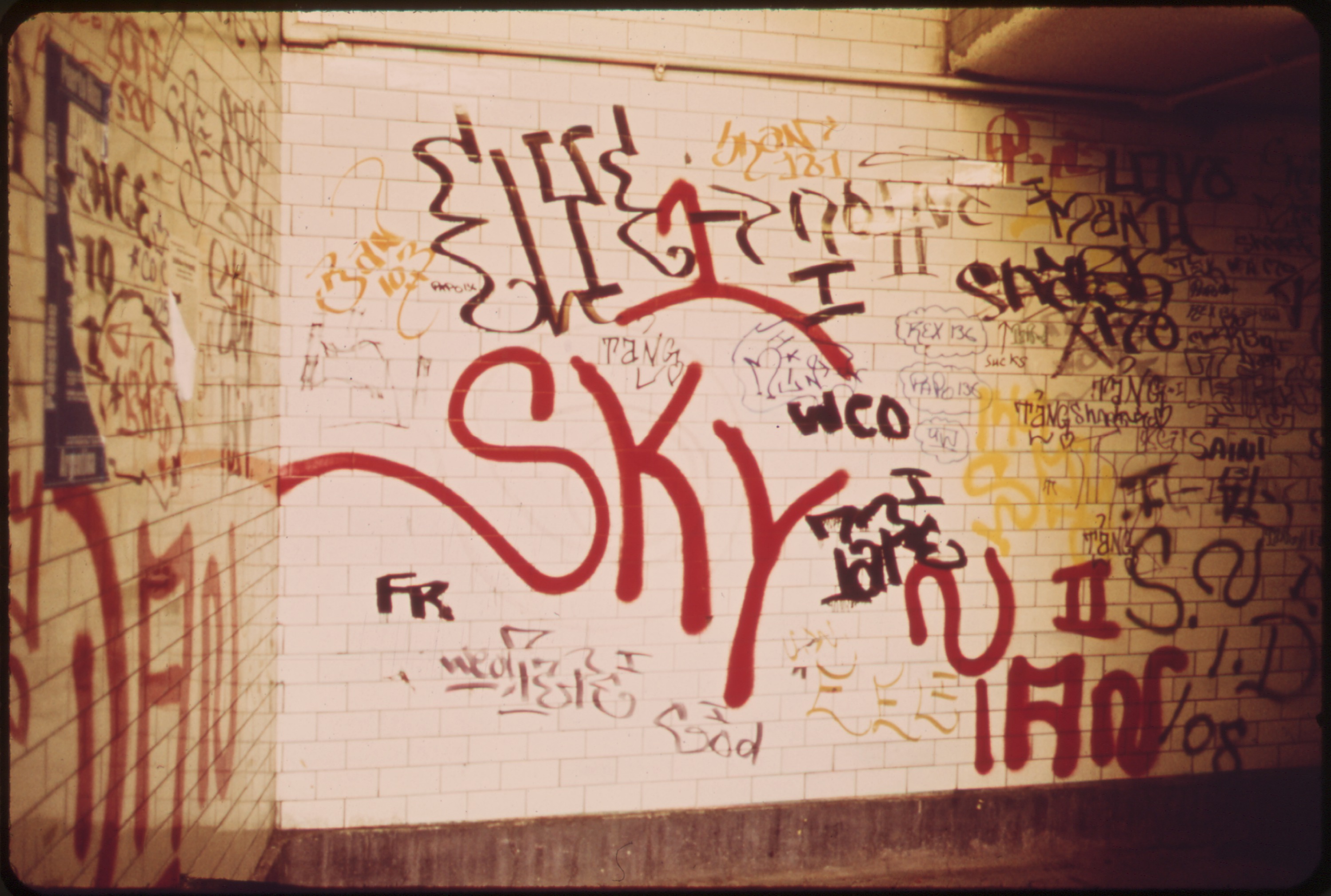
In late January 2026, Riley Walz scraped roughly 100,000 graffiti-violation photos out of an SFPD public database and put them online as a gallery. His pitch was one line: "art, but through the eyes of the law." It hit 102,000 views by the Sunday afternoon after he posted it. What he actually did is sneakier than a viral stunt, and it says something uncomfortable about who is really keeping the record of this work.
What he actually did
San Francisco cops photograph graffiti when they cite it. Every tag, every throw-up, every scrawl on a roll-up door gets shot and filed as evidence in a public-facing database. Walz wrote a scraper, pulled about 100,000 of those citation photos, and dumped them onto a single page at walzr.com/sf-graffiti. No new photography, no editing, no captions explaining what is good. He took the city's evidence pile and reframed the whole thing as a collection.
That reframe is the entire move. The photos were always there. The cops were always shooting them. Walz changed one thing: the context. A stack of legal evidence became something you scroll through the way you scroll a feed. He did not make the art. He did not even make the photos. He made the frame.
The found-object trick, and why it works

This has a name and a hundred-year history. In 1917 Marcel Duchamp bought a urinal, signed it "R. Mutt," titled it "Fountain," and submitted it to an exhibition. He made nothing. He chose an object and put it where art goes, and the act of choosing plus the new setting was the work. That is the readymade. Context decides meaning.
Walz's graffiti page is a readymade at scale. The "art" is not any single photo of any single tag. The art is the decision to take an enforcement archive and present it as an archive of work, and to let the volume do the talking. One hundred thousand images of stuff the city paid someone to erase, lined up where you cannot ignore the amount of it. The point lands because of the source, not in spite of it.
The irony nobody at City Hall planned
San Francisco spends more than $20 million a year removing graffiti. The whole apparatus, the citations, the photos, the cleanup crews, exists to make this work disappear. The 30-day abatement ordinance puts the cost on property owners too, so the public number is a floor, not a ceiling.
And yet the same enforcement machine built the most thorough record of the work that exists. To cite something you have to document it. To document it you have to photograph it. So the city, in the act of erasing tens of thousands of pieces, also catalogued them. The buff crew and the evidence camera work the same shift. One destroys the wall, the other preserves it forever in a database. Walz just noticed that the archive of destruction is also the archive, full stop.
This is the same guy who jammed 50 Waymos

Walz is not new at finding the seam in a system and pulling. He co-founded the data company Numerous.ai and runs a side practice of stunts that all rhyme.
- Waymo DDOS, summer 2025. He coordinated about 50 people to order Waymo robotaxis to 1 Telegraph Hill Boulevard at the same moment, the longest dead-end street in the city, near Coit Tower. The driverless Jaguars stacked up bumper to bumper. Nobody got in. After roughly ten minutes the cars left and charged each participant a $5 no-show fee. Waymo disabled rides in a two-block radius for a few hours. He called it "the world's first WAYMO DDOS."
- Find My Parking Cops, September 2025. He visualized SFMTA parking-enforcement activity in near real time. The agency killed the data feed within four hours.
- Bop Spotter, 2024. A solar-powered Android phone hidden on a Mission District pole, running Shazam around the clock, logging every song that drifts up off the sidewalk. He named it after ShotSpotter, the police gunshot-detection system. Same surveillance tools, pointed at music instead of crime.
- IMG_0001, 2024. A site that cycles through millions of old YouTube uploads still carrying the default iPhone filename, home videos from around 2009 to 2012 that nobody meant to make public.
The thread is always the same. Find a public system that is quietly recording something, then turn the recording into the point. The graffiti page is that move applied to a police database.
The open-data angle most people miss
None of this required a hack. Walz did not break into anything. The graffiti photos were public records in a public database, which is exactly what open-data and public-records law is supposed to produce. Cities put this stuff online because transparency rules say they should and because it is cheaper than answering requests one by one.
What the law did not anticipate is that "public" now means scrapable at scale by one person with a script. A clerk releasing one citation photo on request feels like routine transparency. A hundred thousand of them assembled into a browsable gallery feels like something else, even though it is the same data. Walz keeps finding that gap, between what a system technically allows and what it expected anyone to actually do, and standing in it. The parking-cop feed got shut in four hours because the agency realized too late that "available" and "aggregated and mapped" are not the same thing.
What this means if you make street art
If you put work on a wall, somebody else controls the record of it. The wall gets buffed. Your photo on your phone is the only proof, unless the city cited it, in which case the best-archived version of your piece lives in an evidence file you will never see. That is the real lesson under the joke. The institution that wants your work gone is also the one keeping the most complete copy.
So shoot your own work. Shoot it straight-on, in flat light, before anyone touches it, because the buff crew and the citation camera are both faster than you think. The reason a clean photo of a stencil reads as a real piece and not a snapshot is the same reason Walz's grid works: framing and context. A tag shot as evidence looks like evidence. The same tag shot deliberately looks like the thing you made.
That is the whole game with stencils too. A halftone portrait or a political stencil only carries if the cut is clean and the spray is controlled, so the record of it holds up. If you want the work to outlast the wall, the documentation has to be yours and it has to be good. We wrote the spray-control fixes and the halftone-to-stencil method for exactly that reason, so the piece you photograph is the piece you meant to make. Cut it clean, shoot it clean, and you own the archive instead of leaving it to the people erasing you.
Sources
- Famed North Beach Tech Prankster Trolls SFPD by Turning 100K Graffiti Mugshots Into Accidental Art Gallery - Hoodline, January 2026
- San Francisco Graffiti - walzr.com
- Viral Parking Ticket App Lasts Just 4 Hours as City Kills Project - SF Standard, September 2025
- 50 Waymos Sent to Dead-End SF Street in Prankster's DDOS Attack - SFist, October 2025
- Conceptual Art Project Secretly Shazams the Mission's Musical Taste - SF Standard, October 2024
- Explore a Time Capsule of Deep-Cut YouTube Videos - Mental Floss, 2024
- Graffiti - SF Public Works
- Riley Walz - Wikipedia

0 comments