

Demetrios wrote four characters wherever he stood still long enough to lift a pen. He was a teenage foot messenger crossing Manhattan on the clock, not an artist chasing a movement. A newspaper made him one anyway.

A messenger's habit
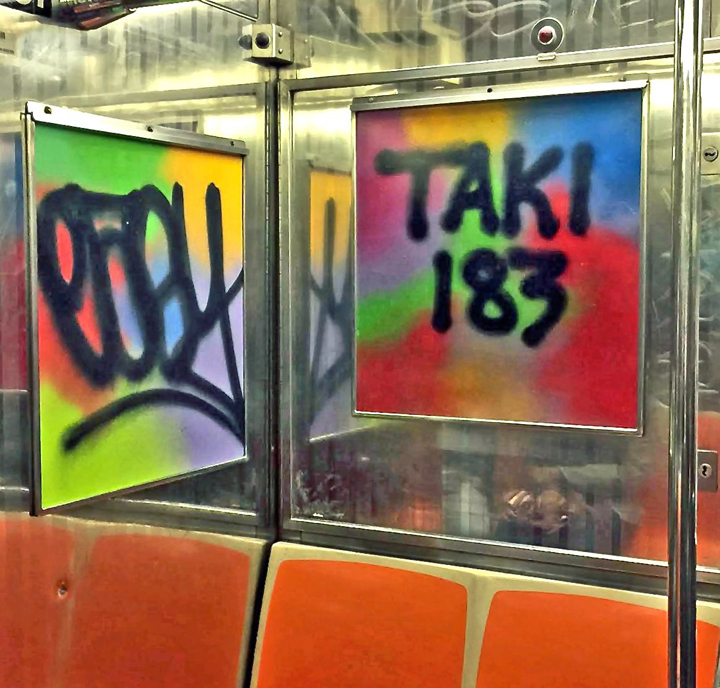
Demetrios grew up on 183rd Street in Washington Heights and worked delivery routes across the city. He signed the walls and doors along those routes the way anyone might scratch initials into a desk, except his signature became a code: TAKI, short for Dimitraki, plus 183 for the street he called home, according to Wikipedia's entry on the writer. He never touched a spray can. Marker and ballpoint pen did the job, block after block, for years before anyone outside his neighborhood noticed.
The headline that changed the rules
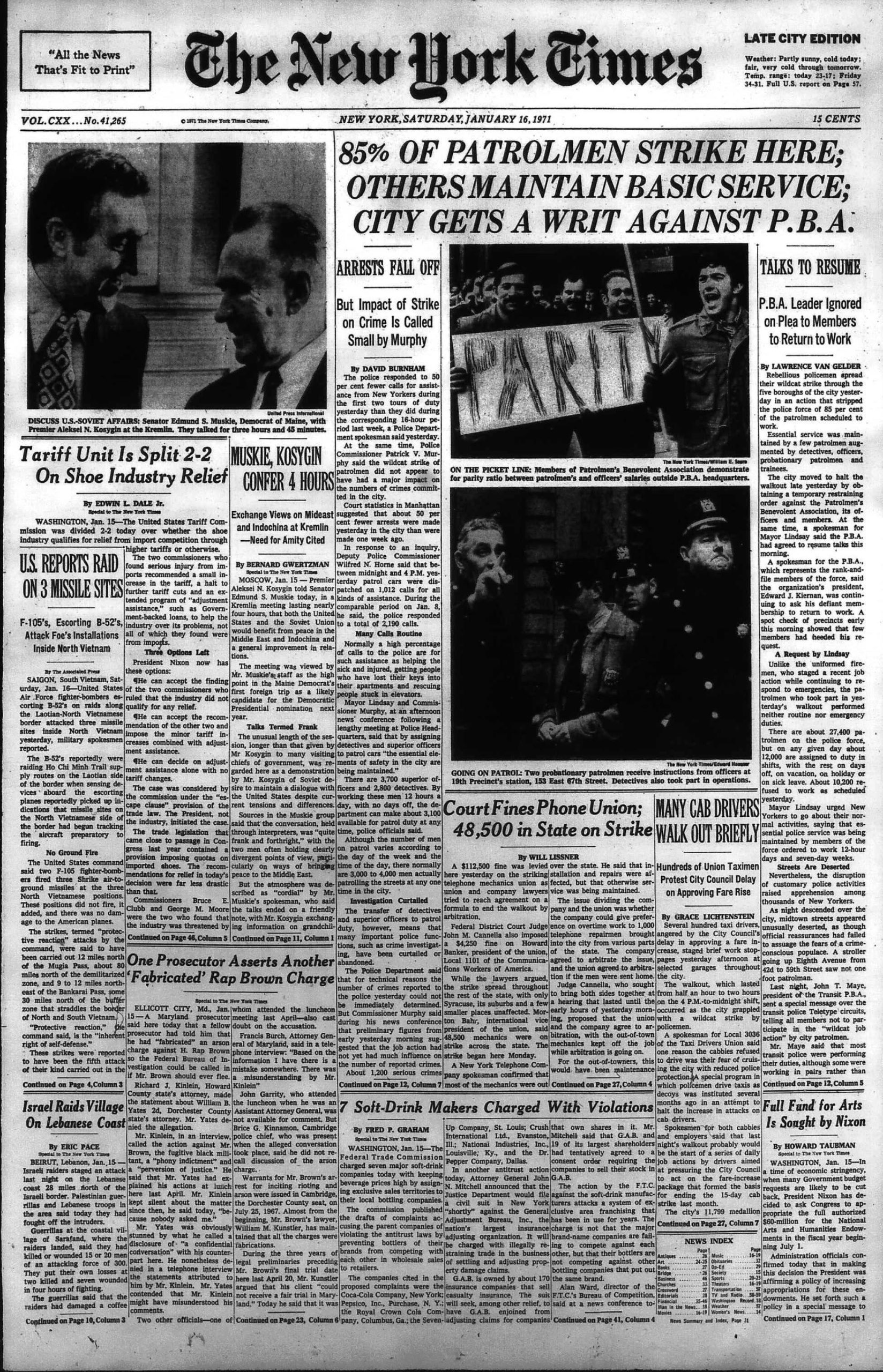
On July 21, 1971, The New York Times ran a story headlined "TAKI 183 Spawns Pen Pals," profiling a teenager whose tag had shown up in enough corners of the city that the paper decided it counted as news. The story named copycats already chasing his lead: kids signing themselves JOE 136, BARBARA 62, EEL 159, YANK 135 and LEO 136, according to 12on12's history of the writer. TAKI 183 wasn't the first person to sign a wall in New York. What the Times did was hand the practice a name, a format and a wire push no local tag had gotten before.
He wasn't first. He was first with a headline
Writers like Cool Earl and Kool Klepto Kidd were already tagging in Philadelphia before Cornbread made that city's version famous, and New York had its own scattered taggers going back to the early 1960s, per Beyond the Streets' account of the era. Cornbread and TAKI 183 share the same footnote: neither invented tagging, both got credited with popularizing it in their city, and the difference came down to who a reporter decided to write about.
All city, before the subway got involved
The format TAKI popularized, first name plus street number, became the template. Writers chasing the same recognition he'd stumbled into on his delivery routes started aiming for "all city," a tag visible in every borough instead of one neighborhood. That ambition is what pushed the next generation onto subway cars, where a single tagged train could put a name in front of more riders in one day than a wall could in a year. TAKI never needed a train. A messenger's legs covered enough ground on their own.
The scene he kicked off got its own documentary
The generation that came after TAKI, the writers chasing all-city fame on subway cars instead of delivery routes, got its own reckoning a decade later. "Style Wars" premiered on PBS in 1983, chronicling writers like Dondi, Seen, Futura and Zephyr working trains instead of walls, and won the Grand Prize for Documentaries at that year's Sundance Film Festival, per the film's own archive. None of it happens without a Washington Heights messenger proving a headline could turn a tag into a citywide habit first.
Fame he never fully explained
TAKI 183 has spent five decades giving interviews without confirming his full legal name. In a 2015 conversation with Street Art NYC, he walked through the mechanics of tagging before the word existed as a category, back when doing it just meant writing somewhere you weren't supposed to. He's drawn a straight line between what a marker did for him in 1971 and what a viral post does now: get a name in front of as many strangers as possible, as fast as possible. The tools changed. The goal never did.
Fifty-five years of rent
Every writer who has ever chased all-city status, every kid who bolted a street number onto a nickname, every tag that spread because one newspaper photo made it look like a contest worth entering, is working off a template a Washington Heights messenger set without trying to. Beyond the Streets called him simply "the originator". Fifty-five years after that Times article ran, that's still the least controversial claim in graffiti history.
Related reading from TasteBueno
- He Stenciled Rats on Paris Walls in 1981. Banksy Later Admitted He Was Twenty Years Behind Him.
- The FBI Just Put Your Spray Can on a Terror Watchlist. An Anarchist Symbol Is Enough to Get Flagged.
- A Tulsa Teenager Tagged 'Mango' Over 100 Times. His Arrest Turned Up a Gun and Meth in His Dad's Pants.


0 comments