

TIME needed a face for America's 250th birthday. It picked a man who has been arrested more than fifteen times for putting art on walls without permission.
A cover built from pieces of the country's past
The magazine's "Our America" issue hit newsstands on June 25, timed to the country's 250th birthday. The cover, created by street artist Shepard Fairey, reworks the Statue of Liberty into a multiethnic woman whose dress carries fragments of the American story: Martin Luther King Jr. under the words "I Have a Dream," the Apollo moon landing, a jazz musician mid-note, and a portrait of Abraham Lincoln folded into the fabric.
Fairey told TIME he picked Liberty because the symbol already carries the weight the assignment needed. In his own words, he wanted "a powerful and universal symbol" that could stand for "the promise of pluralism in a more fair and just society," not a flag-waving mascot.
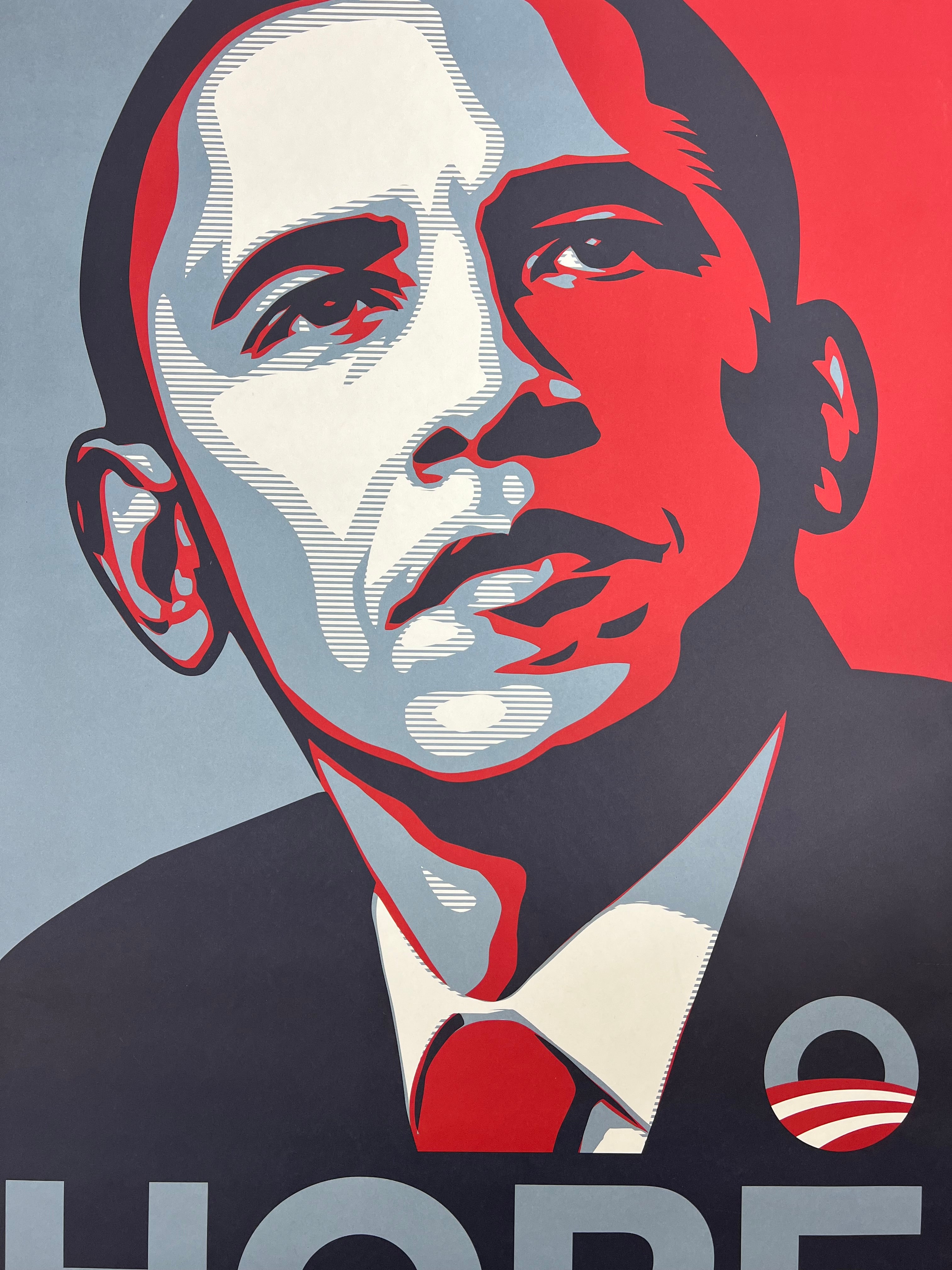
The palette matches everything else Fairey has done since 1989: hard reds, black, and parchment cream, the same three-color scheme printed on the Obama "Hope" poster and slapped on stickers from Los Angeles to Tokyo. On a cover built to mark two and a half centuries of one country, TIME chose an artist whose visual signature took over the world by ignoring property lines.
The résumé TIME didn't print
What the credit line does not mention: this is a man with a record. More than 15 arrests for defacing public property trail Fairey across multiple states. Boston convicted him on one count of defacing property and two counts of wanton destruction, tossing eleven other charges in a plea deal that got him two years probation. Detroit hit him with two counts of malicious destruction of property. A federal fight over his own Obama "Hope" poster ended with a $25,000 fine, after a court found he had tampered with evidence in a copyright dispute with the Associated Press over who actually owned the image. Every one of those cases traces back to the same activity that got him the TIME job: putting his own images on property that wasn't his, without asking first.
None of that is a footnote. It is the résumé. Fairey built a career on wheatpaste and stencil work stuck up before dawn, no permits, no permission. TIME just handed a cover celebrating the country's 250th birthday to the guy that same country kept arresting.

Andre the Giant started it
Fairey's whole career traces back to a stencil. In 1989 he cut a sticker of wrestler Andre the Giant's face, stamped the word "OBEY" under it, and started pasting it around Providence as a design-school joke. The joke became a global brand: skate decks, gallery shows, the Obama "Hope" poster in 2008, and in 2025 a mural stretched across the façade of Paris's Hôtel de Ville. Every stage still runs on the tool he started with: a blade cutting a stencil, then ink or paint pushed through the gap.
That lineage is why Fairey's name keeps surfacing wherever the Stencil Library crowd pays attention. He is proof a stencil cut alone in a bedroom can end up on a national magazine cover thirty-seven years later.

Four covers, one long argument
This is TIME's fourth collaboration with Fairey. The first two were Person of the Year covers: Barack Obama in 2008 and "The Protester" in 2011, both built on the same graphic language he had already been using on illegal postering for two decades. TIME's own account of the "Our America" issue frames the choice as deliberate: an artist whose work has always argued with authority, now illustrating the anniversary of the document that created that authority.
It is a strange arc to watch happen in real time. Wheatpaste poster to felony charge, to magazine cover, to another felony charge, to another magazine cover. Fairey has spent more of his career fighting cities over unauthorized art than he has spent invited onto their walls.

Street art's slow walk into the establishment
Fairey is not the only illegal poster artist who ended up inside the institutions that used to chase him. KAWS broke into ad shelters at night to paint over the ads before museums started building him rooms. Banksy still won't confirm his own identity and still gets invited to blue-chip auctions. The pattern holds: cities spend years prosecuting the work, then spend the next decade paying to display it. Fairey's TIME cover is just the version of that pattern that landed on a newsstand instead of a gallery wall.
What the cover is actually arguing
Fairey's Liberty is not neutral. Putting King's face and "I Have a Dream" on the dress of a national monument, next to the moon landing and Lincoln, stakes out a specific reading of the anniversary: that 250 years of progress got made by people who were, at the time, breaking rules or breaking ground. Fairey has said as much directly, describing his version of Liberty as a figure who welcomes "people from all walks of life."
Whether that lands as patriotism or protest depends on who is standing at the newsstand. That tension is the whole point. TIME did not hire an illustrator to smooth over two and a half centuries of argument. It hired the guy still building his career on top of it.
Related reading from TasteBueno
- A City Tried to Erase Shepard Fairey's Police Print. This Month Santa Fe Gives Him His First New Mexico Show
- KAWS Used to Break Into Bus Shelters at Night to Vandalize Ads. Vienna Just Put Him in a Room With Basquiat.
- A Bronx Kid Helped Bend Graffiti Letters Into Jagged New Shapes in the 1980s. His Alphabet Just Landed on a Vape at Your Gas Station.
0 comments