

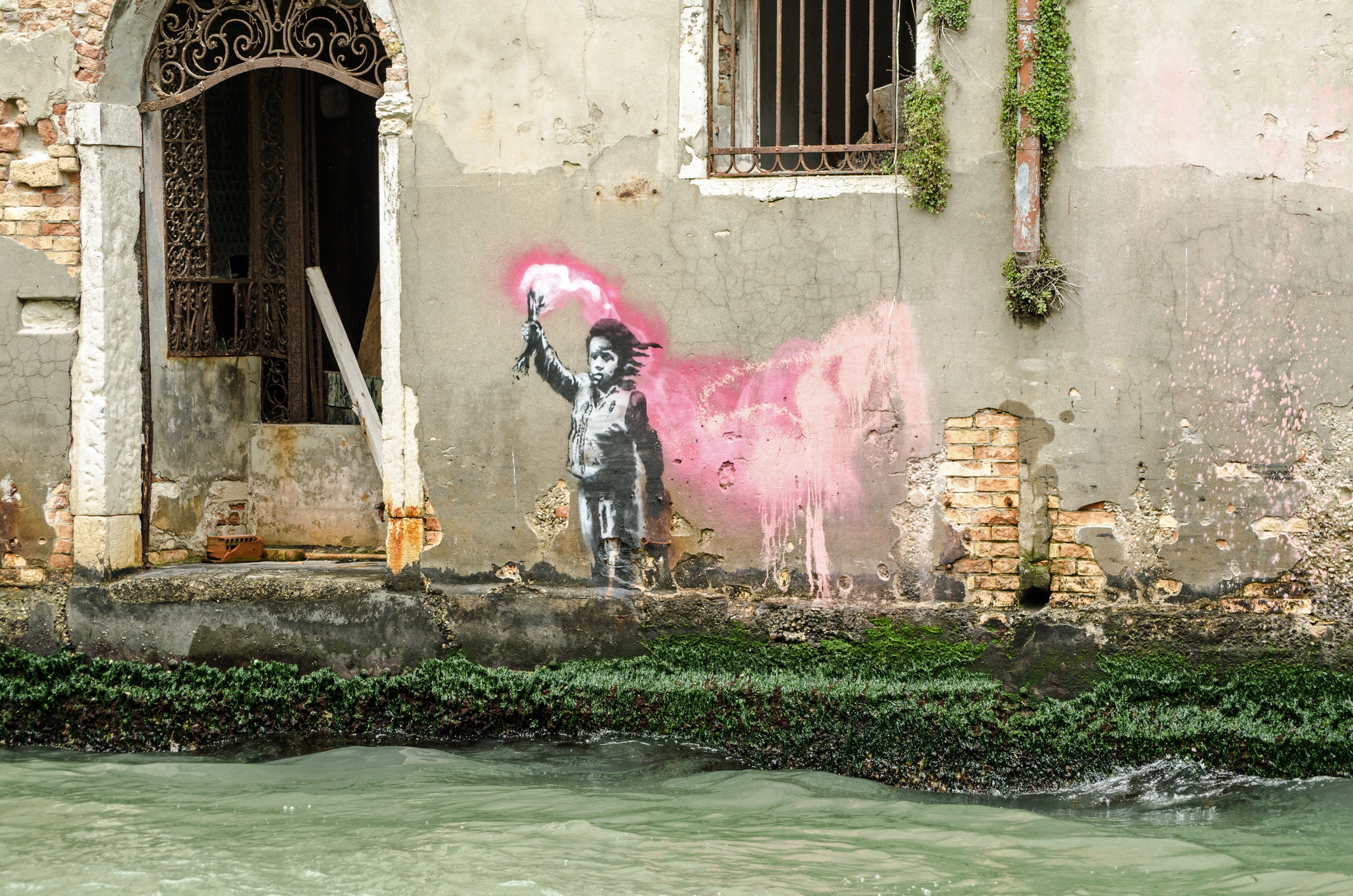
The image of a child, holding a flare and clutching a life vest, is back in circulation, but its return speaks to something larger than simple preservation. Banksy's 'Migrant Child,' initially appearing near the Arsenale in Venice, underwent significant restoration. This isn't just about repairing fading paint; it's about confronting an uncomfortable truth, the fragility of art when placed within a complex political landscape.
Reporting via theartnewspaper.com theinsider.at.
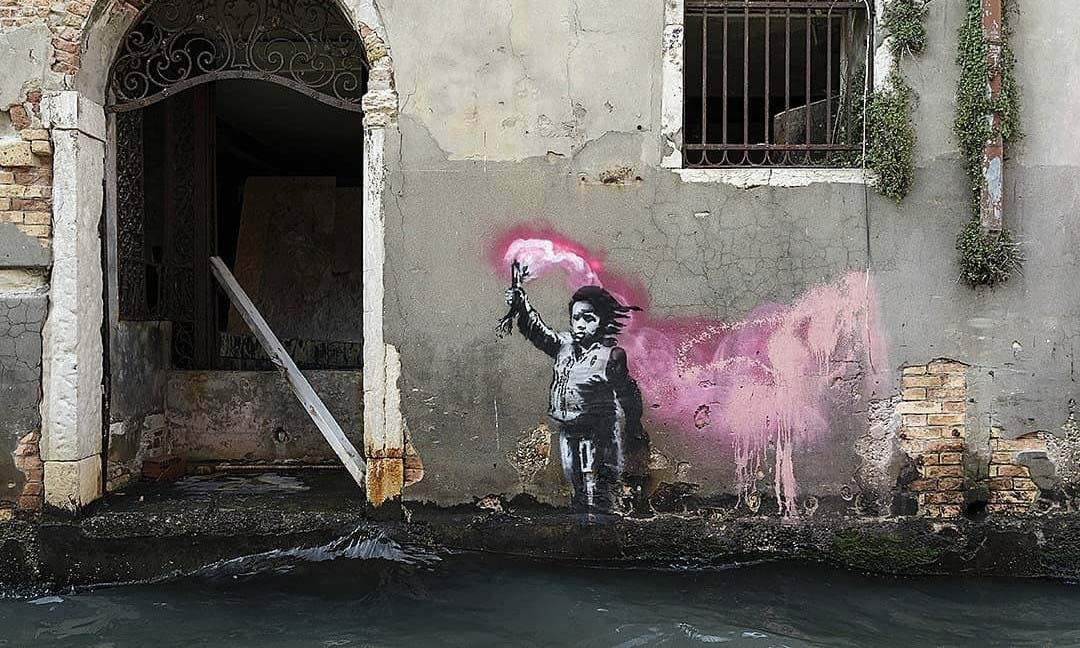
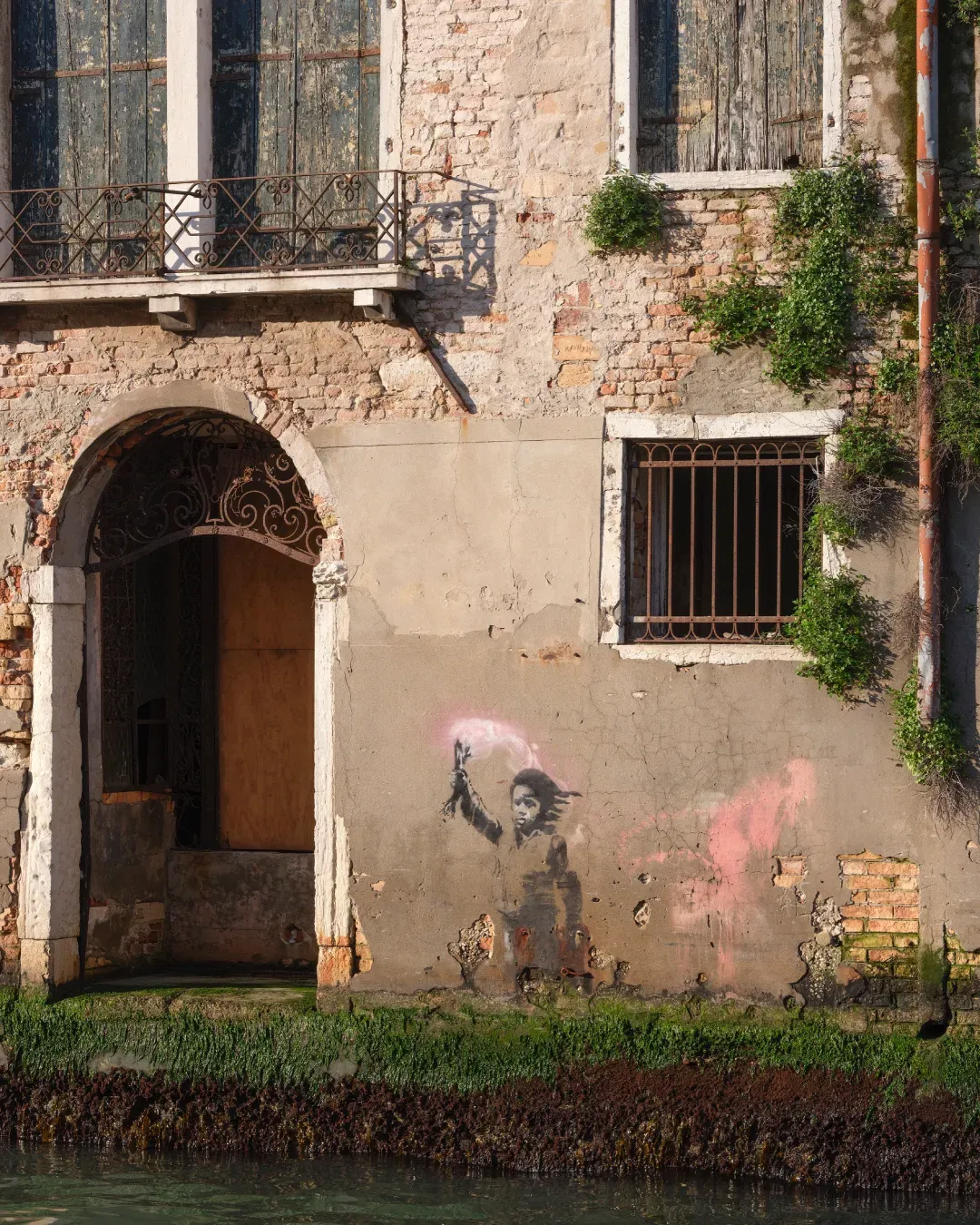
The mural, created in 2019, quickly became a landmark, attracting tourists and provoking thought about the global refugee crisis as October Gallery notes. Its location, just above the canal's waterline, placed it directly within Venice's delicate ecosystem and exposed it to constant wear. Six years of relentless sun and moisture took their toll, with approximately one third of the work deteriorating. The fact that it is one of only two works officially attributed to Banksy in Italy further compounds its symbolic weight; a rare piece of street art becomes a focal point for wider conversations.
The Weight of Neglect and Conservation
The mural's deterioration highlighted the challenges of preserving ephemeral urban interventions. Street art, by nature, is meant to be transient, a fleeting moment captured on brick or concrete. Banksy often chooses these spaces precisely for their impermanence, subverting traditional notions of artistic longevity. However, when a work gains significant cultural resonance, like 'Migrant Child' clearly did, the desire to protect it becomes unavoidable.
The removal of the mural from Palazzo San Pantalon last year and its subsequent conservation underscores this tension. It represents an intervention in Banksy's established practice - a forced removal intended for preservation which fundamentally alters the original context of the work. This contrasts sharply with the artist's typical approach, often embracing the impermanence inherent to street art creation.
A Patron and Preservationist Intervention
The financial backing for this project came from Banca Ifis, a significant intervention in the usual flow of street art's existence. They also commissioned Zaha Hadid Architects to work on the building's restoration as The Living Vision reports, highlighting a deliberate effort to integrate the artwork within a larger project of urban renewal.
Federico Borgogni's involvement adds another layer; he previously oversaw the removal of Banksy's 'Aachoo!' from Bristol. His expertise in handling and transporting large-scale street art pieces is clearly valuable, but it also raises questions about who decides what gets saved and how. These decisions always carry implicit values, shaping the narrative around a piece and potentially shifting its meaning.

Canal-Side Significance
The initial placement of 'Migrant Child' along Venice's canals wasn't accidental. The image immediately evokes scenes of refugees attempting perilous journeys across water - a powerful visual metaphor for displacement and vulnerability. This direct engagement with the city's geography connects Banksy's work to real-world issues, transforming a simple mural into a poignant commentary.
The canal setting also emphasizes the precariousness of survival. The waterline itself represents both hope (a potential route to safety) and danger (the unforgiving nature of the sea). This juxtaposition is characteristic of Banksy's work: simultaneously offering critique and inspiring reflection, though it has become more complex with this intervention.
Returning to Public View
The mural's current display as part of the 61st International Art Exhibition of the Venice Biennale as The Living Vision details, presents a carefully curated moment. It's no longer simply an unsanctioned piece of street art; it is now an officially recognized artwork, presented within the framework of an established institution.
Banca Ifis intends for 'Banksy's work will once again be made accessible to the public as part of free projects organized by Ifis art in agreement with the authorities responsible for the protection of Venice's artistic heritage.' This suggests a desire to connect with local communities and engage them directly with the artwork's themes, though it's difficult to gauge how this accessibility will truly play out.
Beyond Preservation: A Touring Work
The fact that 'Migrant Child' is now touring Venice's canals signifies a departure from its original context. Originally placed as an intervention within the urban fabric, it's now presented as a spectacle for viewers seeking out designated locations.
This mobility changes the artwork's relationship to its surroundings. It becomes less about commenting on a specific place and more about the image itself, a message transported across different canals and audiences. The process of conservation and transportation inevitably alters the experience of viewing it; what was once an unexpected encounter is now a carefully orchestrated event.
The Question of Authenticity
Ultimately, this restoration and tour raise fundamental questions about authenticity in street art. Does preserving a work through removal, conservation, and relocation diminish its original power? Or does it offer a new form of preservation, a way to ensure that Banksy's message continues to resonate with audiences for years to come?
The mural's journey from a neglected wall near the Arsenale to a celebrated piece at the Venice Biennale highlights the complex relationship between street art, institutions, and the public. The enduring image of a child holding a flare serves as a reminder of both the fragility of urban interventions and the persistent need for dialogue about displacement and resilience.


0 comments