

The announcement felt like an expected arrival rather than breaking news. Banksy has made his presence known in Ukraine, not merely as an observer but as an active participant in a landscape marred by conflict. These murals aren't just images; they are interventions, delivered with the artist's signature bluntness into spaces hollowed out by war.
Reporting via fox9.com theartnewspaper.com.
The news spread rapidly: seven murals scattered across various locations including Kyiv and Borodianka. This isn't a brief visit or a single piece of work but a sustained action within an environment profoundly damaged by conflict. It raises questions about the role of art in crisis, particularly when that crisis involves devastating physical destruction and widespread human suffering.
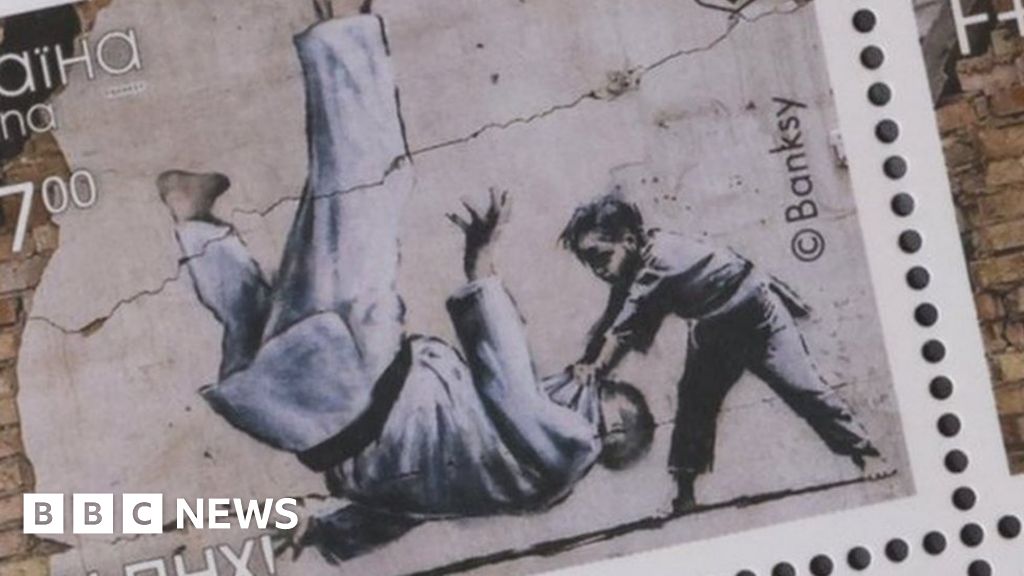
The Judo Takedown: A Symbolic Confrontation
One mural has already become iconic: it depicts a young boy executing a judo throw on a man widely understood to be Vladimir Putin, who is known for his background in judo. This visual statement reverses the power dynamic and emphasizes innocence overcoming force. It's not subtle political commentary; it's an assertion of resistance presented with the immediacy of street art.
The choice of judo is critical. Putin has long used his martial arts background to cultivate a powerful public image. By depicting him being thrown by a child, Banksy undermines this carefully constructed persona, highlighting vulnerability and perhaps ridicule. This kind of direct confrontation stands in stark contrast with the more layered, allegorical work often associated with the artist.
The mural's placement within Borodianka adds another layer of significance. The town suffered extensive damage during the Russian invasion, becoming a symbol of the war's brutality. Positioning this image of defiance in such a space feels less like art for art's sake and more like an act of solidarity with the local population.
The Gymnast: Resilience Amidst Ruin
Another striking mural portrays a gymnast performing a handstand against a backdrop of crumbling concrete. Rendered in stark black and white, it emphasizes the fragility of the human form set against the harsh reality of destruction. It's a powerful representation of resilience, showcasing grace and strength within an environment defined by loss.
The location of this work, painted on what remains of a bombed building, is particularly poignant. The gymnast's upward trajectory contrasts sharply with the downward devastation surrounding her. This visual juxtaposition speaks to the enduring human spirit, the desire for beauty and normalcy even in the face of unimaginable trauma. It's an image intended to offer hope amidst overwhelming despair.
A Series of Interventions
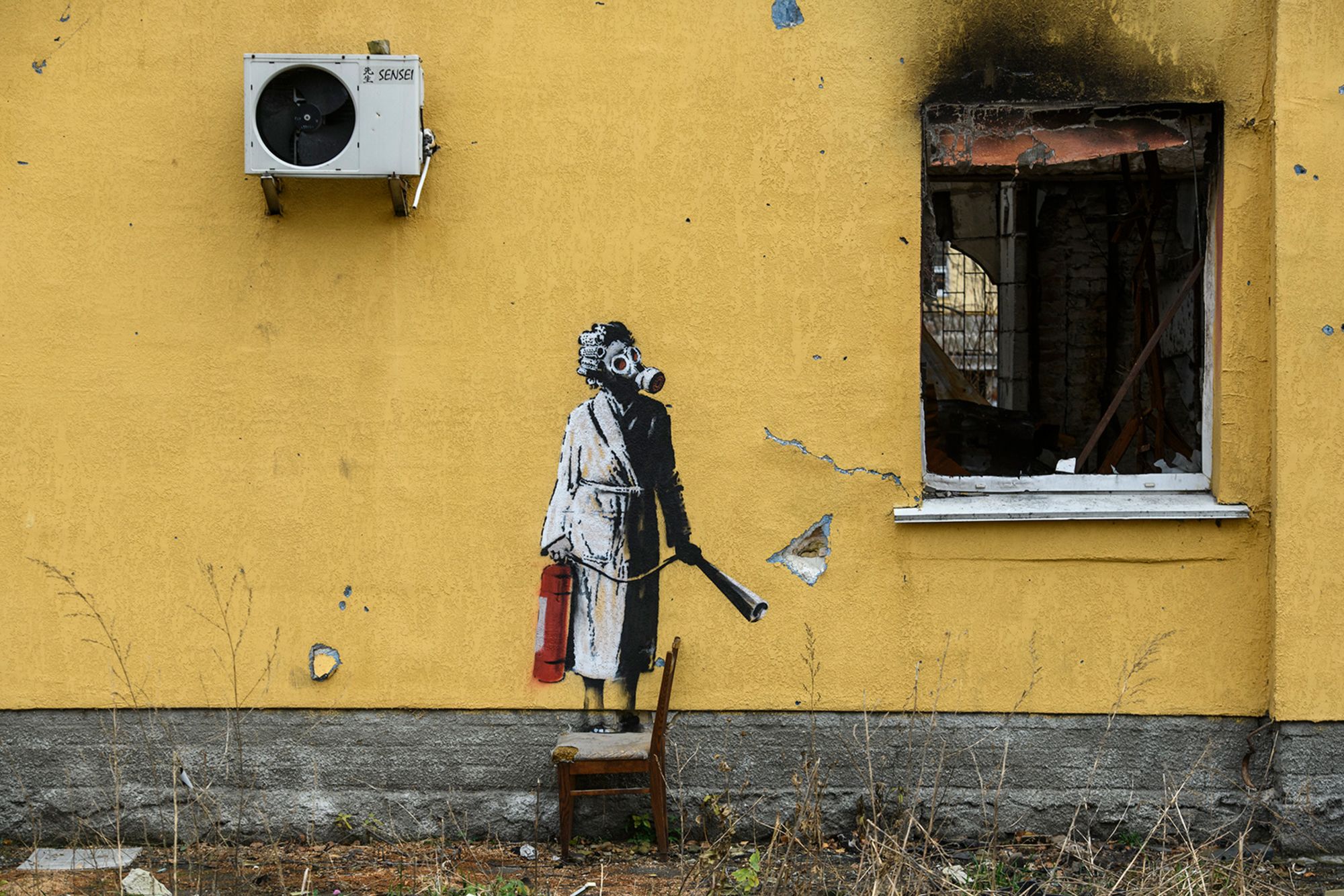
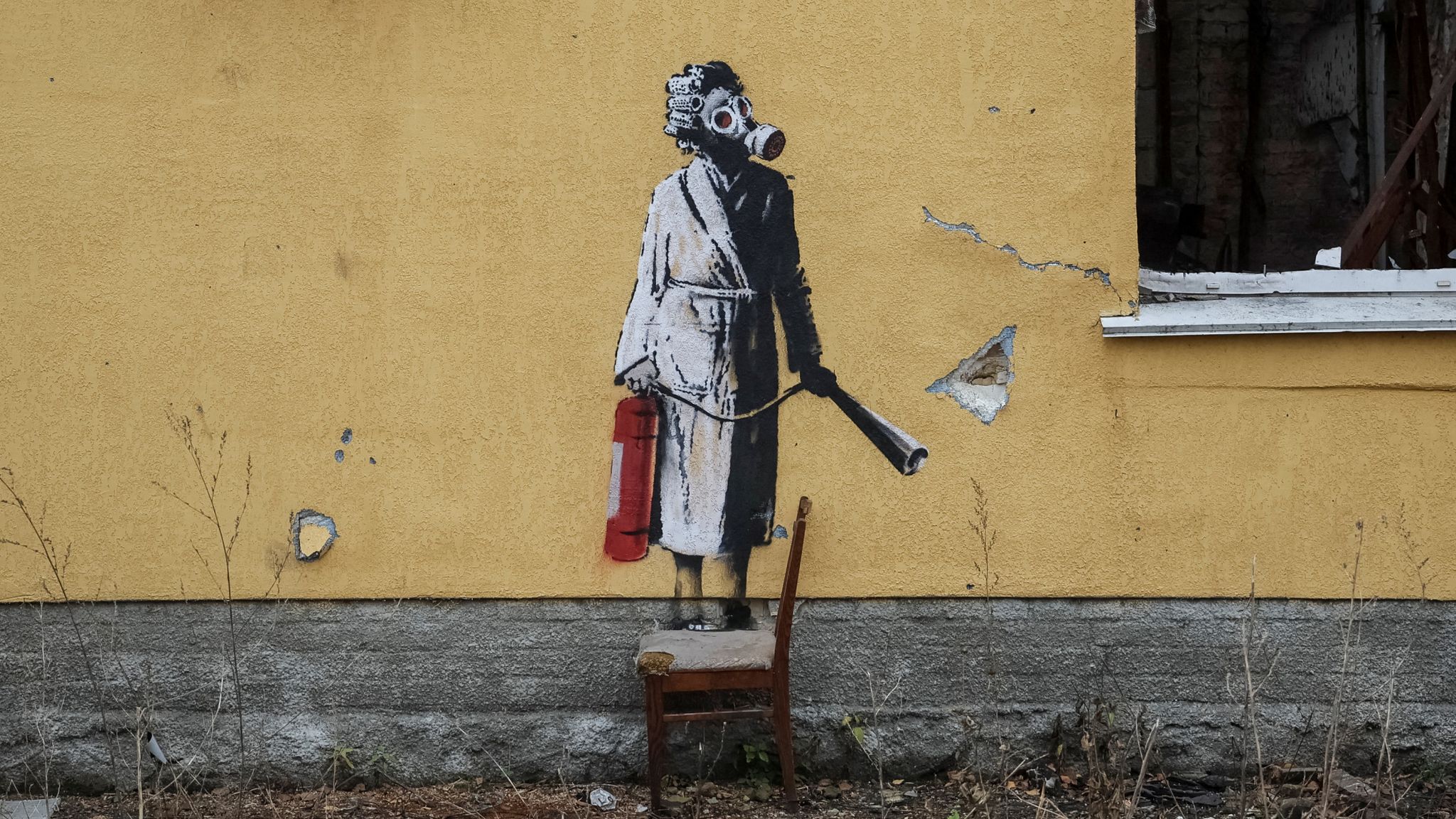
Banksy's Ukrainian murals don't exist in isolation; they are part of a series that includes a woman in curlers wielding a fire extinguisher as reported by The Art Newspaper, children using a tank trap as a seesaw in Kyiv, and another gymnast with a ribbon. Each piece offers a different perspective on the conflict, ranging from humor to defiance to quiet contemplation.
The recurring theme of innocence, children playing, gymnasts performing, underscores the devastating impact of the war on Ukrainian civilians. These images serve as reminders of what has been lost and what is at stake. While some might view this intervention as exploitative, it's undeniable that Banksy's presence brings international attention to Ukraine and its ongoing crisis.

The Bathing Woman: A Moment of Domesticity
One mural in Horenka depicts a woman taking a bath, seemingly oblivious to the destruction surrounding her. The scene is depicted on the ground floor of what remains of an apartment block hit by Russian forces. This image is oddly domestic and almost surreal against the backdrop of war-torn buildings.
According to reports from Dev Discourse, the woman in the mural even provided Banksy's team with a mug of instant coffee during their visit. This personal connection adds another layer to the work, blurring the lines between artist and subject, observer and participant.
The image is open to interpretation; perhaps it represents a yearning for normalcy, a refusal to be defined by conflict, or simply an act of quiet defiance against overwhelming circumstances. Whatever the intention, it's a powerful reminder that life, even in its most ordinary moments, continues amidst devastation.
A Larger Context: Banksy and Political Art
Banksy's work has always been politically charged. His stencils often target consumerism, capitalism, and war. This Ukrainian intervention continues this tradition but within a uniquely sensitive context. The decision to create art in a war zone is inherently controversial.
Some critics might argue that Banksy's presence risks trivializing the suffering of Ukrainians or exploiting their situation for artistic gain. However, defenders would point to his history of using art as a tool for social commentary and activism. Ultimately, the reception of these murals will depend on how they are interpreted by those who live amidst them.
The Nuclear Warhead Truck
Among Banksy's works is one particularly pointed image: an existing piece of graffiti, a phallic shape, repurposed as a nuclear warhead loaded onto a Russian armored military truck marked with the "Z" symbol. The visual commentary is direct and provocative, linking Putin's actions to images of potential annihilation.
This artwork exemplifies Banksy's ability to transform everyday objects and imagery into powerful statements about political conflict. It subverts existing symbols, such as the "Z" marking Russian military vehicles, and recontextualizes them within a framework of nuclear threat. It's a stark reminder of the gravity of the current situation in Ukraine.
The appropriation element is crucial to Banksy's method. He doesn't create something entirely new; he manipulates what already exists, giving it a new layer of meaning and significance. In this case, turning street graffiti into a visual representation of potential catastrophe.
A Fleeting Presence
Winter has begun, and the future remains uncertain. As reported by Dev Discourse, residents face immediate challenges like freezing temperatures and limited access to resources. Banksy's presence may be fleeting, but his art offers a moment of reflection and perhaps even a spark of hope in an environment defined by loss and uncertainty.
It remains to be seen what impact these murals will have long term. Will they become cherished symbols of resilience? Will they fade with the passage of time? Regardless, they represent a bold intervention into a conflict zone, a moment when art collided directly with reality. They are a potent reminder that even amidst destruction and despair, the human spirit finds ways to express itself.


0 comments