

The shadow of Russia's invasion looms large, casting a stark backdrop against which unexpected art emerges. Banksy's recent murals in Ukraine do more than offer fleeting images; they introduce an uncomfortable truth to the urban landscape.
Reporting via en.wikipedia.org theguardian.com.
Beyond celebratory works or simplistic messages of hope, these murals confront the immediate and brutal consequences of conflict, the destruction, fear, and displacement that have become daily realities for Ukrainians. Banksy's work is a pointed commentary on how art can respond to crisis, forcing viewers to grapple with uncomfortable truths directly within their communities.
A Series Born From Conflict
The unofficial title "Solidarity with Ukraine" began circulating when Banksy's works appeared in November 2022. See the full documentation here. Seven distinct artworks were created, each offering a different perspective on life under siege. This series isn't about glorifying war; it's a direct response to an ongoing humanitarian catastrophe.
Banksy chose sites directly impacted by Russian invasion for his murals, not pristine gallery walls or curated public spaces. By transforming damaged buildings into canvases for powerful statements, Banksy places the art within the context of lived experience, crucial in understanding its significance.
Images of Ordinary Life Under Duress
Banksy's murals capture ordinary life under duress: a woman in her dressing gown wearing a gas mask and holding a fire extinguisher; children transforming a metal tank trap into a seesaw. These scenes, while seemingly mundane on the surface, are imbued with anxiety and resilience born from constant threat. The children's playfulness contrasts sharply with underlying danger.
The stark simplicity of these images amplifies their impact, stripping away any romanticism or heroism associated with conflict to present an honest portrayal of daily survival. This subversive approach challenges viewers to confront the reality of war's effects on civilians.
The Judo Match: Symbolism and Speculation
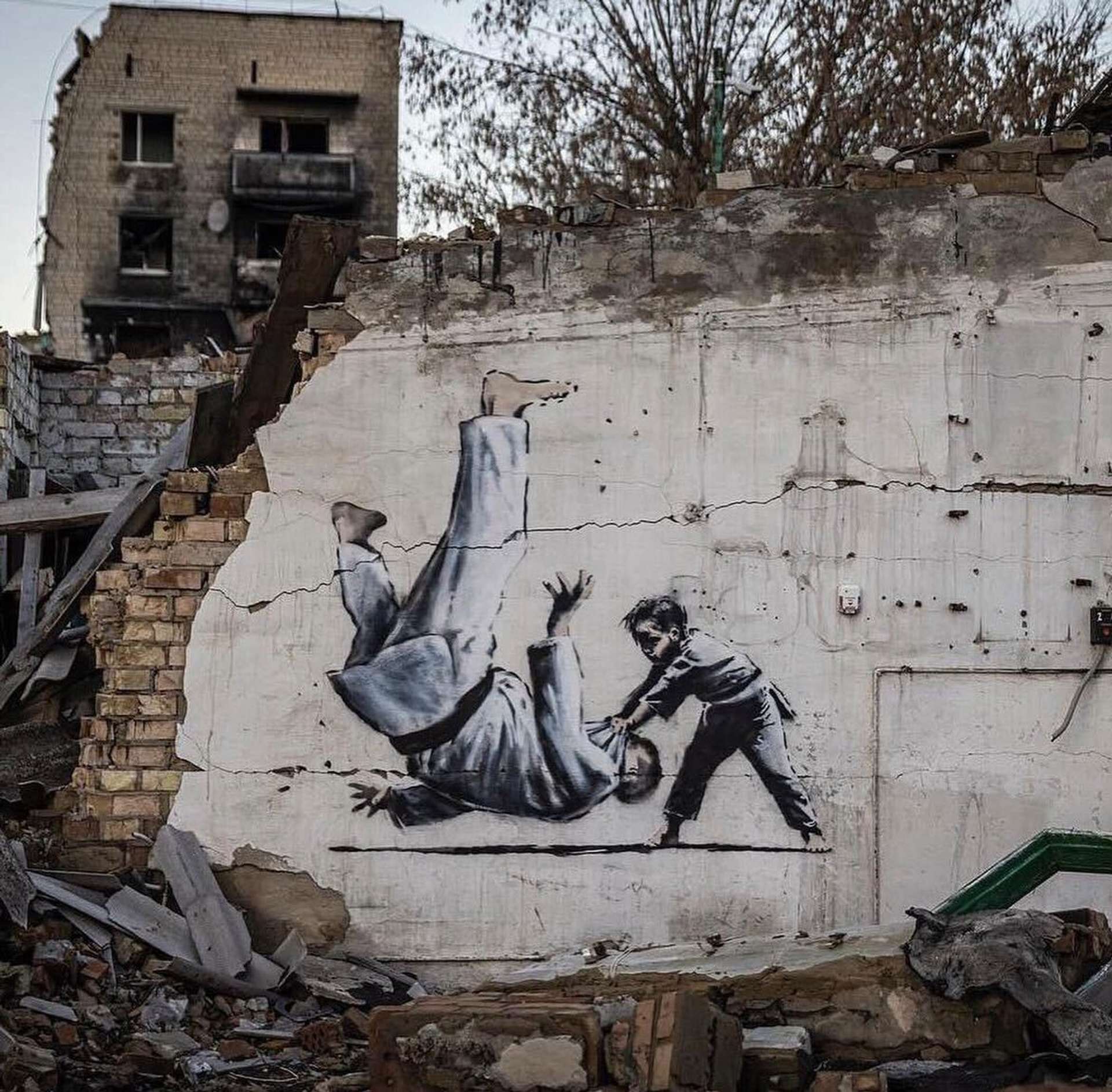
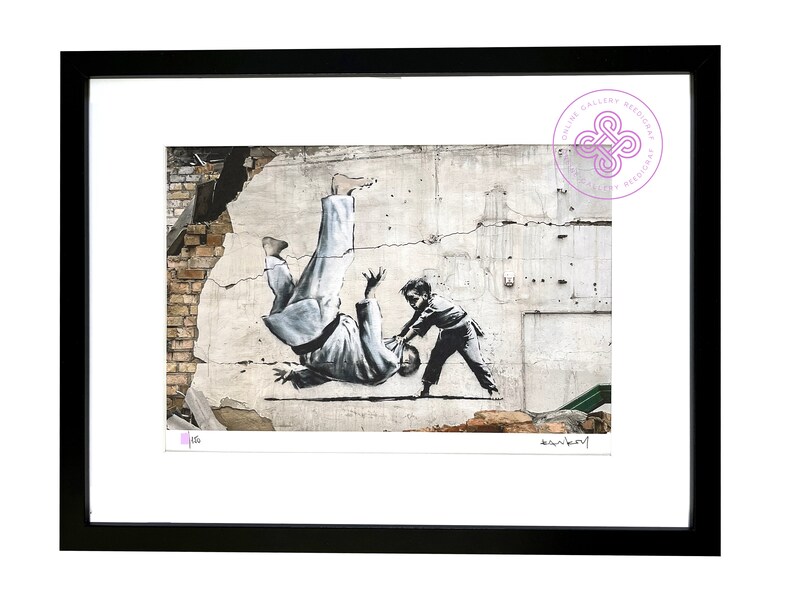
In Borodyanka, a mural shows a young boy flipping an older man onto his back. More details on the Borodyanka murals here. The older man's appearance has fueled speculation that he represents Russian President Vladimir Putin, though no confirmation has come from Banksy.
Whether intentional or not, this interpretation resonates powerfully within the conflict's context. It suggests a shift in power dynamics, highlighting Ukrainians' determination to resist aggression and reclaim agency. The image speaks to the spirit of defiance that permeates Ukrainian society.
A Gymnast's Unbreakable Spirit
Another mural, also located in Borodyanka, portrays a gymnast performing a handstand on rubble. This powerful visual symbolizes Ukraine's unbreakable spirit. The image directly confronts the devastation caused by Russian airstrikes.
The choice of a gymnast, a figure representing grace and strength, suggests that even amidst destruction, Ukrainians can maintain their dignity and find moments of beauty. This is not naive optimism but an assertion of resilience in the face of overwhelming adversity.
Irpin's Ribbon Dancer
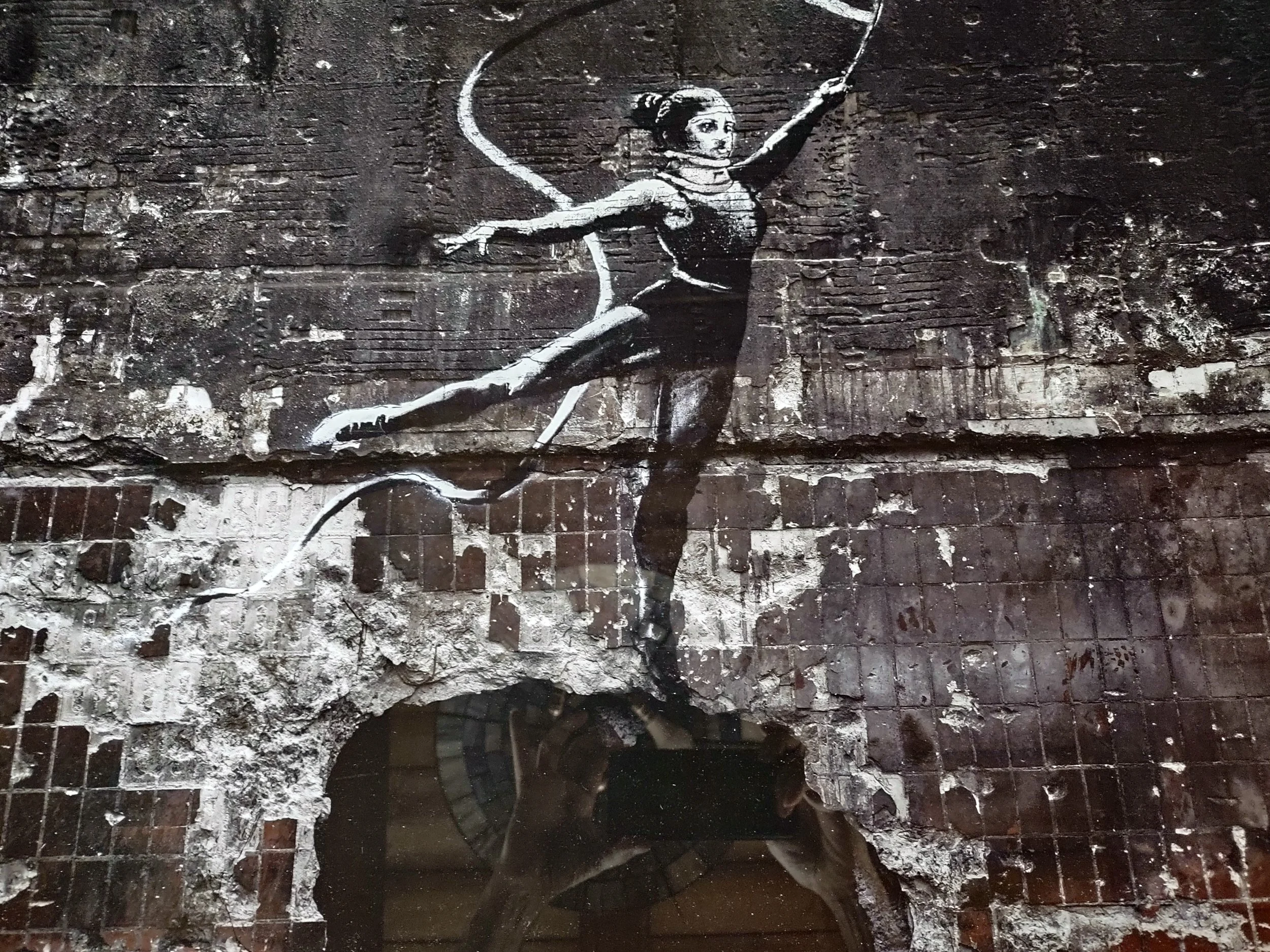
In Irpin, a mural depicts a gymnast balancing on top of a hole in the wall of a damaged building while holding a ribbon. The location itself underscores the precariousness and fragility of life under wartime conditions. Banksy's art becomes a temporary memorial against buildings scheduled for demolition.
The ribbon, often associated with grace and fluidity, contrasts sharply with the rigid structure of the damaged wall. This juxtaposition embodies the tension between destruction and hope, despair and resilience that defines the Ukrainian experience.
Preservation and Profit: A Moral Dilemma
Banksy's murals have ignited a debate about preservation. Some argue these artworks should remain in their original locations to serve as enduring reminders of the conflict, while others propose selling them at auction. The potential financial gain is substantial; however, unauthorized sale of cultural heritage carries a penalty of up to 12 years in jail under Ukrainian law. Read more about the preservation debate here.
The attempted theft of one mural, featuring a woman with a gas mask, highlights the vulnerability and potential for exploitation. The subsequent recovery by police underscores the importance of protecting these artworks not just as pieces of art but as symbols of cultural identity and national pride. It raises questions about ownership, value, and the commodification of trauma.

Beyond Individual Images: A Wider Context
Banksy's murals in Ukraine are part of a larger body of work that consistently addresses themes of war and suffering. This series includes images such as children riding an anti-tank hedgehog like a swing, and a Russian Z-armored vehicle carrying a male genital organ. Explore more of Banksy's recent works here.
This series connects to a long tradition of street art responding to political conflict. It utilizes stencil techniques and impactful imagery to bypass conventional media channels, reaching audiences directly in affected communities. The work exists as both documentation of current events and an act of solidarity with those experiencing them.
0 comments