

The spectacle of Area15 is a calculated thing, an ecosystem built to generate reaction. It's more than just experiences, retail, and dining; it's about constructing an environment that constantly pushes boundaries. This ambition extends directly into the art program, which has evolved alongside the venue itself. Now there's a new way to navigate this weirdness: an app-based tour offering multiple pathways through Area15's collection, accessible at area15.com/experiences/art-quest.
Reporting via lasvegasweekly.com fabulousnevada.com.
The sprawling complex aims for a constant state of unexpected discovery. One moment you might find yourself staring up at 747, Ken Feldman's suspended Boeing 747 fuselage that once dominated the playa at Burning Man; the next, confronted with Mr. Fusion, Henry Chang's driveable art car constructed from stainless steel tubing and powered by a V8 engine. These pieces, along with others, suggest an attempt to transplant counterculture aesthetics into a hyper-commercial space.
Eric Vozzola's 'Multiverse': Scale and Surrealism
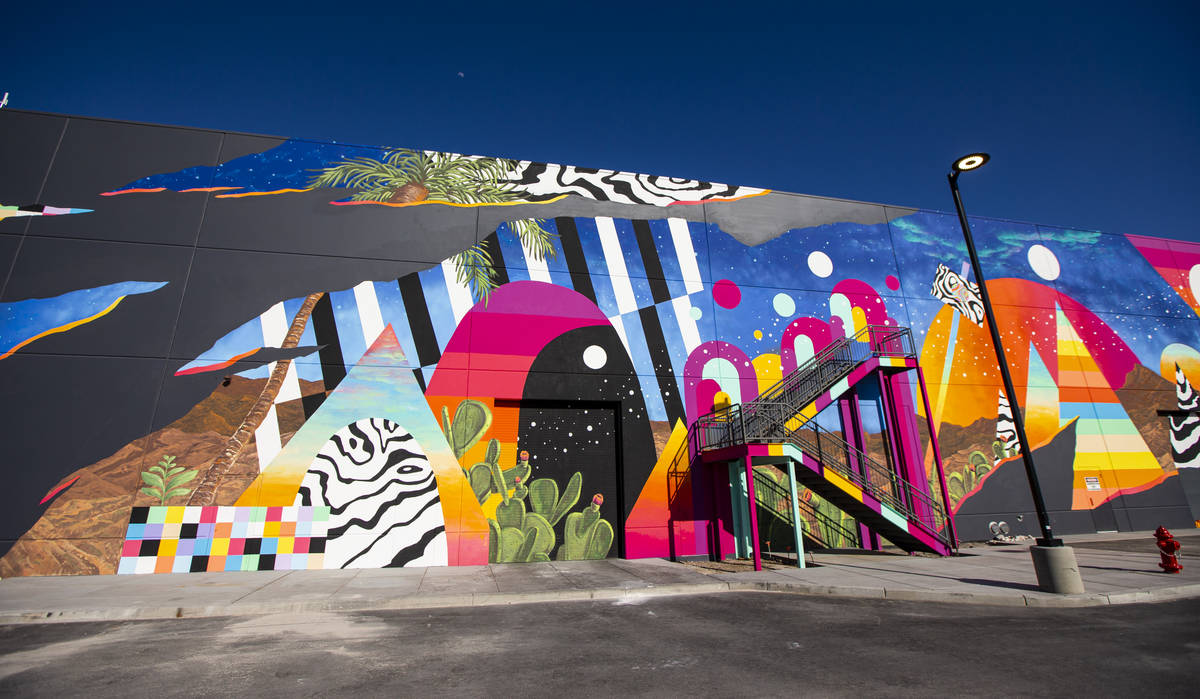
The centerpiece of this artistic landscape is Eric Vozzola's 'Multiverse,' the largest mural he has ever painted. It stretches an immense 400 feet wide and 40 feet tall, a sheer wall of imagery that demands attention. This isn't some subtle addition to the background; it's a statement meant to overwhelm. The scale alone speaks volumes about Area15's desire for impact.
Vozzola's work is described as combining surreal imagery to suggest endless alternate realities, and this concept feels perfectly suited to the environment of Area15. While other pieces might offer fleeting moments of wonder, 'Multiverse' operates on a different plane entirely. It encourages prolonged engagement, an attempt to decipher what lies within its sprawling composition, a strategy designed to hold attention in a space saturated with competing stimuli.
The mural's presence signals more than just artistic ambition; it speaks to the broader trend of massive public art interventions. These works aren't simply decorative elements; they are intended to transform perceptions of place, creating a sense of spectacle and wonder. It remains to be seen how deeply this large-scale work resonates with visitors accustomed to rapid-fire sensory experiences.
The Art Quest App: Navigating the Experience
Understanding the scope of Area15's offerings has always seemed overwhelming, which is why the new app-based tour might prove useful. The app provides three formats: Full Immersion, Express Experience, and All-Ages Adventure, offering a tiered approach to exploring the artwork. This structured exploration feels like an attempt to impose order on what is fundamentally designed as chaos.
The 'Art Quest' itself acknowledges that Area15's art isn't just about looking at things; it's about experiencing them, and potentially participating in them. The app functions as a guide, but also potentially as a curator, shaping the visitor's experience, a subtle form of control within an environment ostensibly built for freedom. Given its focus on accessibility, will this guided tour dilute the individual's own process of discovery?
BARTKRESA Studio & Joshua Harker's 'Shogyo Mujo'
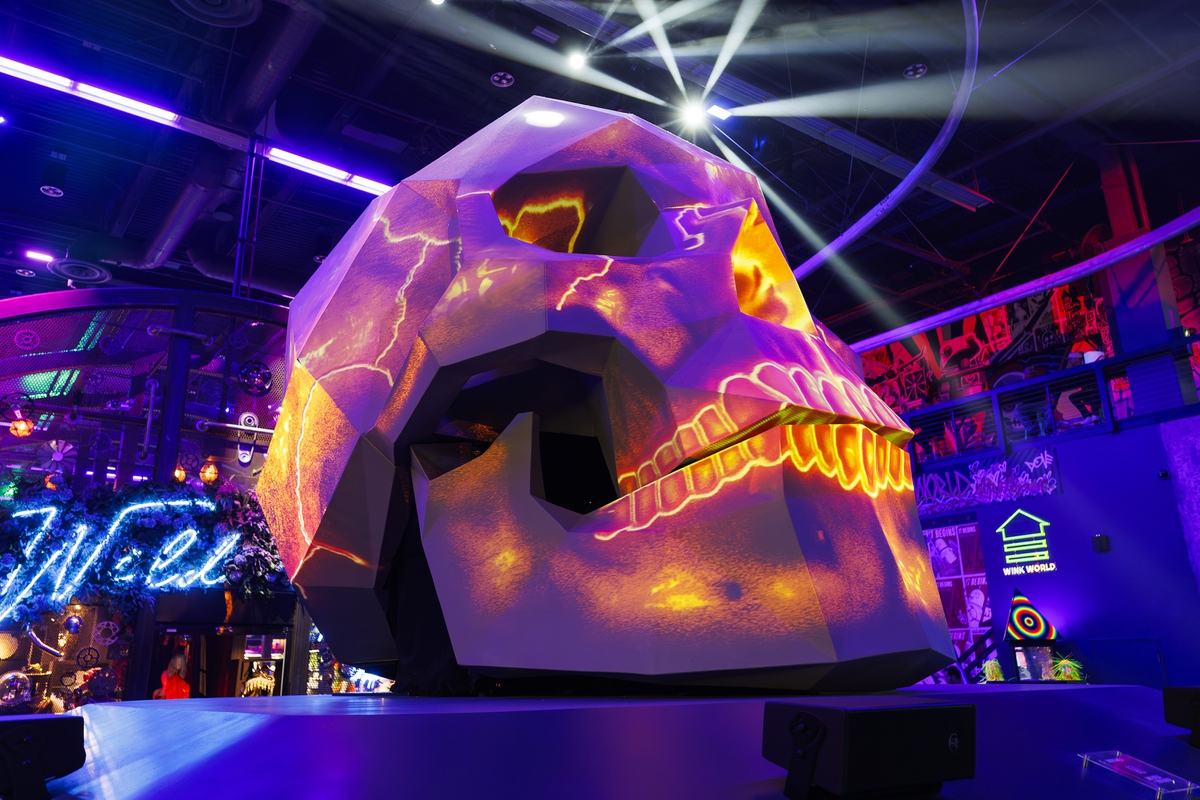
Beyond Vozzola's mural and the guided tours, Area15 features pieces that actively engage with philosophical concepts. Shogyo Mujo, a projection-mapped skull created by BARTKRESA Studio in collaboration with Joshua Harker, greets visitors to the main building. This work explores the concept of impermanence, a Buddhist principle suggesting that all things are transient.
The jarring juxtaposition of this weighty theme and Area15's overtly playful atmosphere is telling. It suggests a deliberate attempt at intellectual provocation; forcing audiences to confront profound ideas within an environment designed for entertainment. While the intention might be admirable, it feels somewhat incongruous with the surrounding spectacle, a philosophical footnote in a landscape of manufactured thrills.

Tyler Fuqua's 'Mechan 11': Industrial Functionality
One of Area15's more unusual pieces is Mechan 11 by Tyler Fuqua. This towering, steampunk-inspired robot assembled from scavenged materials stands upright and performs a practical function, picking up trash. Nicknamed 'The Collector,' it's the first in a series of robots Fuqua intends to create.
There's something inherently compelling about this combination of industrial aesthetics and utilitarian purpose. It's a commentary on consumerism, waste, and the potential for technology to address environmental concerns, a subtle message within Area15's otherwise unapologetically commercial environment. The robot's function further blurs the lines between art and utility, questioning our definitions of both.
Dream Portal & Vortex Portal: Immersive Entryways
Davis McCarty's Dream Portal is a crystalline archway designed to invite guests to walk through shifting light and color. Similarly, Cree8 Studios' Vortex Portal merges industrial textures with science fiction aesthetics, both pieces serve as gateways into the Area15 experience.
These installations function less as standalone artworks and more as transitional spaces, guiding visitors further into the complex's manufactured world. They contribute to a sense of ongoing spectacle, reinforcing the feeling that every step is part of a carefully curated journey, a deliberate manipulation of perception intended to maximize engagement. These portals hint at a larger narrative arc within Area15 itself.
The Burning Man Connection: A Shared Aesthetic
Several pieces at Area15 carry strong echoes of the Burning Man festival, including 747 by Ken Feldman, a Boeing 747 fuselage on wheels that famously rode the playa. The significance of this connection lies in the shared ethos of experimentation, radical self-expression, and challenging conventional norms.
Bringing elements from Burning Man into Area15 is a shrewd move; it taps into a cultural cachet associated with counterculture rebellion and artistic innovation. However, transplanting this spirit into a commercial environment also raises questions about authenticity, can the raw energy of the playa truly be replicated within a manufactured spectacle? It's difficult to ignore that Burning Man's ethos is inherently anti-establishment.


0 comments