

Street artists continuously push boundaries, seeking innovative ways to express themselves on public surfaces. The tools they use evolve alongside their ambitions; spray paint and wheatpaste are staples, but a newer technology is quietly revolutionizing street art: laser cutting offers unprecedented detail for stencil work, fundamentally altering what's possible.
Reporting via omtech.com crealityfalcon.com.
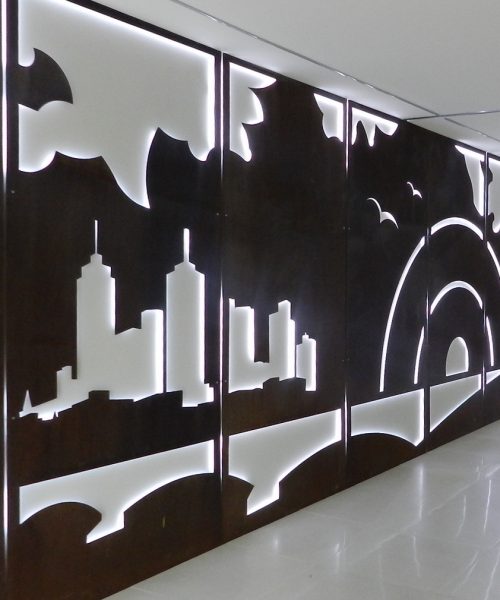
This isn't about replacing traditional methods entirely but expanding them into new territory. Hand-cut stencils have long been constrained by the limits of human dexterity and available tools. Now, laser cutting emerges, offering a precision that changes everything for artists looking to create intricate imagery in public spaces; it's more than just an aesthetic shift, it's transformative.
The Evolution of Stencil Creation
A stencil is fundamentally a template cut from a thin sheet. The design is removed, creating openings through which paint or another medium can be applied to a surface behind the stencil. Traditionally, these stencils were hand-carved; this process inherently restricted their complexity and precision.
The limitations of hand-cutting are significant. Intricate designs become incredibly challenging, requiring considerable skill and time. Even experienced artists face hurdles when attempting highly detailed work. The advent of laser cutting technology changes that equation dramatically, opening up a world of possibilities previously unavailable to stencil artists.
Laser Cutting: A Technological Leap
Laser cutting uses a high-powered laser beam to cut through materials with incredible precision as explained by Omtech. This allows for the creation of designs far beyond what's achievable using traditional hand-cutting methods. It's a shift from manual labor to automated, highly precise production.
The technology isn't new in itself, but its application to stencil creation is relatively recent. As laser cutting machines become more accessible and affordable, they are finding their way into the hands of artists seeking greater control over their work. This newfound control has implications for the complexity and impact of street art pieces.
Material Choices: Beyond Paper
The versatility of laser-cut stencils extends to material selection. While cardstock offers a cost-effective option for single-use projects according to Creality, other materials offer distinct advantages for artists needing durability and reuse.
Acrylic provides rigidity and longevity suitable for repeated use and detailed designs. Mylar remains the industry standard as Creality Falcon notes, prized for its heat resistance, flexibility, durability, and reusability; it's an excellent choice when high precision and longevity are required. Choosing the right material is as important as selecting the machine itself.
Precision and Edge Quality
One of the most immediate benefits of laser cutting is the quality of the edges produced. Traditional hand-cutting tools often leave ragged or uneven edges, which can affect the final image when paint is applied. Laser cutting delivers sharp, precise, and consistent edges.
This precision translates to cleaner lines and more detailed artwork. It also simplifies the application process; less bleed occurs around the stencil's perimeter, reducing rework and improving overall efficiency. The difference in edge quality alone significantly elevates the potential of stencil-based art.
Applications Across Creative Fields
The uses for laser-cut stencils extend far beyond graffiti and street art. Their versatility makes them suitable for a wide range of applications across various industries as Omtech explains, from home decor to cake decorating, automotive markings, textile design, and industrial projects.
This widespread applicability highlights the broader impact of laser cutting technology; it's not just a tool for artists but also a solution for businesses needing precise marking or patterning. The ease with which intricate designs can be produced opens up entirely new avenues for creative expression across many disciplines.
The Future of Urban Art
While spray paint and hand-cut stencils will undoubtedly remain part of the street art landscape, laser cutting represents a significant advancement. It allows artists to translate increasingly complex digital designs into physical form with unprecedented accuracy; this fundamentally changes the scope of what's achievable.
The technology's accessibility is key, as machines become more affordable and user-friendly, we can expect to see even greater experimentation and innovation in stencil art. This new precision invites artists to explore previously unimaginable forms and textures on public surfaces, opening up exciting possibilities for the future of urban expression.
Sources
Related reading from TasteBueno
- French Artist Mahn Unveils Dreamlike Mural in Urban Fringes
- Krystal Ramirez's New Mural Brightens Las Vegas
- How to Size and Scale a Stencil for a Big Wall
- The Stencil Library - hundreds of cut-ready halftone stencil files, $5/mo.


0 comments