

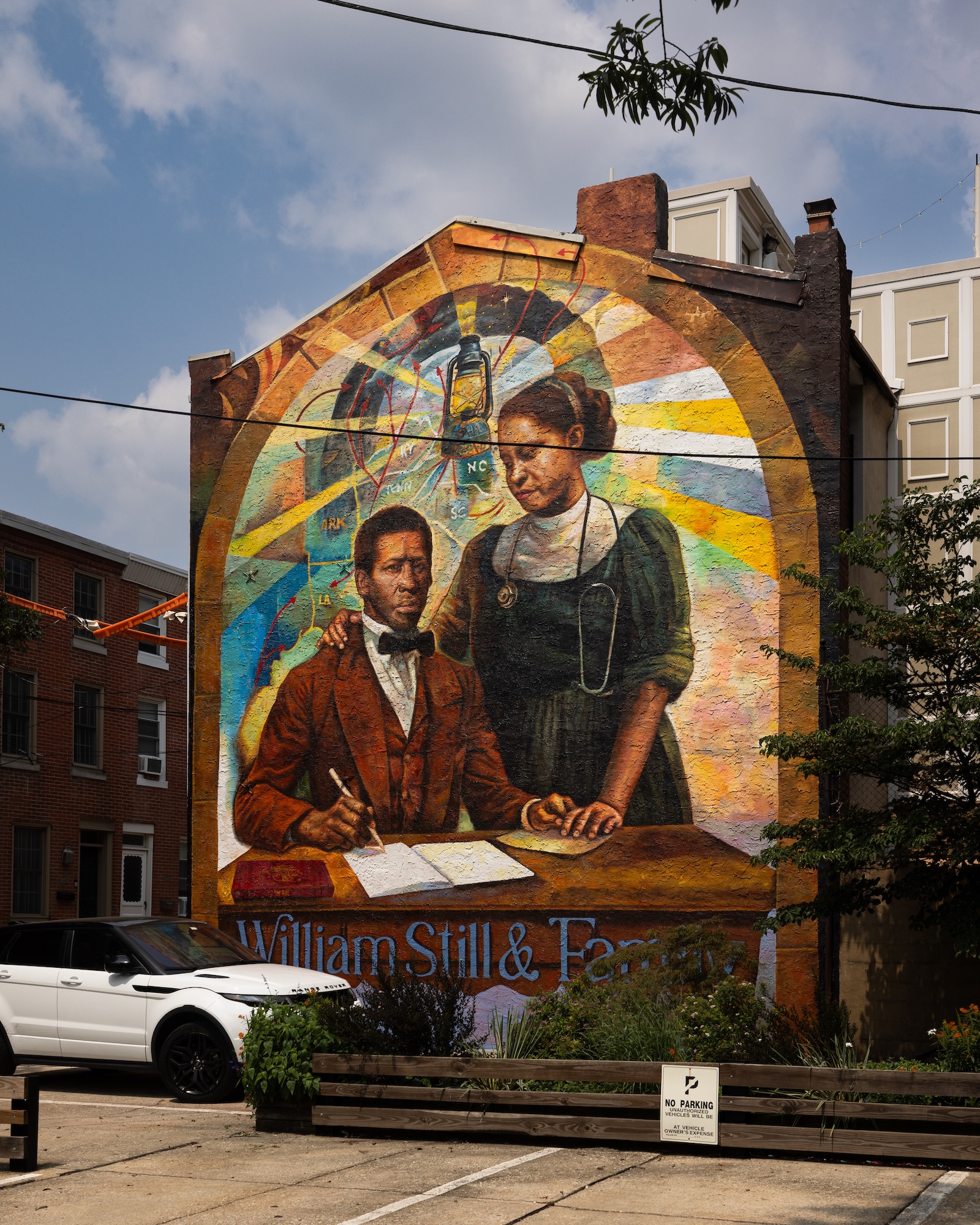
A simple address, 625 S. Delhi Street, now bears a profound story etched onto its facade for all of South Philadelphia to see. This mural isn't just paint on brick; it's a visual reckoning with a crucial chapter in American history, connecting the city's urban fabric directly to an anti-slavery network.
Reporting via en.wikipedia.org fox29.com.
The mural commemorating William Still and his family serves as more than artistic expression. It stands as a concrete reminder of Philadelphia's role in the Underground Railroad and honors the quiet heroism of individuals like Still, who risked their lives to help countless people attain freedom. The unveiling marks a significant event within the ongoing effort to reclaim and celebrate the 7th Ward's Black history, positioning this artwork firmly within a larger cultural project called Legacy Reclaimed.
A Life Rooted in Resistance
William Still's journey began far from Philadelphia, born on October 7, 1821, in Shamong Township, Burlington County, New Jersey. His parents were formerly enslaved people who escaped Maryland and found refuge in the North. Growing up within a family of eighteen children, Still experienced firsthand the pervasive threat of slavery and its impact on families, shaping his future commitment to liberation.
He later moved to Philadelphia, where he transitioned into business and became an entrepreneur while also establishing himself as an author and writer. This combination of skills proved invaluable; he had both the financial stability to support Underground Railroad operations and the ability to document its activities, a task crucial for preserving a history often obscured by secrecy and danger.
The House That Sheltered Hope
625 S. Delhi Street, now adorned with this striking mural, was not merely Still's home; it functioned as an active way station on the Underground Railroad from 1850 to 1855. This building served as a safe haven for individuals escaping enslavement, offering respite and guidance on their perilous journey North. The very structure became symbolic of resistance, a visual signal to those seeking freedom that assistance was available.
The mural's placement at this specific location elevates its significance; it roots the abstract concept of the Underground Railroad in a tangible place. This work occupies the site of an event so momentous that its walls hold historical weight, transforming street art into a powerful marker of history and resistance.

Recording Freedom's Footsteps
Still's most significant contribution was his meticulous record-keeping. In 1872, he published "The Underground Railroad Records," documenting over 800 freedom seekers who passed through his Vigilance Committee office. This work is invaluable for understanding the breadth and complexity of the Underground Railroad's operations, providing crucial details about the individuals involved.
The pen depicted in the mural signifies Still's role as an author and recorder; it moves beyond simple activism into documentation, a form of preservation that speaks to a desire not only to liberate but also to remember. This act ensures those stories aren't lost to time or intentionally suppressed.
Family and Legacy
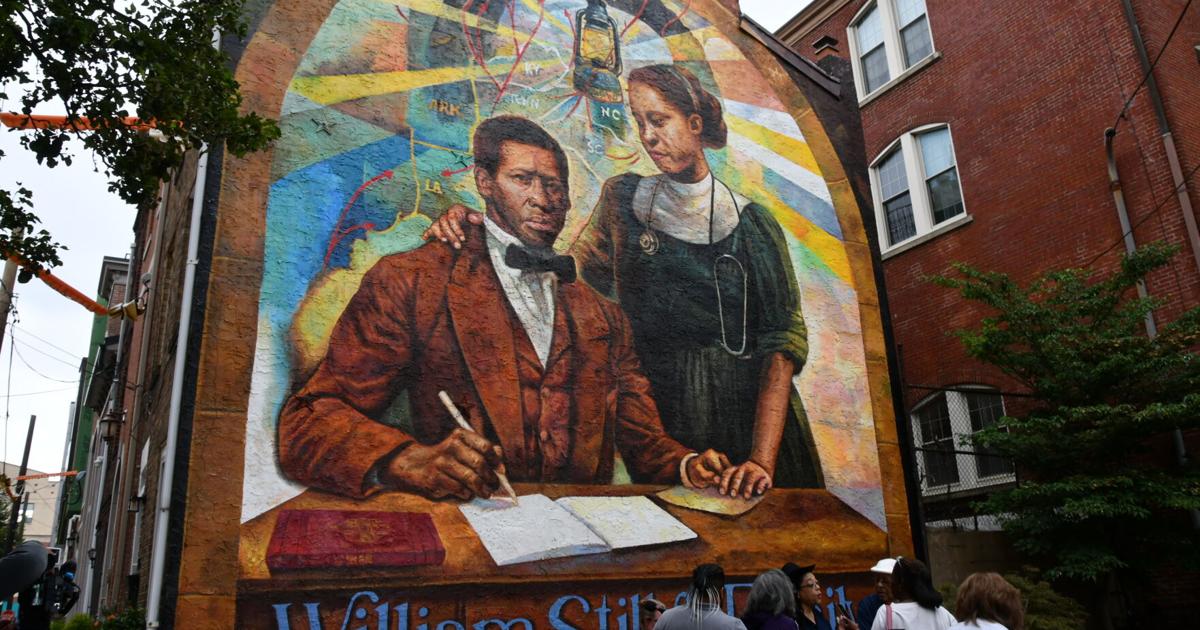
The mural doesn't solely focus on William Still; it rightfully features his daughter, Caroline Virginia Matilda Still Anderson, who became the first African American licensed physician in Philadelphia. Her inclusion highlights the broader legacy of social progress achieved by the Still family, a family built on resilience and a commitment to uplifting their community.
The depiction of Caroline Virginia Matilda Still Anderson wearing a modern white physician's coat creates a powerful visual link between past and present, demonstrating that her father's actions paved the way for future generations of Black professionals. This juxtaposition reinforces the mural's message: freedom isn't simply an endpoint but a foundation for continued growth and achievement.
Symbolism on Brick
The visual language of the mural is intentionally symbolic, employing imagery like a lantern, map, and North Star, evocative representations of the Underground Railroad's journey. These are not mere decorative elements; they serve as powerful reminders of the risks and challenges faced by those seeking freedom.
These symbols transform what could be a straightforward historical depiction into something richer and more layered. The lantern represents hope and guidance in darkness, while the map signifies the perilous path to liberation. All these contribute to a broader narrative about resilience and determination that resonates far beyond Philadelphia's South Delhi Street.

Collaboration and Reclamation
The creation of this mural involved close collaboration with Still's descendants, a testament to the importance of community involvement in historical preservation. This partnership ensures accuracy and authenticity, allowing the family's perspective to inform the artwork's narrative. The project was designed collaboratively with artist Ernel Martinez, combining historical knowledge with artistic skill.
This collaborative approach underscores a broader movement within urban art: murals are increasingly seen as tools for community engagement and empowerment. By involving descendants, the mural becomes an active part of their ongoing efforts to reclaim and celebrate their heritage, a powerful reminder that history is not static but continually evolving through collective memory.


0 comments