

A French artist wearing a ski mask just did something no street artist has ever pulled off: he sued a major auction house to get his stolen art back, and he won round one before the case even reached trial.
The mosaics never should have left the wall
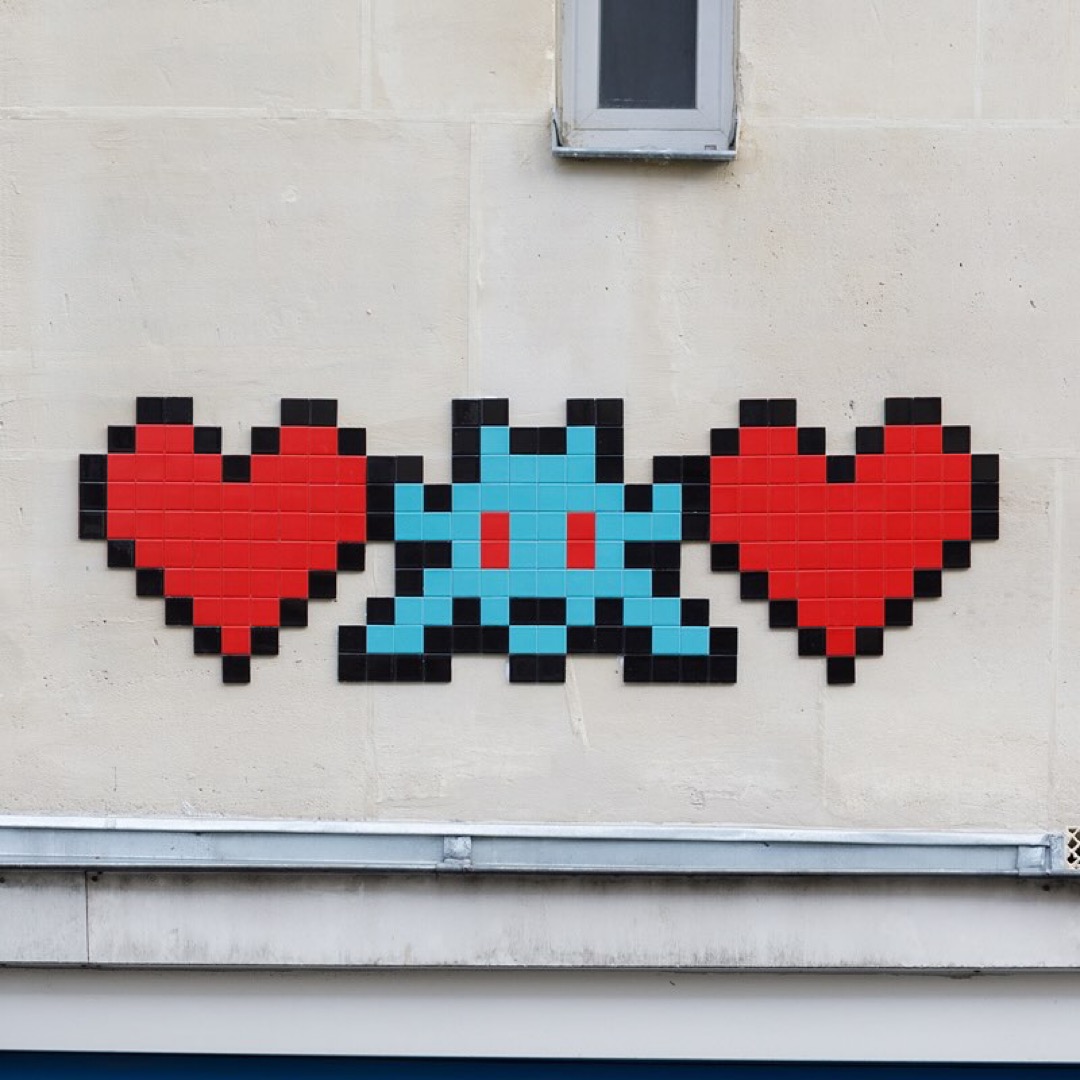
Invader has been gluing pixelated ceramic tile mosaics to walls in more than 80 cities since 1998, work built entirely on a modern-myth of anonymity and a genuinely simple rule: the piece belongs to the street it's stuck to. Chip a mosaic off a building and sell it in a saleroom, and you haven't rescued a piece of art. You've killed it.
That's the argument Invader took to court against the parent company of Julien's Auctions, the Beverly Hills house better known for selling Marilyn Monroe's dresses and Michael Jackson's gloves. The lawsuit alleges copyright infringement and theft over 15 of Invader's street mosaics that turned up for sale in the house's online catalogue, listed without his knowledge or consent.
Fifteen pieces, three countries, one signature move
The contested works span Invader's whole career. Two of the mosaics were installed in Tokyo in 2014. Five went up in France in November 2024, recent enough that whoever pried them loose barely gave the cement time to cure. One is even older: a piece from Paris dated October 2000, among the earliest mosaics Invader ever placed, according to Graffiti Street. Someone tracked down 24 years of his work, chiseled it off walls on two continents, and routed it into a single auction catalogue.
On September 25, a court sided with Invader on the first ask: a temporary restraining order compelling Julien's to pull all 15 listings attributed to him from its online catalogue. That doesn't settle the case. It just stops the sale clock while the underlying theft and copyright claims get argued out in front of a judge.
Why the wall matters more than the wall's new owner
Invader's filing leans on something auction houses don't usually have to answer for: where a piece is supposed to live. His argument is that the site is the artwork. A mosaic installed on a specific corner in Tokyo is a public encounter, free, unannounced, meant to be stumbled onto by a stranger with nowhere to be. Pop it off that corner and hang it in a private collection and it isn't the same object anymore. It's a souvenir of a crime scene wearing the original's clothes.
That distinction has teeth because Invader mosaics already move on the secondary market constantly, both through galleries he sanctions and through pieces that vanish off walls and resurface for sale with no clear paper trail. This lawsuit is the first time he's tried to draw a hard legal line between those two channels instead of just watching the second one happen.
This isn't Julien's first provenance fight
Julien's has been here before, on different terms. The house was previously ordered to return over $1 million in Kareem Abdul-Jabbar memorabilia after a dispute over how the items reached the auction block in the first place. Auction houses run on the assumption that whoever consigns an item actually has the right to sell it. Street art breaks that assumption at the root, since the artist almost never authorized the placement, let alone the removal.

An old problem finally gets a courtroom
Street art has always had this hole in it. The whole point is that it's illegal, unsanctioned, and unowned by anybody but the wall. That made it nearly impossible to claim theft when someone stripped a piece off a building, because legally the artist was often trespassing when he put it there to begin with. Banksy pieces get cut out of walls and auctioned constantly, and city governments have alternately sold, preserved, or painted over them with no consistent rule for who actually gets to decide.
Invader's suit is trying to force a different answer: that authorship survives even when placement was never permitted, and that an auction house doing basic due diligence should have caught 15 works with no legitimate chain of custody. If the theft and copyright claims hold up past the restraining order, it sets a marker every other secondary-market seller of street art now has to think about before listing something they can't fully explain how they got.
For now, the mosaics are off Julien's site and the case is still open. Somewhere, 15 chipped patches of wall are missing their pixels.
Related reading from TasteBueno
- A Colchester Gallery Just Got 28 Original Banksys. Two of Them Are Walls Ripped Off Real Streets.
- This Queens Building Wore Twenty Years of Graffiti. A Developer Painted It White in One Night, and a Jury Made Him Pay $6.7 Million For It.
- A $500 Banksy Print From 2006 Just Sold for £96,000. Nobody Can Explain Why.


0 comments