

In 1996, a New Jersey teenager tagging under the name KAWS used a skeleton key, a gift from another graffiti writer, to pop open a bus shelter ad frame on a Manhattan street corner. He pulled the ad, painted his cartoon skeleton over it back at his studio, and slid the panel back into the frame before the ad company noticed anything was wrong. Thirty years later, the Smithsonian poured that same cartoon skeleton into fourteen feet of bronze and planted it on the National Mall.
A commission for the National Mall
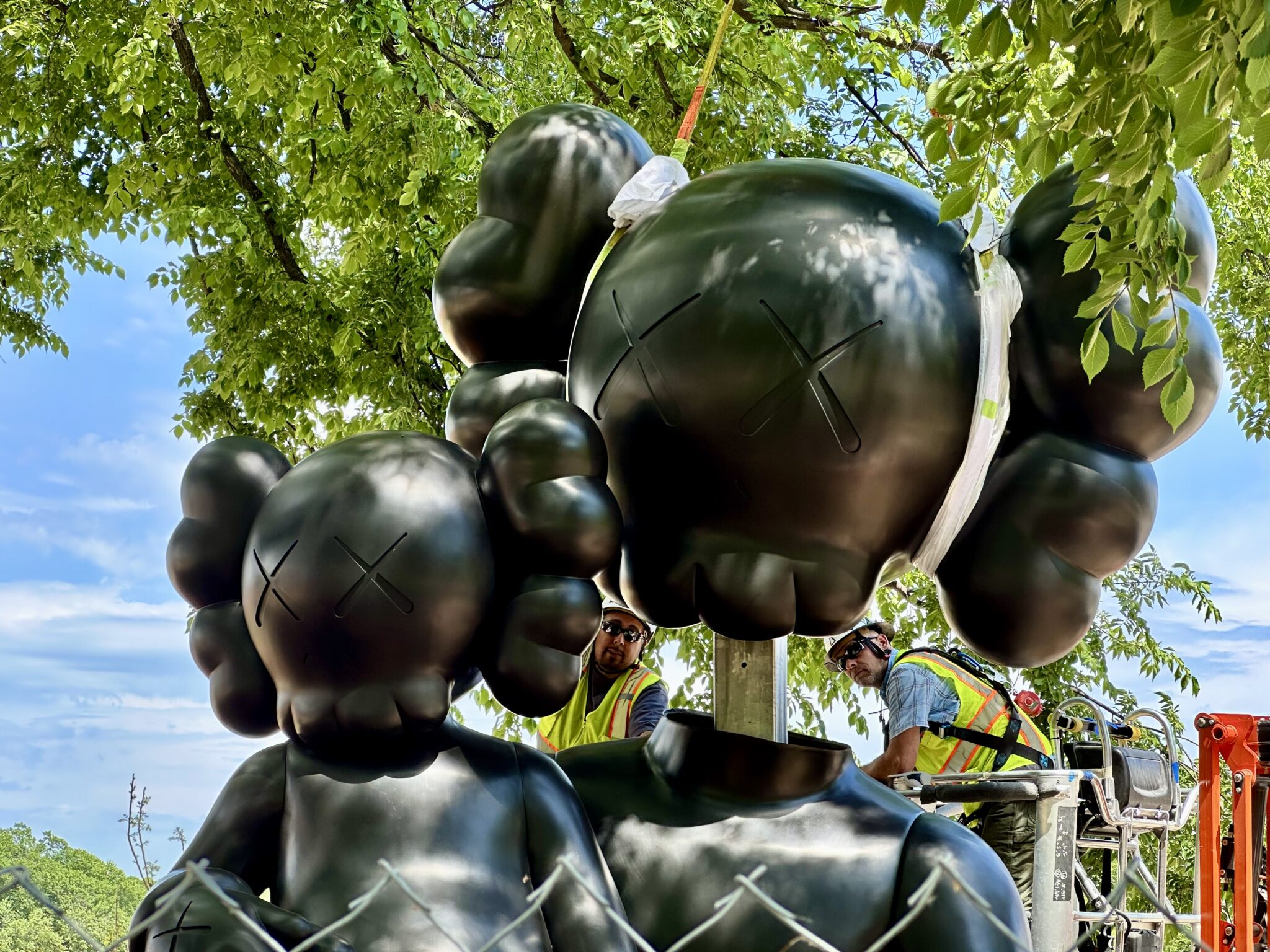
The Hirshhorn Museum and Sculpture Garden confirmed this spring that it commissioned "SHELTER," a 14-foot bronze by KAWS, specifically for its renovated outdoor galleries, according to ArtDependence. The sculpture went up on the garden's West Overlook this May, positioned to face the National Mall's recently reopened carousel, according to Washingtonian. It depicts two of KAWS's signature COMPANION figures, a parent holding a child, both wearing his trademark skull-and-crossbones heads with Xs where their eyes should be.
"It's an honor to have my work installed in the Hirshhorn Sculpture Garden alongside so many artists I respect and admire," KAWS said in a press release announcing the piece, adding that being placed so prominently on the nation's capital was "a true privilege" and that he hoped the work would push people to think about "how we treat one another."

From a stolen key to a real name
KAWS is the alias of Brian Donnelly, who started painting billboards and freight trains around New Jersey as a teenager before settling on the KAWS name in 1992, according to Wikipedia. He moved to New York in the early 1990s and started going after a different kind of surface: bus shelter and phone booth ad panels. On a 1995 trip to San Francisco he met Barry McGee, who was already prying open ad frames around the city and reworking the posters inside. Donnelly brought the technique back to New York, using a skeleton key to open the panels, pulling the ads, painting his characters directly over the corporate imagery, and reinstalling the panels so commuters found his skeletons staring back where a perfume or liquor ad used to be. The practice has a name, subvertising, and it earned Donnelly a handful of minor run-ins with the police long before galleries knew who he was.
Those altered ad panels are what built the KAWS name inside the graffiti world before the art market ever noticed him. The COMPANION figure on the Mall today, skull head and X eyes included, is a direct descendant of the character he was slipping into bus shelters three decades ago. The vinyl toys, the Uniqlo collaborations, and the auction results that now regularly clear seven figures all trace back to a guy with a stolen key and a folder of altered ad posters.
A garden built to be argued over
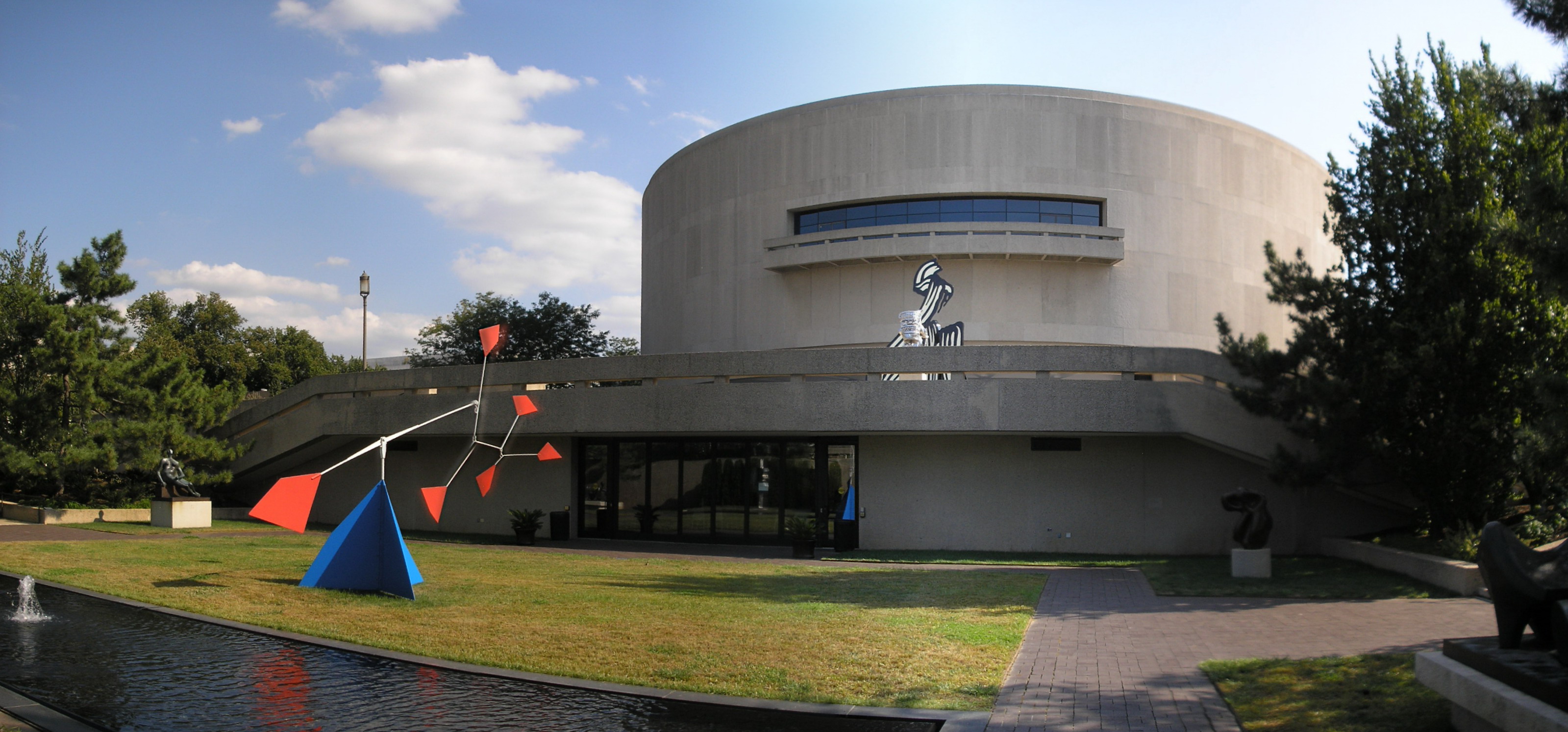
The Sculpture Garden KAWS is entering has been under renovation since 2022, redesigned by artist and architect Hiroshi Sugimoto ahead of an October 2026 reopening, according to the Smithsonian. It is the first major overhaul of the garden since it opened to the public on October 4, 1974, as part of Gordon Bunshaft's design for the Hirshhorn, the first modern building ever constructed on the National Mall, per Wikipedia. The redesign is widening entrances, adding shade and seating, and reworking how visitors move through the space.
SHELTER joins seven other new acquisitions going into the garden, including work by Mark Grotjahn, whose bronze mask began life as a discarded cardboard box, and Lauren Halsey, whose column wrapped in South Central Los Angeles storefront signage and topped with a portrait of her grandmother was built specifically to push back on who typically gets commemorated on the Mall, according to The Art Newspaper. Every piece in that new lineup came from somewhere outside the Mall's usual bronze-general-on-a-horse vocabulary. KAWS's is the one with the most crooked path to get there.
The original 1.3-acre sunken garden was itself a compromise. Bunshaft's first plan called for a two-acre garden slicing across the Mall, and Congress halted construction over the design in 1971 before approving a scaled-down version that finally opened three years later. Half a century on, the same institution is again rewriting what belongs in that sunken space, and this time it decided a former ad-frame vandal's cartoon skeleton belonged in the mix.
The joke lands either way
Visitors who don't know the backstory will still get an image that works: a parent holding a child, placed to face a carousel full of real ones. Visitors who do know it get something sharper. The same skull-and-crossbones face that used to interrupt a Calvin Klein ad on a random Manhattan corner is now a permanent fixture a few hundred feet from the Washington Monument, cast in bronze by the same federal government whose ad partners never figured out who kept breaking into their bus shelters. Donnelly never got arrested for the stunts that built his name. He got a museum commission instead, and a spot on the National Mall that a Congress-sanctioned redesign spent four years clearing space for.
Related reading from TasteBueno
- A Blue-Chip Artist Just Got the Keys to 300 Bus Shelters. Taggers Used to Need a Stolen One.
- An Artist Who Drills Faces Into Walls Just Turned a Paris Airport Into 11,000 Tiles of the City Itself
- Two São Paulo Twins Painted Their Dreams Yellow. Their Characters Have Since Covered a Boeing 737 and Six Grain Silos.
0 comments