

A new piece from Banksy appeared in Marseille last week, and it's unsettling a lot of easy narratives. The work isn't instantly legible as protest or provocation, which is precisely the point. It arrives like a question mark hanging over the city, demanding something more than immediate reaction.
Reporting via smithsonianmag.com artshortlist.com.
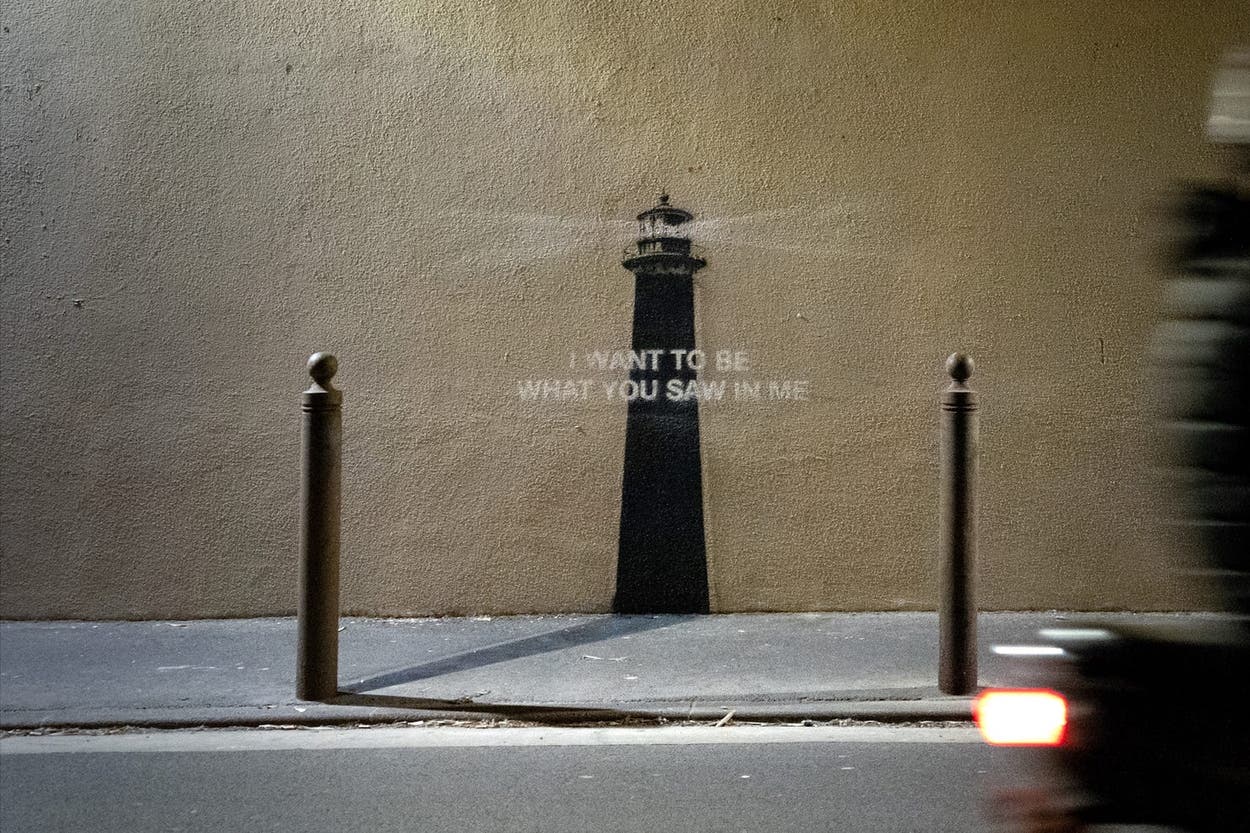
This isn't just another wall painted with an image; it's an intervention in the flow of urban perception. The mural's location, Rue Félix Frégier, beside a covered street, is carefully chosen for its obscurity and how that obscurity concentrates attention. It suggests Banksy is deliberately engaging with Marseille not as a political battleground but as a place where personal introspection can find public expression. This choice feels like a direct response to the increasingly performative nature of contemporary activism.
/https://tf-cmsv2-smithsonianmag-media.s3.amazonaws.com/filer_public/c4/aa/c4aae144-8636-4df8-b2f8-b97f26642316/gettyimages-2217056702.jpeg)
The Anatomy of the Lighthouse
The mural itself depicts a black lighthouse, stark against what was previously just another wall in Marseille. Banksy's trademark stencil technique is evident in every clean line and precisely rendered form. The lighthouse isn't about literal navigation; it's a symbol loaded with meanings, hope, guidance, isolation, even warning. It stands as an object of desire or perhaps aspiration, something to strive toward.
What's immediately striking is the text: 'I want to be what you saw in me'. Banksy rarely uses words in his work as Smithsonian Magazine notes, preferring to incorporate existing signage or graffiti. This inscription feels vulnerable, almost confessional, disrupting the established iconography of his previous works. The words disrupt any simple reading of the lighthouse as a singular, powerful symbol.
The Illusion of Light
The visual trickery at play is also significant; the lighthouse's beam appears to extend the shadow cast by a nearby streetlamp as Artshortlist reports. This trompe-l'œil effect creates an illusion of shared illumination, blurring the boundaries between constructed image and lived experience. It's a clever move, drawing attention to how perception itself is always mediated by external factors.
This manipulation reinforces the mural's thematic concerns about identity and projection. The light isn't solely emanating from the lighthouse; it's a composite, dependent on its surroundings. This complicates our understanding of both the artwork and the self, suggesting that who we are is shaped by what others see in us.
The Textual Resonance
The phrase 'I want to be what you saw in me' carries considerable weight, stirring speculation across the internet as Maddox Gallery observes. Some fans have linked it to lyrics from Lonestar's 'Softly,' which adds another layer of complexity. Regardless of its specific origin, the phrasing is inherently romantic and introspective, a stark contrast to Banksy's usual political fire.
The personal nature of this statement challenges the common perception of Banksy as a solely political artist. While his previous works frequently address issues like immigration as Smithsonian Magazine details and the war in Ukraine, this new mural seems to turn inward, exploring a different kind of human need.
/https://tf-cmsv2-smithsonianmag-media.s3.amazonaws.com/filer_public/d7/ab/d7abc978-9cef-4b55-831c-1a84bbf1101c/banksy_swinger_building_detail.jpg)
Vandalism and Restoration
The immediate vandalism of the artwork following its discovery is almost predictable. Graffiti often provokes reactions, both positive and negative, and Banksy's work is no exception. This act of defacement, however, only served to highlight the mural's significance.
The subsequent restoration by a local artist speaks volumes about Marseille's relationship with street art. It suggests a community that values artistic expression, even when it comes from an elusive and controversial figure like Banksy. The act of repair becomes part of the artwork's narrative, a testament to the ongoing dialogue between creator, audience, and environment.
Marseille and the Global Street Art Scene
The choice of Marseille is no accident; the city has been steadily gaining recognition as a hub for street art as Artshortlist reports. It's a place where urban decay meets creative energy, offering a fertile ground for artists seeking to challenge conventional norms.
Banksy's presence here contributes to Marseille's growing importance in the global street art landscape, elevating the city's profile and attracting attention from both local communities and international audiences. It speaks to a broader trend of cities embracing street art as a means of cultural revitalization and urban identity.
A Philosophical Departure
Art critics have noted that this work represents a departure according to Smithsonian Magazine from Banksy's usual political and social commentary. While his previous pieces frequently tackled weighty issues, the lighthouse mural appears more concerned with existential questions, the nature of identity, perception, and desire.
This shift suggests that Banksy is willing to explore different avenues of artistic expression, moving beyond simply reacting to current events. It's a reminder that even artists known for their political activism can engage with broader philosophical themes, prompting audiences to consider more nuanced perspectives on the human condition.


0 comments