

The story of "The Migrant Child" isn't about preserving art; it's about power dynamics. A mural meant to spark dialogue on displacement is now undergoing a complex restoration process, one that alters its original meaning and relationship with the city where it first appeared. This intervention feels less like an act of respect and more like an exercise in control: dictating which pieces endure and how they are remembered.
Reporting via uk.news.yahoo.com hypebeast.com.
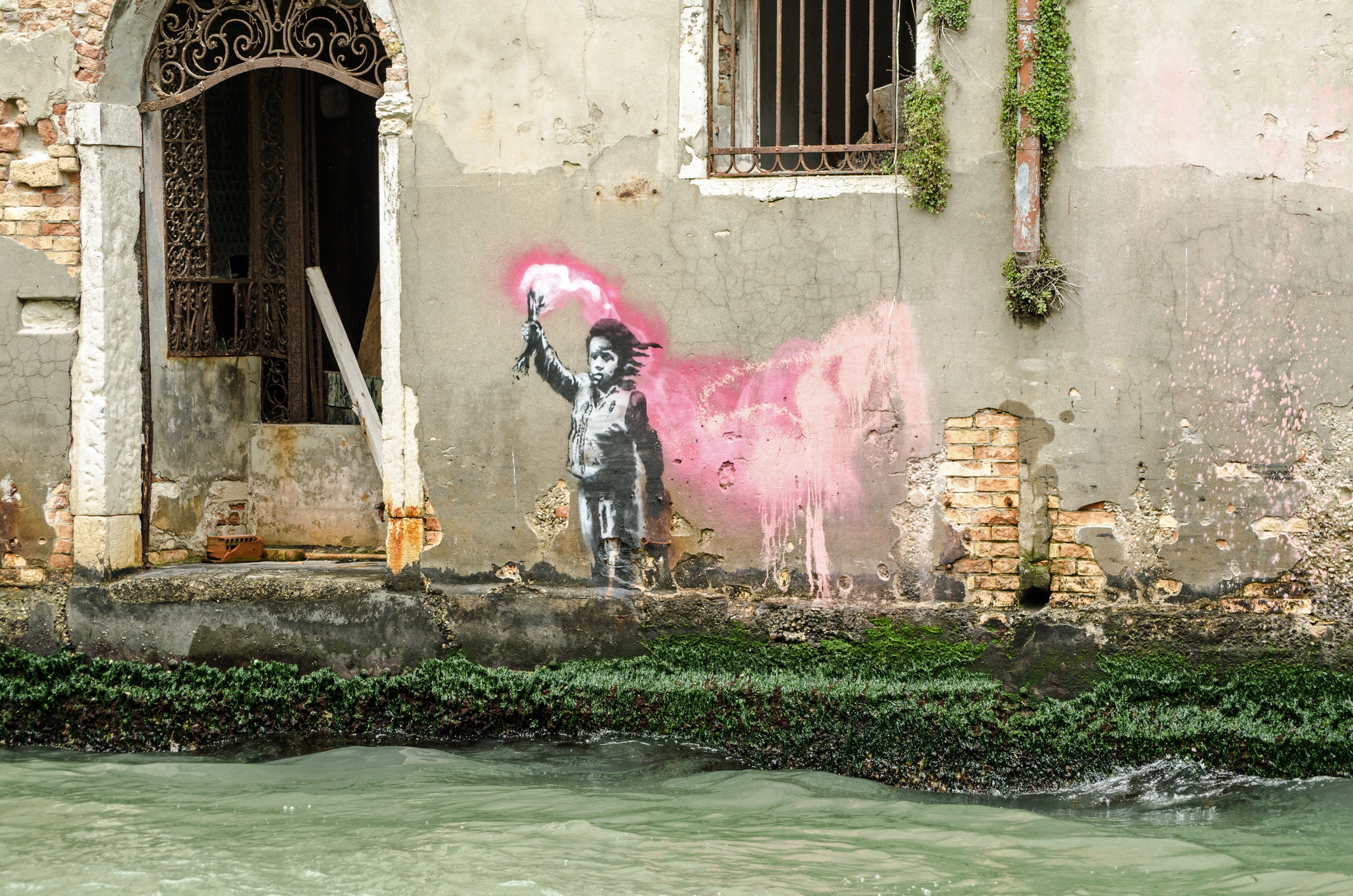
It's a familiar narrative in the world of street art. Often born from rebellion, these works are intended for fleeting existence but suddenly become worthy of preservation. This shift creates an uncomfortable tension between the artist's original intent and institutional stewardship, inevitably reshaping public perception. Banksy himself navigates this paradox: a provocateur who simultaneously cultivates value and awareness through his work.
The Work Itself: A Child in Crisis
Appearing along Rio di San Pantalon during the Venice Biennale 2019 art fair, "The Migrant Child" depicts a shipwrecked child clutching a pink smoke bomb while wearing a life jacket. This isn't a hopeful image; it's one of trauma and confusion, capturing the disorientation experienced by displaced children navigating conflict zones. The pink smoke bomb is a jarring detail, a playful element juxtaposed with the gravity of the situation, highlighting the absurdity of war and the loss of innocence.
Banksy's choice to use this imagery wasn't arbitrary; it was a pointed commentary on Europe's ongoing migrant crisis, an issue that continues to demand attention. The mural appeared at a moment of heightened political tension surrounding migration policies and border security, giving it immediate resonance within the Italian context. It aimed to interrupt the comfortable distance many feel from these events, forcing viewers to confront the human cost of policy decisions.
Consider this: street art's power lies in its unexpectedness, its ability to disrupt established spaces and challenge conventional viewpoints. Placing an image like this on a building overlooking a canal, alongside ornate palaces and gondolas, amplified that disruption, a stark reminder of the inequalities inherent in our world.
The Deterioration: Time's Relentless March
After six years exposed to Venetian weather conditions, about a third of "The Migrant Child" had deteriorated. This wasn't an unforeseen event; it was part of the artwork's projected lifespan. Street art is inherently fragile and susceptible to the elements, in stark contrast to oil paintings meticulously preserved in museums.
The deterioration itself tells a story: it speaks to the passage of time, the indifference of nature, and the inevitable decay that affects all things. This process underscores Banksy's own artistic philosophy: embracing ephemerality as an integral aspect of his practice. The impermanence is not a flaw; it's an essential element of the piece's meaning.
The decision to remove and restore involved Federico Borgogni, who previously cleaned and dusted the mural before undertaking its removal. This highlights the complex relationship between preservation efforts and respecting the original context, a building facade overlooking a canal in Venice is vastly different from a climate-controlled gallery.

Banksy's Statement: Jobs and Immigration
Following the mural's appearance, Banksy issued a statement that directly linked the migrant crisis to economic prosperity. He referenced Steve Jobs, highlighting his Syrian heritage and Apple's significant tax contributions as evidence of immigrants' potential benefits to society.
This is a calculated move: Banksy understands the power of economic arguments in shaping public opinion. By invoking a figure synonymous with innovation and wealth, he subtly challenges prevailing narratives about immigration being a burden on national resources. It's an argument cloaked in provocative imagery, a child holding a smoke bomb, making it undeniably compelling.
The statement simultaneously critiques xenophobia while acknowledging the complicated realities of global economics. This layered approach is characteristic of Banksy's work, forcing viewers to grapple with uncomfortable truths and question their own assumptions about migration and its impact on society.
The Restoration: A Contradiction in Terms
Removing a piece of street art from its original location fundamentally alters its context. That mural was an act of defiance, asserting presence within a space not typically allocated for artistic expression. Now, it becomes an object, a commodity to be curated and displayed at the whim of institutions.
The very act of restoration carries profound implications for street art's identity. Art critics have questioned whether this intervention undermines Banksy's original intent, transforming a politically charged piece into a sanitized artifact.
The irony is palpable: a work intended to challenge the status quo now becomes a tool for legitimizing it. This isn't necessarily malicious; it's an inevitable consequence of the art world's desire to preserve and capitalize on cultural phenomena, even those born from anti-establishment sentiment.

The Bureaucracy of Art: A Familiar Script
In Italy, as elsewhere, artistic preservation is frequently intertwined with bureaucratic maneuvering. The restoration of "The Migrant Child" follows a predictable pattern: funding is secured, political reputations are enhanced, and the artwork transitions from subversive act to cultural asset. This process often occurs without genuine engagement with the work's original message.
The audacity of it all, the willingness to sanitize an image intended for direct confrontation, highlights the inherent contradictions within the art world. Street art is meant to be disruptive, uncomfortable, and even challenging; attempting to control its narrative fundamentally diminishes its power.
This scenario isn't unique to Banksy's work; it's a recurring theme in the management of street art globally. The impulse to preserve often overshadows the original intent, transforming acts of rebellion into carefully managed spectacles and diverting resources from communities who may benefit most.
Beyond Preservation: What's Lost?
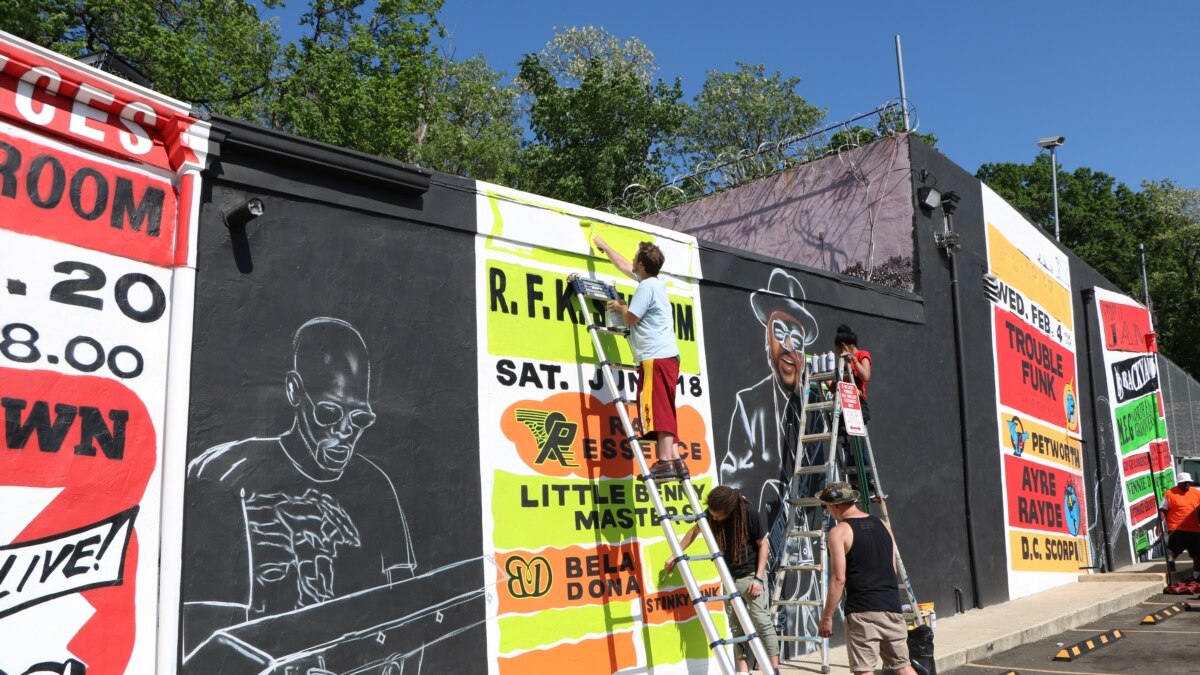
To cordon off a piece of street art, to place it behind plexiglass and under spotlights, is to miss the point entirely. The very essence of street art lies in its interaction with the public sphere, in unexpected encounters, spontaneous reactions, and the friction it generates within communities.
The original mural existed as a catalyst for dialogue, a visual provocation that challenged viewers to confront uncomfortable truths about migration and European politics. This function is severely compromised when the artwork is removed from its context and transformed into an object of display. It's a moment lost, a chance to engage with art in a raw and visceral way.
Ultimately, the restoration of "The Migrant Child" serves as a cautionary tale: while preservation may seem like an act of respect, it can inadvertently erase the very qualities that made the artwork significant in the first place. The question remains: what is truly being saved?


0 comments