

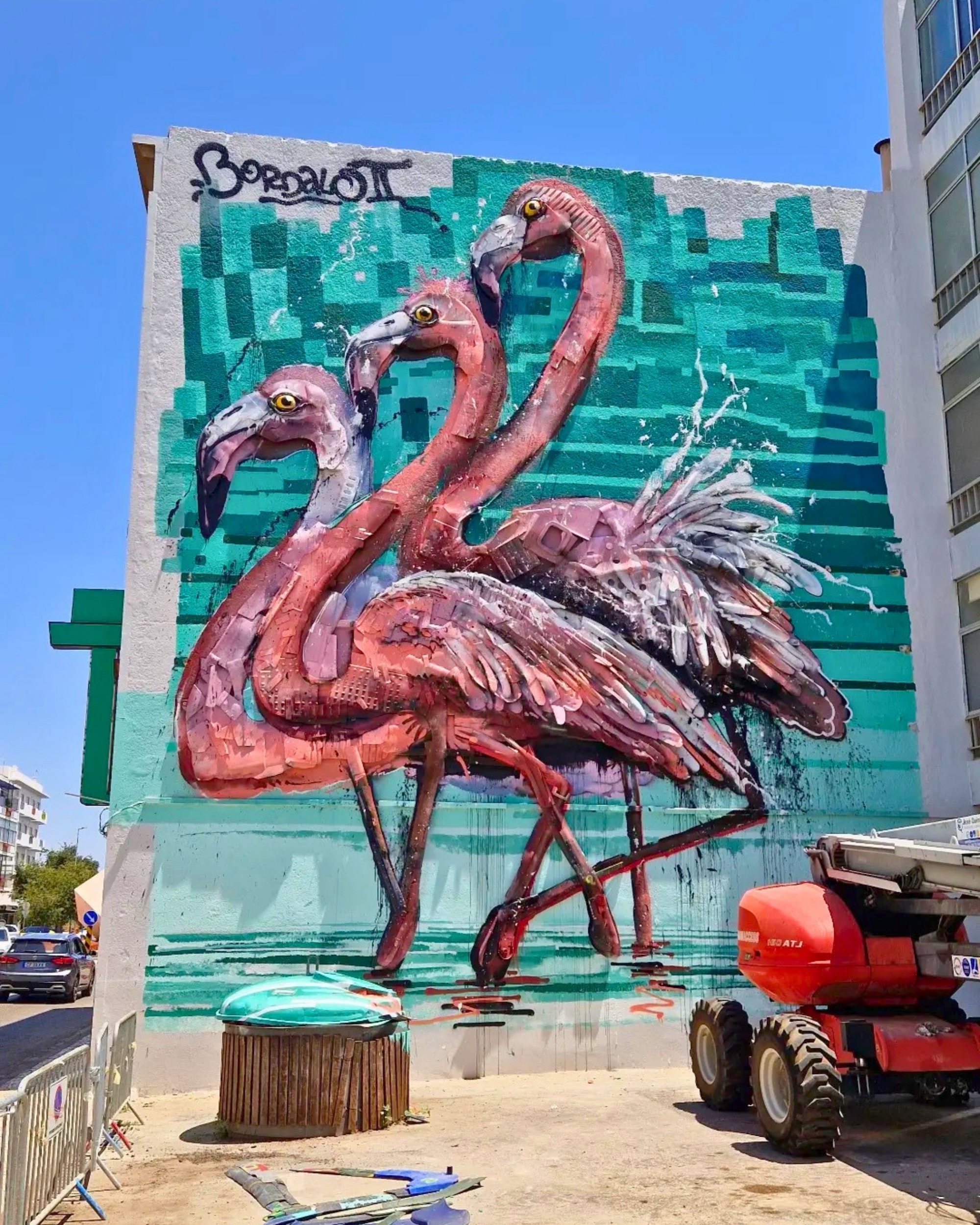
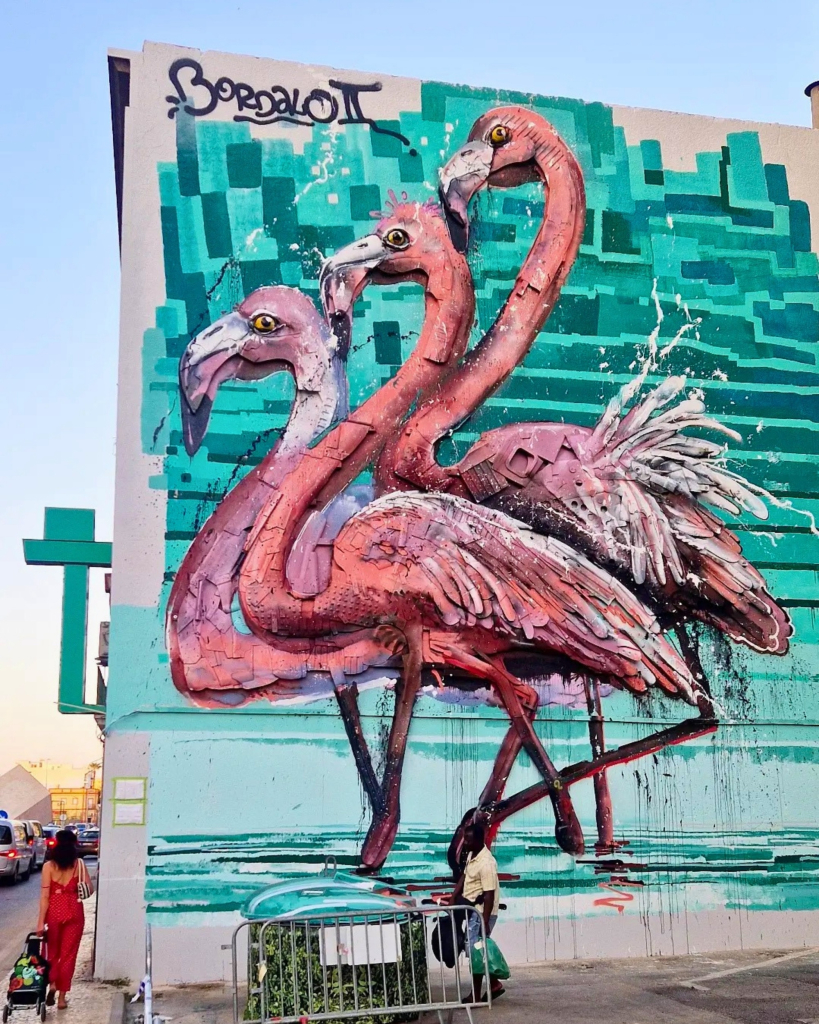
Massive wildlife sculptures crafted from refuse never fail to capture attention, and Bordalo II's latest creation in Olhão, Portugal, is no exception. The Portuguese artist has just unveiled two large-scale murals depicting flamingos, a species deeply intertwined with the region's identity.
Reporting via graffitistreet.com sulinformacao.pt.
These aren't painted images but three-dimensional sculptures meticulously assembled from discarded materials. One mural features a monumental group of adult flamingos dominating a wall, while another showcases a smaller, more playful baby flamingo. The placement and scale demand immediate attention, acting as instant landmarks in this coastal city and serving as an urgent reminder of the environmental pressures facing the Ria Formosa.
The Materials Tell a Story
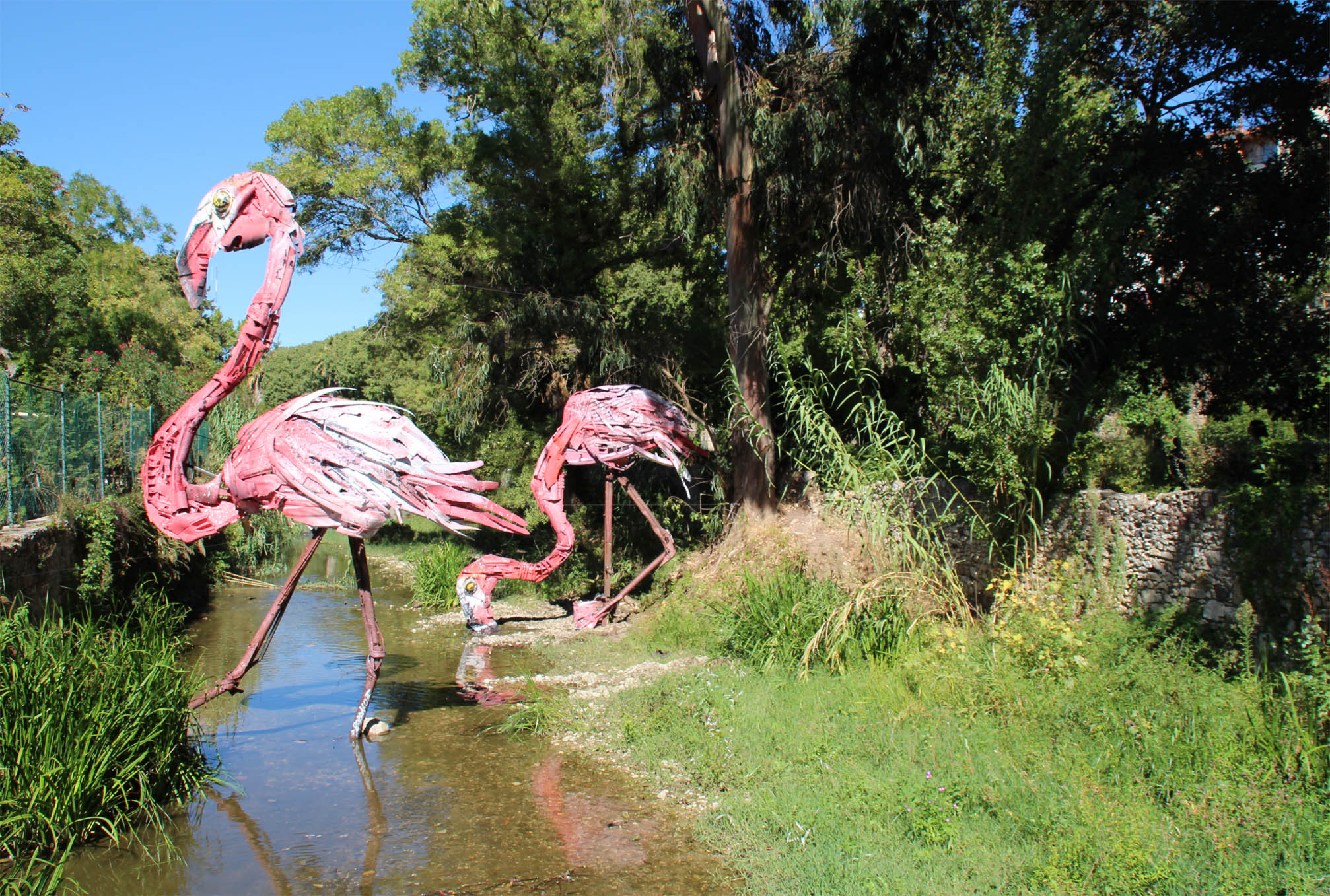
Bordalo II's technique is instantly recognizable: he builds his "Big Trash Animals" from recycled plastic, metal, bicycle parts, and abandoned objects. As he explains, his studio collects materials from diverse sources such as abandoned sites, businesses, and municipal holdings. Sometimes, they even purchase items specifically for the project. The choice of materials isn't just aesthetic; it's inherently political.
The visual connection between the artwork's components, the plastic waste, metal scraps, discarded bicycle pieces, and the animals they represent, creates a direct link to the issue of pollution and unsustainable consumption. This approach resonates within stencil culture, where artists frequently use readily available materials and techniques to create accessible interventions in public space.
Flamingos da Ria Formosa: A Regional Connection
The title "Flamingos da Ria Formosa" immediately grounds the work in its location. The Ria Formosa is a coastal lagoon system beside Olhão, an area of significant ecological importance. This isn't merely decorative art; it's a direct engagement with a specific place and its environmental challenges.
The flamingos are iconic symbols of the region, their presence marking the health of the lagoon. By crafting these monumental figures from discarded materials, Bordalo II draws attention to how human activity threatens the very environment that sustains them. This mirrors broader trends in street art where artists increasingly use their platform to highlight local ecological concerns.
A Return to Olhão's Artistic Roots
Bordalo II describes his return to Olhão as a homecoming of sorts, emphasizing the city's rich past in public expression. He notes that Olhão was a global hub for graffiti and street art for over three decades, largely thanks to the work of SEN.
This context is vital. Bordalo II's intervention isn't happening in isolation; it builds upon a legacy of artistic experimentation and public engagement. The contrast between the monumental scale of his sculptures and the often smaller-scale, more ephemeral nature of traditional graffiti creates an interesting dialogue within Olhão's existing street art scene.
Unexpected Origins: Avoiding SEN's Mural
The project's journey to fruition wasn't entirely straightforward. Initially intended for a building façade in the Bairro dos Índios district, the location shifted after Bordalo II discovered an existing mural by local artist SEN. This adjustment demonstrates respect for the established creative community and avoids overshadowing the work of other artists.
The eventual placement on Avenida D. João VI, near the Cubo roundabout, provides high visibility, ensuring a wide audience encounters the artwork. This strategic positioning is characteristic of many street art interventions that seek to maximize impact and reach. Commissioned as part of Olhão's bicentenary celebrations, the mural gains additional significance within the city's cultural landscape.
Municipal Support and Local Talent
The new mural was officially inaugurated by Mayor Ricardo Calé, who specifically highlighted Bordalo II's initiative to involve local artists in the project. This collaboration underscores a commitment to fostering artistic talent within the community.
The project was planned over a year ago and integrates into the Municipality's broader urban redevelopment strategy. This level of official support is increasingly common, as cities recognize the potential of street art to revitalize public spaces and engage residents.

A Call for Environmental Action
Beyond its aesthetic impact, the mural serves a critical function: it functions as a wake-up call regarding the future of the Ria Formosa. The lagoon is an internationally recognized natural park facing multiple environmental pressures.
Bordalo II's work isn't simply about highlighting pollution; it's about prompting action to protect this vital ecosystem. This aligns with a growing trend in street art that moves beyond mere commentary to actively advocate for social and environmental change, serving as powerful visual activism.
Long-Term Vision and Urban Renewal
The mural's integration into Olhão's urban redevelopment strategy signals a long-term commitment to public art. Its placement is purposeful, designed to contribute to the city's overall revitalization. It also speaks to how municipalities are increasingly recognizing the value of street art in attracting tourism and enhancing community pride.
The project's planned longevity, standing as a permanent fixture on Avenida D. João VI, reinforces its message and provides an ongoing reminder of the need for environmental stewardship. This serves as another example of how impactful street art can become when it is part of thoughtful urban planning.

0 comments