

Ilford isn't a place that usually grabs headlines, but something quietly significant is happening there. It's a story about how art can be more than decoration; it becomes a conversation starter, a symbol of community strength after hardship. The streets are changing, slowly but visibly.
Reporting via graffitistreet.com buenosairesstreetart.com.
This transformation started with a simple idea: to use art to reflect and uplift Ilford. Tom and Rieko Vining began a four-year project in collaboration with Redbridge Council, seeking to demonstrate the potential within their community through visual expression. It's easy for places like Ilford to get overlooked, but this initiative proves that even seemingly ordinary streets can become canvases for creativity. The result is already starting to reshape perceptions and build local pride.
Dotmaster's Playground of Resilience
On Kenneth More Road in Ilford, Dotmaster's 'End of the Line' stands as a striking example of this transformation. This piece directly responds to the anxieties surrounding the pandemic, specifically those represented by data graphs demonstrating case spikes. The sharp red line, a visual shorthand for crisis and fear, is cleverly reimagined as something entirely different: a playground. Two children, Max and Louie, are depicted enjoying this newly transformed space.
Dotmaster's style consistently blends humor with social commentary, and 'End of the Line' exemplifies that approach. He has been active since the early 1990s, accumulating international recognition for his work. The ability to take a symbol of global crisis, the relentless upward tick of infection rates, and transmute it into an image of playful innocence is testament to Dotmaster's skill as both an artist and observer.
Ben Eine's Enduring Message
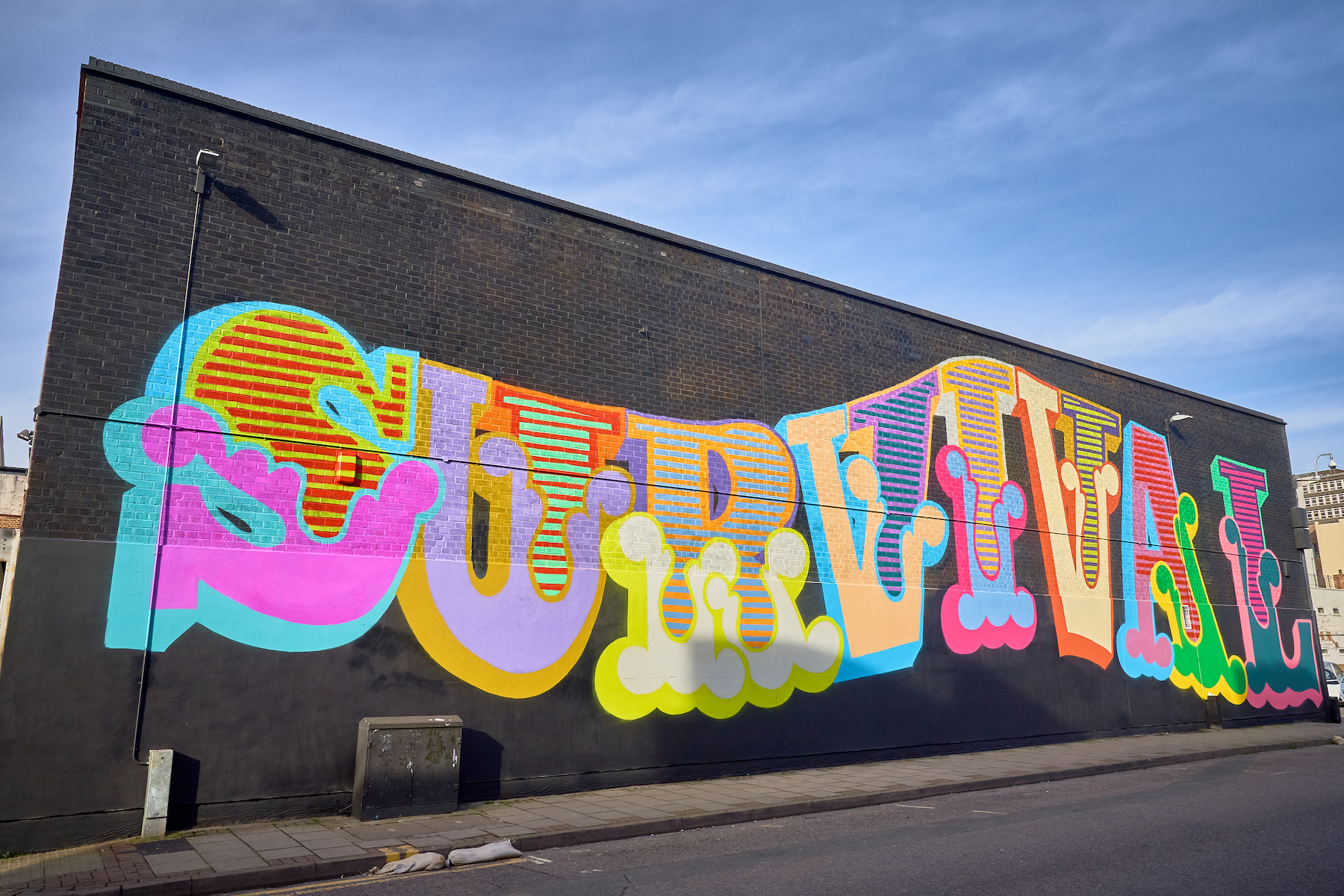
Nearby, Ben Eine's 'Survival' offers a different perspective on the challenges faced during this period. The piece speaks directly to the need for perseverance and resilience in the face of adversity. Ben Eine is one of the most recognizable figures in street art; over 30 years he has redefined graffiti typography, leaving his mark across London and beyond.
His contribution to Ilford's artistic revival underscores a broader trend within street art: using public space not just for aesthetic expression, but as a means of communication and solidarity. In Buenos Aires, during the lengthy lockdown that began in March 2020, graffiti similarly served as an outlet for frustration. Messages such as "Fuck Covid" appeared frequently on walls across neighborhoods, reflecting a collective weariness with restrictions.

The Economic and Social Impact
The pandemic's impact extended far beyond health concerns. Government lockdown measures devastated the economy in Argentina, causing small businesses to struggle and schools to remain closed for over a year according to reports. This widespread disruption fueled feelings of anxiety and resentment, which were often expressed through spontaneous acts of graffiti.
In Ilford, the project's timing coincides with a period of considerable social and economic strain. The ability for art to provide solace and foster community spirit in such circumstances is significant. It provides a visual representation that residents can connect to, something tangible amidst uncertainty. The murals represent more than just pretty pictures; they are symbols of hope.
Global Echoes: Buenos Aires' Response
The artistic responses to the pandemic weren't limited to Ilford or London. In Argentina, local governments commissioned murals honoring healthcare workers and public health staff demonstrating a desire to acknowledge the sacrifices made during that difficult time. Similarly, stencil artists like Lucas created works reflecting public sentiment, including one depicting a cherub firing a syringe at a love heart.
While some in Argentina questioned vaccine mandates and expressed skepticism about the pandemic's severity as evidenced by graffiti, the overall trend was towards a need for collective healing and recognition of those who served on the front lines.
Dotmaster's Artistic Journey
Dotmaster's involvement in this Ilford project highlights his established position within the street art world. Known for his unique blend of humor and critique, he brings a level of sophistication to public space. His longevity - active since the early 1990s - allows him to offer perspective on shifts within the scene.
The ability to evolve an artistic practice over decades requires both technical skill and an understanding of cultural currents. Dotmaster's work resonates because it speaks to shared experiences, whether those are anxieties about global health crises or simply the joys of childhood play. His presence in Ilford elevates the entire project.
Ben Eine's Legacy
Ben Eine's contribution is equally significant. His typography-driven approach has redefined graffiti lettering and earned him international recognition. He's not just creating images; he's crafting a visual language that communicates directly to viewers.
The impact of artists like Ben Eine extends beyond individual pieces; they shape the overall aesthetic of urban environments. His style is instantly recognizable, and his presence in Ilford adds another layer to the community's cultural identity. This project signals a commitment to fostering artistic expression within diverse communities.
A New Chapter for Ilford
The collaboration between Tom and Rieko Vining, Redbridge Council, Dotmaster, and Ben Eine marks more than just a series of murals; it represents a turning point for Ilford. The project proves that art can reshape not just walls but perceptions, transforming everyday streets into spaces of creativity, resilience, and pride.
This initiative offers a model for other communities seeking to revitalize their public spaces through artistic expression. It demonstrates the power of collaboration, the importance of recognizing local talent, and the potential for art to foster a stronger sense of community identity within Ilford.
0 comments