

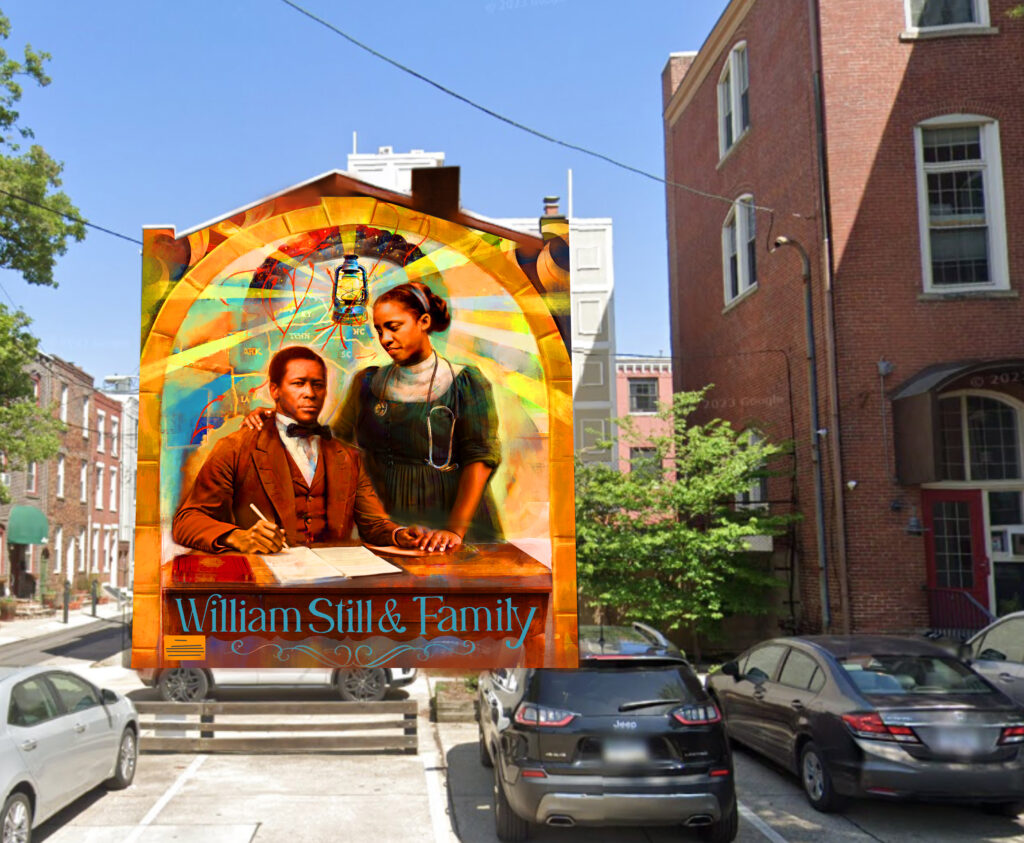
A new mural in South Philadelphia quietly announces itself, not with fanfare but a slow reveal of history. It's the kind of thing that settles into a neighborhood, a quiet landmark. The work centers on William Still and his daughter, Dr. Caroline V. Still Anderson, figures far too many Philadelphians don't know.
Reporting via muralarts.org phillytrib.com.
This isn't simply a portrait; it's a recognition of an essential lineage. It acknowledges the role of one man's home, 625 South Delhi Street, as a vital node in the Underground Railroad. The mural underscores how personal action, Still's meticulous record-keeping and quiet bravery, became instrumental in liberation for hundreds of individuals.
A Family Forged Through Flight
William Still's early life is inextricably tied to escape. Born in Burlington County, New Jersey, he was the child of Levin Steel and Sidney Steel, who themselves were formerly enslaved people. They fled slavery with their children and found safety in Pennsylvania. This experience shaped William's understanding of freedom's fragility and the importance of aiding those seeking it, a direct inheritance passed down to him.
His narrative becomes a powerful counterpoint to romanticized notions of heroism; it's about quiet, persistent work. The fact that his mother kept meticulous records while escaping speaks volumes about the importance placed on documentation and family preservation within this struggle for liberation. This legacy influenced Still's later role as a chronicler of freedom seekers, he understood first hand why accurate accounts are so vital.
The Home as Way Station
From 1850 to 1855, the house at 625 South Delhi Street served not just as a residence for William Still and his family but as an active "way station" on the Underground Railroad. It was a pivotal point in a network that stretched across states and relied on the courage of countless individuals. The building itself wasn't marked or advertised, its safety depended on secrecy.
The mural's location is significant, situating this story directly within its geographic context. This isn't about an abstract concept of freedom; it's about a specific place and the tangible actions that occurred there. It speaks to the idea of ordinary homes acting as places of extraordinary resistance.
Still's Legacy: The Underground Railroad
The mural itself explicitly references William Still's book, The Underground Railroad (1872). This work documented the stories of over 800 freedom-seekers who passed through his Office of the Vigilance Committee. Its presence at the Philadelphia Centennial Expo in 1876, as detailed in recent reporting, demonstrates the book's immediate impact and its enduring importance to understanding this era.
Still's insistence on recording names and details was revolutionary, giving voice to those who were systematically denied it. The mural shows William Still at a desk with pen and book, symbolizing his commitment to preserving these narratives, a task that became an act of defiance against systems designed to erase their existence.
Caroline: A Physician's Presence
The inclusion of Dr. Caroline V. Still Anderson is crucial; she was the first African American licensed physician in Philadelphia, and her presence acknowledges a continuum of achievement. The mural depicts her standing beside her father with a stethoscope around her neck, a modern symbol contrasting with the historical context.
Her attire - a white physician's coat - intentionally connects the past to the present, signifying continuity across generations. She represents not only a personal triumph but also the continued fight for access and equity within professional fields. It suggests that liberation is not a singular event; it's an ongoing process requiring constant vigilance.
Legacy Reclaimed: Remembering the 7th Ward
The mural is part of a larger initiative called Legacy Reclaimed, a tribute to the rich Black history of Philadelphia's 7th Ward. This places Still and his work within a broader context of community resilience and cultural preservation. The ward's historical significance isn't always highlighted, so this project provides an important correction.
This mural is more than just art; it's part of a concerted effort to reclaim forgotten narratives. It underscores the importance of remembering those who built Philadelphia, even when their contributions have been marginalized or overlooked. The visual representation helps cement these stories within the physical landscape of the city for future generations.
A Quiet Monument
The unveiling at 625 S. Delhi Street, as reported recently, was a community event, reaffirming the mural's purpose as a local landmark. It doesn't scream for attention but offers itself to those who seek it, a quiet monument to courage and perseverance.
The absence of other family members in the mural underscores a deliberate choice; their contributions were vital despite limited visual documentation. The narrative remains incomplete, emphasizing that this is just one piece of a larger story, one that requires further exploration and remembrance. It's an invitation to learn more about William Still, his daughter Caroline, and all those who risked everything for freedom.


0 comments