

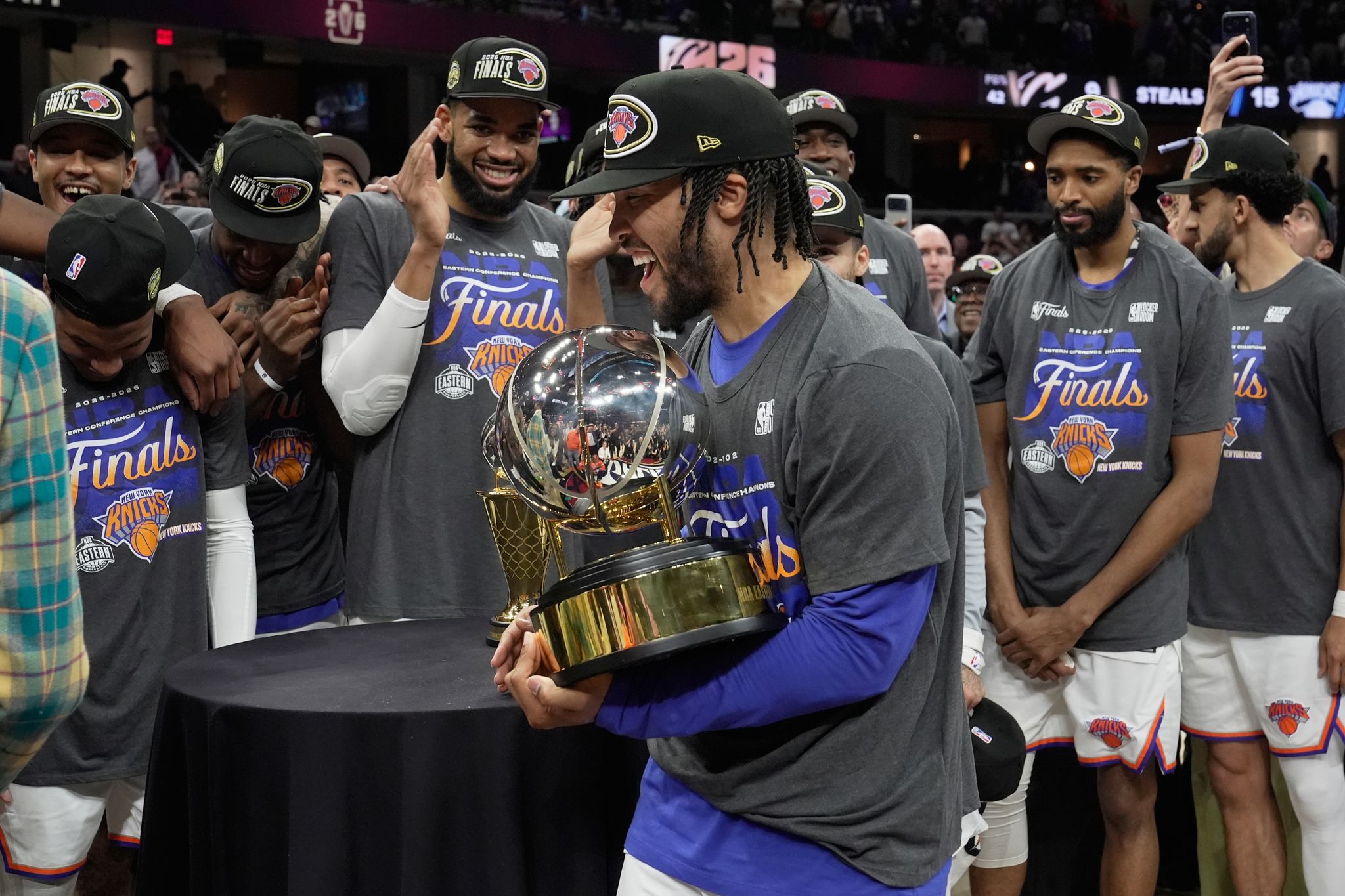
A New York City subway car turned up drenched in orange and blue paint the morning of the Knicks' championship parade, and nobody at the MTA has explained how someone got to it.
The train nobody could miss
Transit workers found the tagged train in a layup area just north of the Q line's 96th Street terminal, underneath Second Avenue, at 4:41 a.m. on the Wednesday of the parade, according to The City Reporter. Every car on the train read "KNICKS" in letters several feet tall, painted in the team's orange and blue. One end carried a single word in gold: "BRUNSON."
The MTA pulled the train before the morning rush and hauled it to Coney Island Yard for cleaning. It did not disappear quietly. Riders on the Q line that morning caught it rolling through Brooklyn past the Coney Island-Stillwell station, phones out, according to a report from Yahoo News. A New York Police Department spokesperson confirmed the Citywide Vandals Task Force is investigating. Nobody has been charged.
A trophy, a parade, and a name in gold
The Knicks had just won the franchise's first championship in more than 50 years, and Jalen Brunson took home Finals MVP. The city ran its championship parade down lower Broadway that same afternoon, temporarily renaming stretches of Manhattan streets after individual players for the day, according to amNewYork. Fans lining the route were already trading photos of the graffiti train before it ever reached a passenger platform. For a few hours, an unauthorized paint job was the closest thing the city had to an official float.
Sports-driven vandalism in New York usually runs the other direction: fans deface rival gear, or a bad season ends with someone's car keyed. A celebratory whole-car piece, built with enough lead time to spell out a nine-letter word and a surname in three colors, is rarer. It reads closer to the tribute pieces writers used to paint after a death in the community than anything tied to a box score.
New York taught the world to paint whole trains
Covering an entire subway car is not a new trick in this city. Through the 1970s and 1980s, writers took over whole trains floor to ceiling, turning the city's lines into a moving gallery system, a period covered at length in the Wikipedia history of graffiti in New York City. The city spent most of the 1980s fighting back with what officials called the Clean Car Program, holding every tagged train out of service until none were left running by 1989. The policy worked. Whole-car pieces on active trains have been rare ever since, which is part of why this one made news at all.
They have not vanished completely. New R211 cars, the newest in the MTA's fleet, were hit at the same Coney Island yard earlier this year: one car marked "GLOVE" in bubble letters, another tagged "MUL," believed to stand for a Chicago-based crew, according to Gothamist. Getting into a working railyard undetected, painting an entire train, and getting back out takes planning that has nothing to do with the paint itself. It is the same logistical dare that defined the golden era of subway writing, just with more cameras in the way now.

The paint always comes off
None of that history buys the Knicks train any protection. It got scrubbed down at the yard like every other tagged car before it, championship or not. The MTA does not carve out exceptions for civic pride, and the Vandals Task Force does not care whether the message was a slur or a scoreline.
Whoever climbed into that layup track with cans of orange, blue, and gold knew exactly how long the work would last: about a day, maybe less. That is the trade every subway writer since the 1970s has made, chasing a piece meant to be seen once, hard, before the system erases it. This crew just picked the one morning in fifty years when half of Brooklyn was already looking up.

Related reading from TasteBueno
- A Teenage Messenger's Ballpoint Tag Made the New York Times in 1971. Every Tag on Earth Still Owes Him Rent.
- A Milwaukee Mural Took 250 Hours to Paint. It Took One Night to Deface After Giannis Left for Miami.
- Someone Spray-Painted Slurs Inside a $2.1 Billion Stadium. The Bills Are Paying $100,000 to Find Out Who.

0 comments