

A man spent eight years trying to copyright a picture his computer made. He lost.

On March 2, 2026, the US Supreme Court declined to hear Stephen Thaler's appeal. No argument, no opinion, just a one-line denial of certiorari in Thaler v. Perlmutter. That refusal did more than end one man's lawsuit. It locked in the rule for everyone who makes images with a machine, and the rule is short. If a person did not make it, you do not own it.
That sounds simple. It is not simple at all, and the gap between "I generated it" and "I own it" is about to cost a lot of people money. Here is what the court actually left standing, and why it matters more to anyone holding a spray can than to anyone holding a subscription to an image generator.
What Thaler was actually asking for
Thaler is a computer scientist. He built a system he calls DABUS and used it to produce a piece of visual art titled "A Recent Entrance to Paradise," train tracks running through an archway in an overgrown forest washed in green and purple. He filed for copyright in 2018 and did one thing most applicants would never do. He told the truth on the form. He listed the AI as the author and said there was no human involved.
The Copyright Office said no. A federal district judge said no, because the work had no human creator. In 2025 a three-judge D.C. Circuit panel said no again, ruling that the Copyright Act reserves the word "author" for a human being. Thaler took it to the top. The Supreme Court would not even look. Five rejections across eight years, and the answer never changed.
So the picture exists. Anyone can copy it, print it, sell it, and Thaler cannot stop them. A thing with no human author is a thing nobody owns. That is the part the AI crowd has not fully sat with yet.
The line the court drew is the human hand

The ruling did not ban AI art. It drew a line through it. On one side is output with no human behind the expressive choices, which gets nothing. On the other side is work where a person controlled what it looks like, which can still be protected.
The Copyright Office spelled out where that line sits in its 2025 guidance. Type a prompt, even a long and clever one, and pick the result you like best? Not enough. The selection of a prompt is not an act of authorship. But take an image a person actually drew, or cut, or painted, and the protection holds for the human expression in it. The test is control over the expressive elements, not effort, not cleverness, not how many tokens you spent.
Read that twice if you make things for a living. The law just told you exactly which side of the line keeps its value, and it is the side where a person did the work.
This is good news for street art, not bad

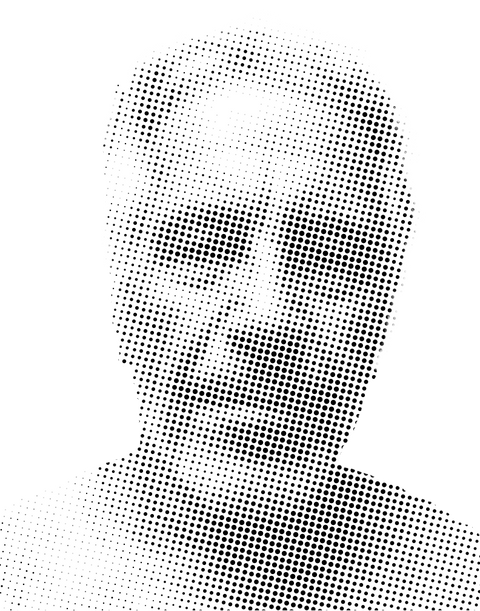
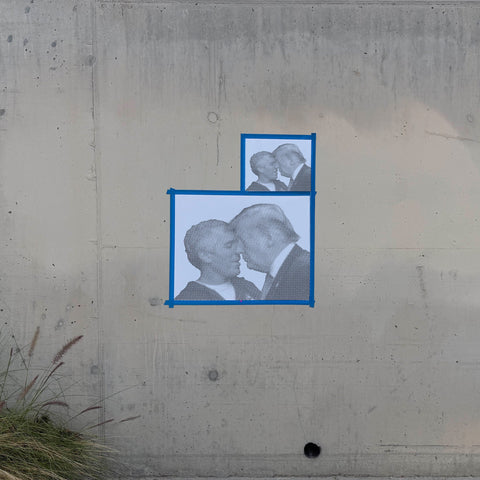
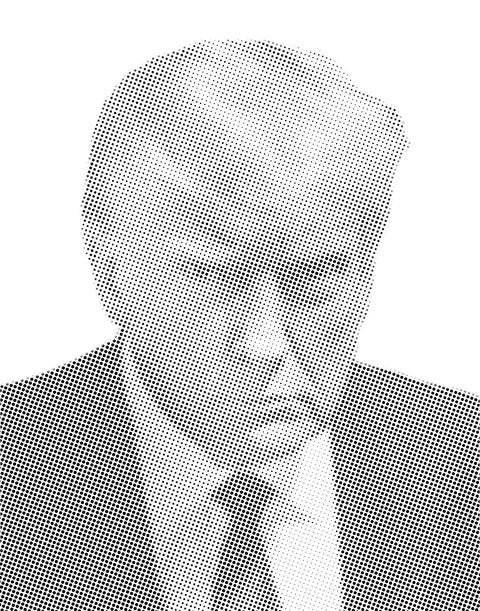
A hand-cut stencil is the opposite of the thing the court threw out. You pick the photo. You set the threshold and decide which shadows become bridges and which become holes. You cut it. You line it up, spray it, and peel it back to paint bleeding and overspray. Every one of those is a human decision about how the thing looks. That is authorship, the exact kind the court said still counts.
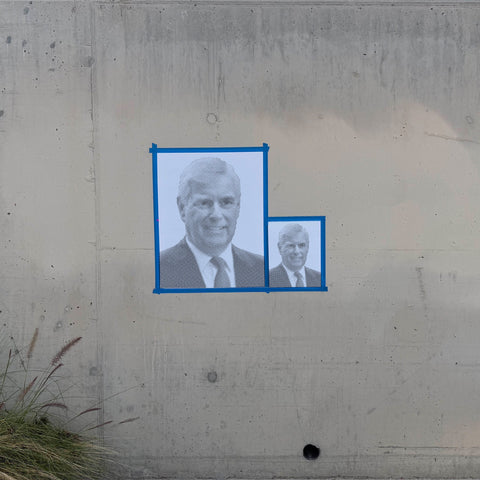
The artist who sprays a portrait on a wall has something Thaler will never have. Not because the wall piece is better art, but because a person made the choices that decide what it is. The pure AI output sits in the public domain on arrival. The hand-made piece does not. For years the worry was that machines would flood the market and make human work worthless. The court just said the opposite about ownership. The human hand is now the thing that holds the rights.
That is the second reason this case matters, and it is the one almost nobody is writing about. The first was about who loses. This one is about who is protected, and it turns out to be the people who never stopped doing it by hand.
Where this leaves you

The practical version is blunt. If your whole image came out of a prompt box and you touched nothing, you cannot register it and you cannot defend it. If a person made the real choices about how it looks, you can. The court did not punish using tools. It punished handing the tool the entire job.
This is why the way you turn a photo into a stencil matters beyond how it looks on the wall. You can do it by hand in Photoshop, choosing every threshold and bridge yourself. You can run our free Stencilizer plugin to speed up the conversion while you still make the calls. Or you can use the Custom Stencilizer, send us a photo, and get a laser-cut stencil shipped, with a person dialing in the cut. All three keep a human in the loop where the law now says the human has to be.
Thaler spent eight years arguing a machine could be an author. He lost at every level, and the last door closed in March. The artists cutting stencils in a kitchen at midnight already had the thing he was chasing. They had a person making the work. Next we will get into how the Copyright Office actually treats a stencil pulled from a photo, and where the line falls when AI does part of the conversion, because that is the question every maker is about to be asking.
0 comments