

Christie's held its first all-AI art auction. Six thousand artists signed a letter demanding they cancel it. Microsoft shipped a racing game with AI-generated graffiti in the backgrounds. Gamers caught it in 48 hours. And somewhere in a rail yard at 3 AM, a writer with a fat cap and a headlamp is doing something that no prompt can generate.
The collision between AI image generation and street art culture is happening fast, and nobody — artists, collectors, developers, or the writers bombing trains — quite knows what to make of it yet. Here's what's actually going on.

Christie's "Augmented Intelligence": The Auction That Split the Art World
On February 20, 2025, Christie's launched "Augmented Intelligence," a selling exhibition of 34 artworks created using artificial intelligence tools. The house framed it as a milestone — the first major auction dedicated entirely to AI-generated and AI-assisted art.
Over 6,200 people — artists, academics, cultural workers — signed an open letter demanding Christie's cancel the sale. The core argument: the AI models that generated these images were trained on copyrighted artworks scraped from the internet without consent. The machines learned to paint by consuming the work of real painters. Christie's was selling the output as fine art.
On the other side, supporters argued that AI is just another tool — like photography was, like Photoshop was, like every new medium that the art establishment initially rejected. The artists using AI said their creative decisions — the prompting, the curation, the editing — constituted authorship. Christie's proceeded. Some pieces sold. The legal questions remain unresolved.
Karla Ortiz, a concept artist and plaintiff in one of the major copyright infringement lawsuits against AI companies, became a face of the protest. Artist and researcher Reid Southen estimated roughly a third of the works used models trained on copyrighted material without consent. But even Southen acknowledged that the conversation is more complex than "AI bad" — the question is about consent, compensation, and credit, not whether the technology itself has value.
Forza Horizon 6: When AI Fills the Background
Then came the gaming industry, stumbling into the same conversation from a completely different direction.
When Forza Horizon 6 launched on May 19, 2026, players spotted something off about the in-game graffiti. The colors were oversaturated. The letterforms had that uncanny smoothness that AI image generators produce — confident from a distance, nonsensical up close. Details like gears and mechanical elements were malformed in ways consistent with known AI artifacts.
The accusation: Microsoft's Playground Games studio had used AI generators to fill background walls instead of hiring human artists or licensing real graffiti work. Microsoft, which has invested billions in OpenAI, has neither confirmed nor denied AI use in the game's environmental art.
The reaction was split. Some players didn't care — it's background texture in a racing game. Others saw it as a sign of things to come: real artists getting replaced by generators for anything the studio considers "low priority." The graffiti community pointed out the irony — a culture built on individual style being simulated by machines for corporate entertainment — but also acknowledged that game studios have been using procedural generation for environmental art for years. The line between "tool" and "replacement" keeps moving.
What AI Can and Can't Do With Graffiti
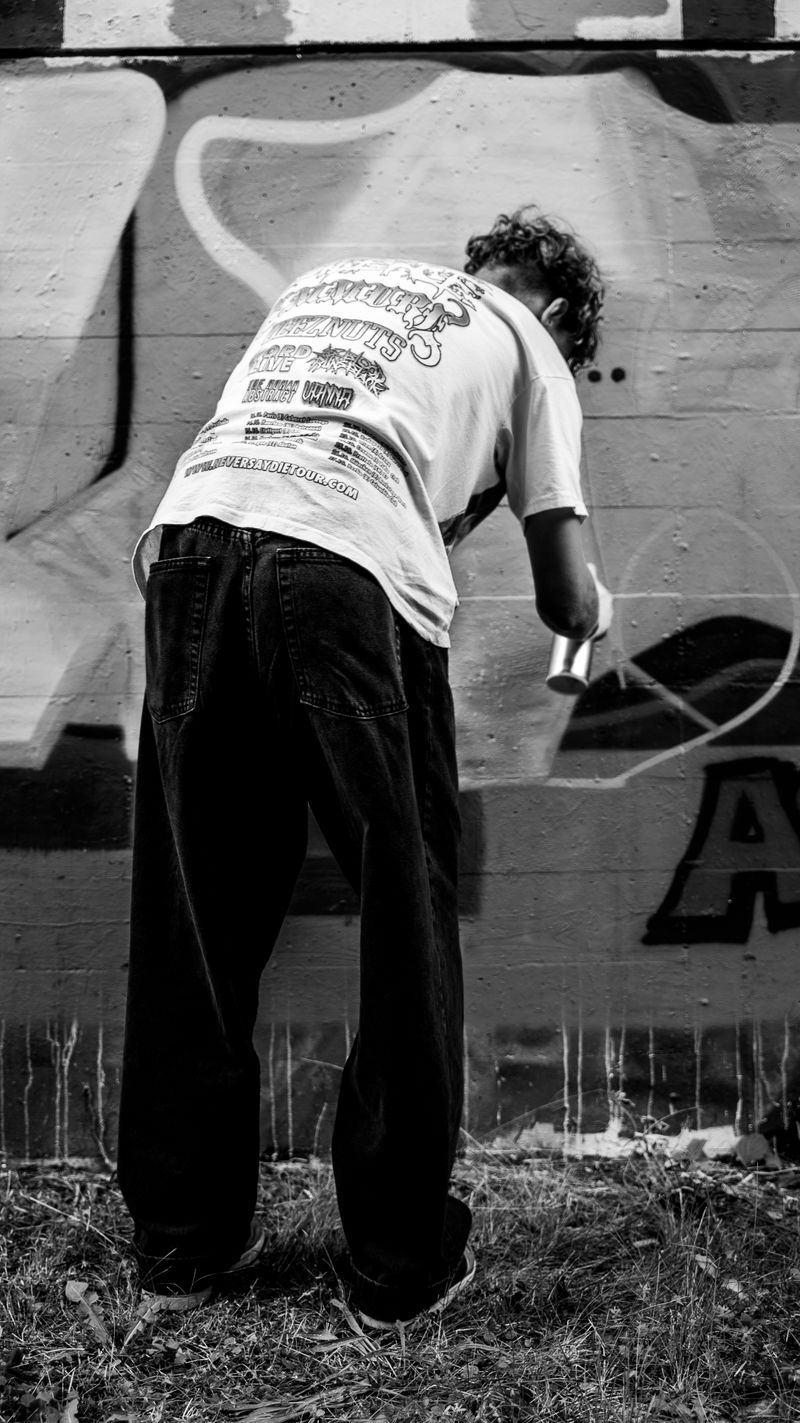
Technically, AI image generators are reasonably good at producing simple, straight-letter graffiti. Block letters, basic fills, clean outlines — the kind of thing that works as background filler in a video game or a stock photo library.
Wildstyle is a different story. The interlocking arrows, the dimensional extensions, the deliberate distortions that took decades of cultural evolution to develop — current AI models produce gibberish when they attempt it. The letters don't connect logically. The arrows point nowhere. The three-dimensionality collapses. Feed a model "wildstyle graffiti" and you get something that sort of looks like graffiti from twenty feet away but falls apart on inspection.
The reason is interesting rather than damning: graffiti style is deeply personal and culturally coded. A writer's hand style develops through years of practice, influenced by their local scene, their crew, the writers they study. AI models recognize aggregate patterns but can't replicate the individual voice that makes a piece readable to someone inside the culture. That's a limitation, not necessarily a permanent one. Models get better. Whether they'll ever capture the cultural context — the why behind the letterforms — is the open question.
Stencil Art: Already a Digital-Physical Hybrid
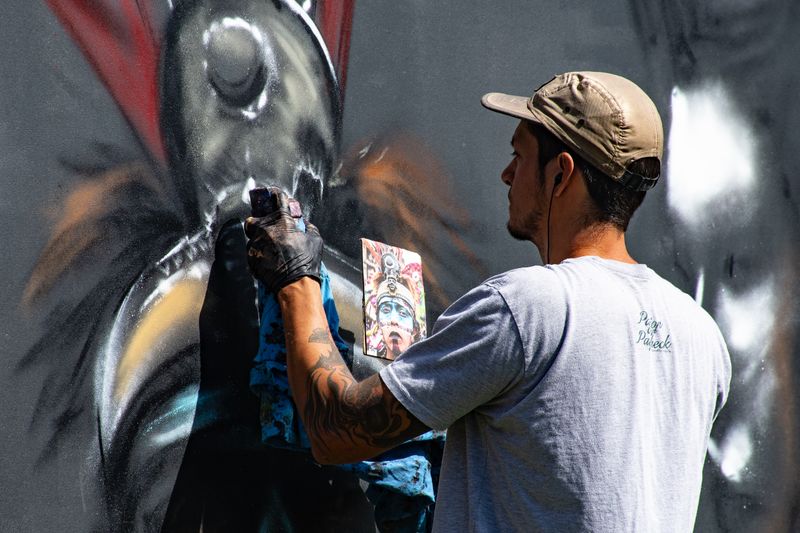
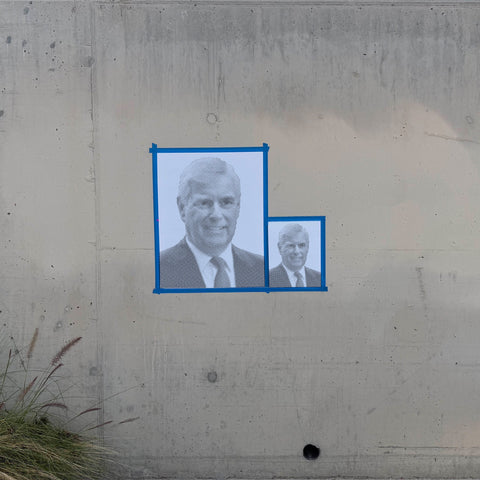
Stencil artists have an interesting position in this conversation because the stencil process is already hybrid. You design in Photoshop, maybe cut on a laser, but the spray application is pure human craft — the distance from the wall, the angle of the can, the pressure, the conditions. The digital and physical are already intertwined.
AI could plausibly generate source images or suggest compositions for stencil work. Some artists are already experimenting with this. The question isn't whether AI touches the workflow — it's whether the final output still requires human judgment and physical execution to mean something. Right now, it does. A cut-ready stencil file still needs someone who understands bridge structure, dot spacing, paint spread on the target surface. These are craft decisions informed by physical experience.
Tools like the Stencilizer plugin for Photoshop sit in this space — they automate the conversion from photo to stencil pattern, but the output is engineered for real-world cutting and spraying, not just visual approximation. The difference between "looks like a stencil on screen" and "works when you cut and spray it" is still a gap that requires understanding of the physical process.
The Conversation Nobody's Settled
The honest answer is that nobody has figured this out yet. The art world is arguing about it. The legal system is arguing about it. The graffiti community is mostly ignoring it because they're busy painting.
Some things seem clear: AI image generation is a tool, and like every tool, it can be used well or badly. Using it to replace artists without credit or compensation is a labor issue, not an art issue. Using it as part of a creative workflow — the way Photoshop filters, projectors, and stencils themselves are tools — is something artists have always done. The question is consent and credit, not whether the technology exists.
What also seems clear: the physical act of putting paint on a surface in the real world isn't going anywhere. No prompt generates the adrenaline of a 3 AM mission. No model replicates what it feels like to peel a stencil and see the image appear on concrete. The output might look similar on a screen. The experience of making it is completely different.
Street art has always been about presence — being somewhere, marking something, taking a risk. AI can generate an image that references that. It can't do it. Whether that distinction matters to collectors, curators, gamers, and audiences is the conversation that's just getting started.
We're watching it unfold. Everyone else should be too.
Sources
- NPR — "Christie's AI Art Auction Inspires Protests and More Art"
- NBC News — "Christie's AI Art Auction Draws Big-Money Bids and Thousands of Protest Signatures"
- Smithsonian Magazine — "6,200+ Artists Sign Open Letter Protesting Christie's AI Auction"
- Tech4Gamers — "Forza Horizon 6 Already Accused of Using AI-Generated Art"
- The Artist Block — "Graffiti vs AI: Will Technology Erase Street Art?"

0 comments