

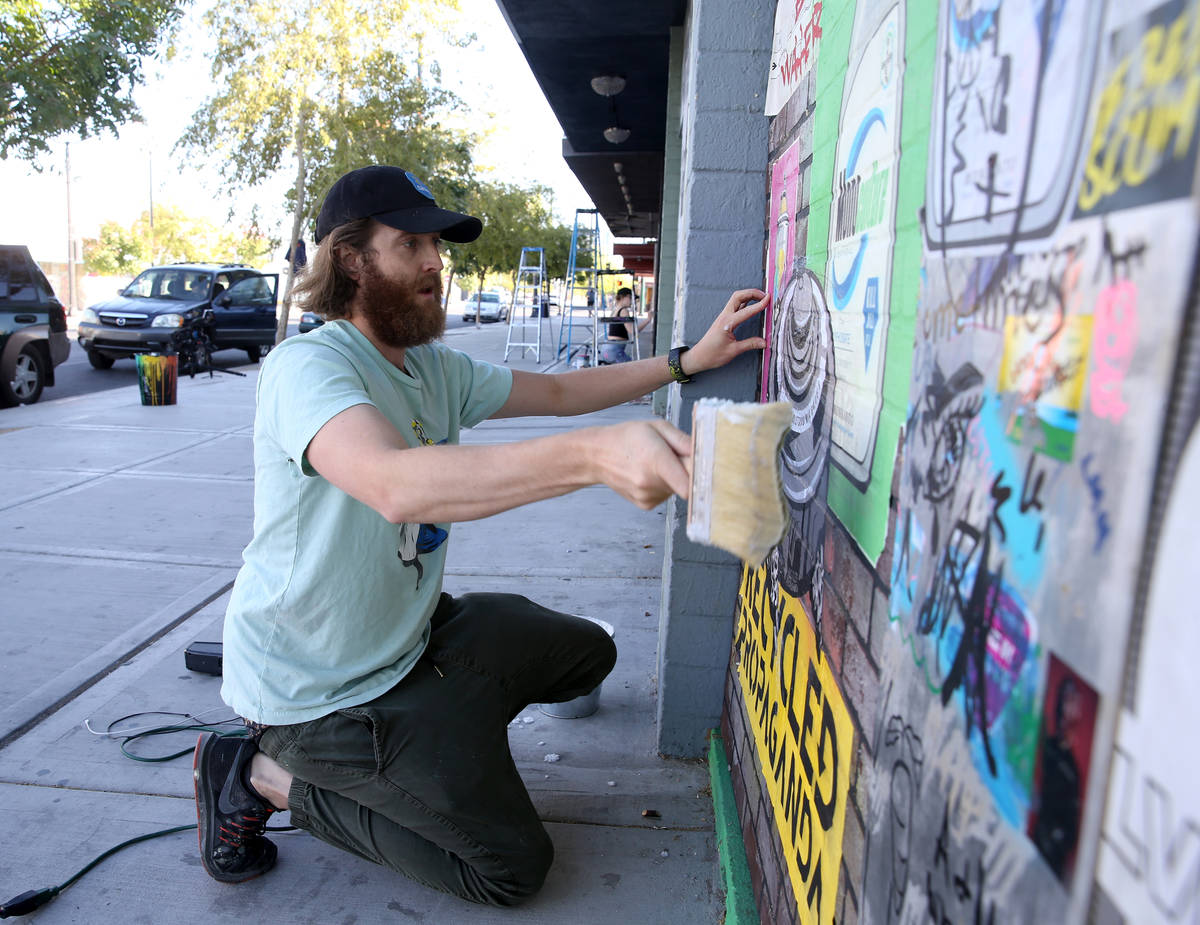
Every First Friday, a street artist sets up on Main Street in downtown Las Vegas and paints live in front of a crowd. Most of the crowd has no idea his work started on a computer screen, not a spray can.
question everything, one cut at a time
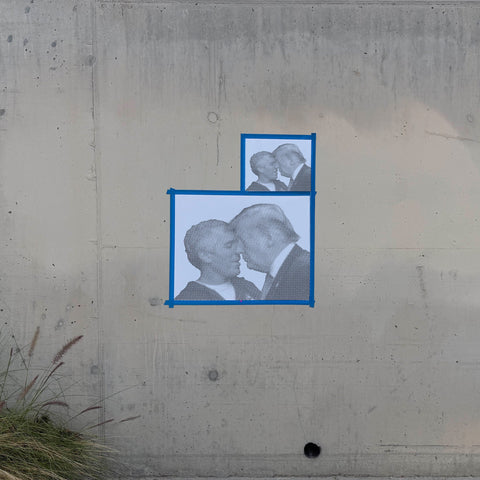
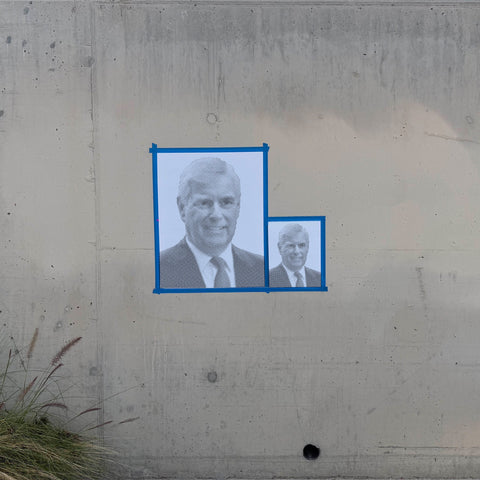
The artist works under the name Recycled Propaganda. His real name is Izaac Zevalking, an English-American artist who has built his career in Las Vegas since 2013, according to his own artist biography. His process runs backward from what most people picture when they hear the word graffiti. He sketches an idea on paper, builds the final image digitally in Adobe Illustrator, then cuts it into a stencil before a can of spray paint ever comes out. Sometimes he skips the digital step and cuts freehand instead. Either way, the paint goes on last, after every hard decision about the image has already been made in the cut.
The tagline on his gallery's site is "Question Everything," and the work backs it up. Zevalking builds pieces around contemporary issues, global history, and current events, describing his aim as subverting "the black and white - fear and fact-based rhetoric that we are so frequently plagued with" into something more layered and open to argument.
from boarded storefronts to a mayor's award
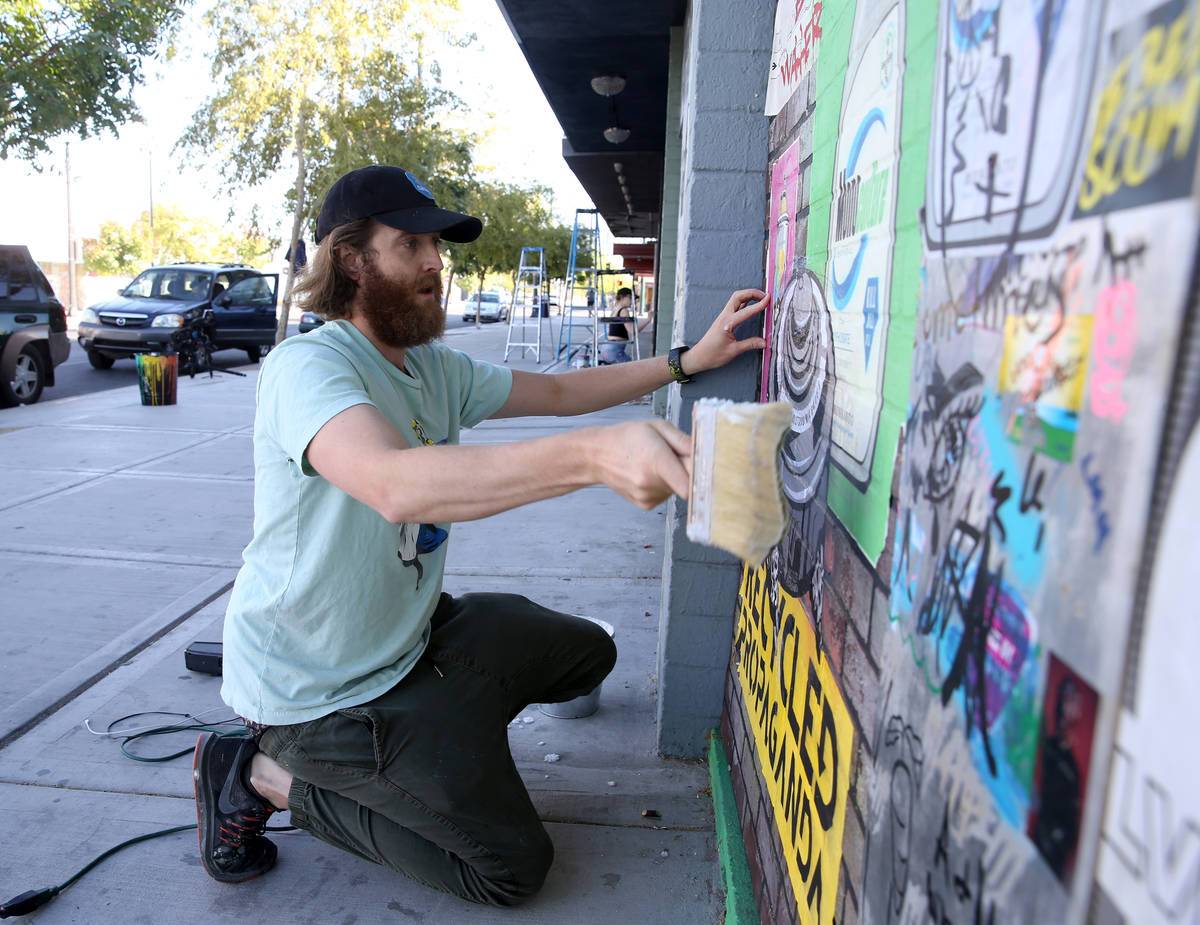
Zevalking opened a brick-and-mortar gallery in the Arts District in 2018, at 1114 S. Main St., and used it as a platform for other local artists as much as a shop for his own work. Two years later, when downtown Las Vegas boarded up empty storefronts during the 2020 shutdowns, he treated the plywood as blank wall space instead of an eyesore, covering panels around the district with new pieces. The city gave him a Mayor's Urban Design Award for that project, on top of a "Best of" prize for street art, according to a Las Vegas Review-Journal profile.
Six years after opening, the gallery is still picking up hardware. Las Vegas Weekly readers voted it the city's best art gallery, ahead of venues that never smelled like spray paint and never built a shopfront around a knife blade.
why the cut matters more than the can
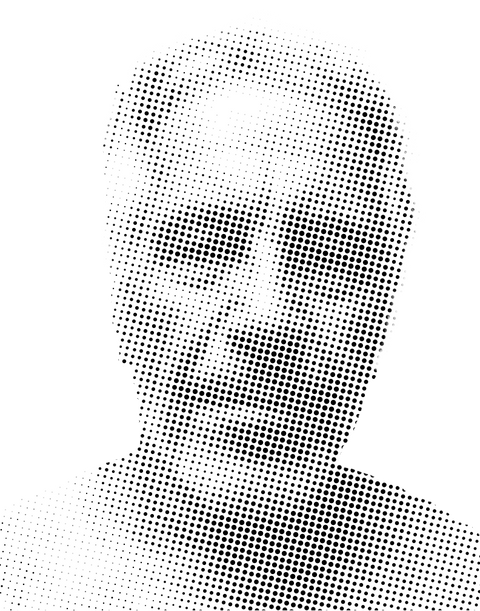
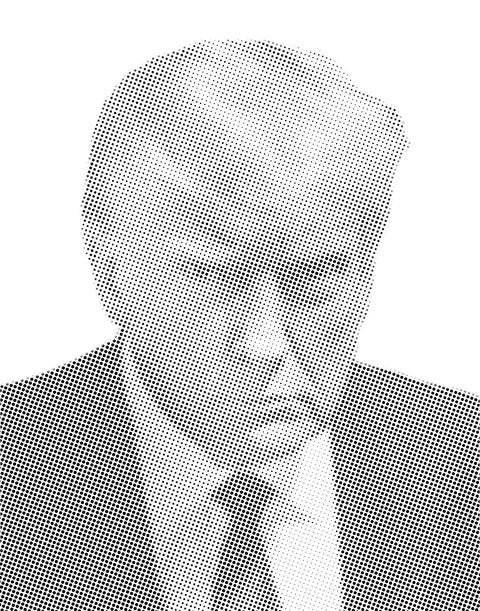
Cutting a stencil forces an artist to simplify before the paint ever hits a surface. Every line has to survive as a physical shape once the blade or the laser passes through it, which is why stencil work reads clean from across a street in a way a freehand tag rarely does. That discipline is also what makes stencils the format street art travels best on: a shape that works cut in Las Vegas works exactly the same cut in London or Melbourne, because the file, not the wall, carries the design. Zevalking's jump from paper sketch to Illustrator file to physical cut is the same pipeline laser cutters have made faster and cheaper for anyone working at a smaller scale. Someone chasing that workflow at home, building clean, repeatable designs instead of freehanding every piece, can skip the trial and error with the Stencil Library, TasteBueno's archive of cut-ready halftone stencil files.
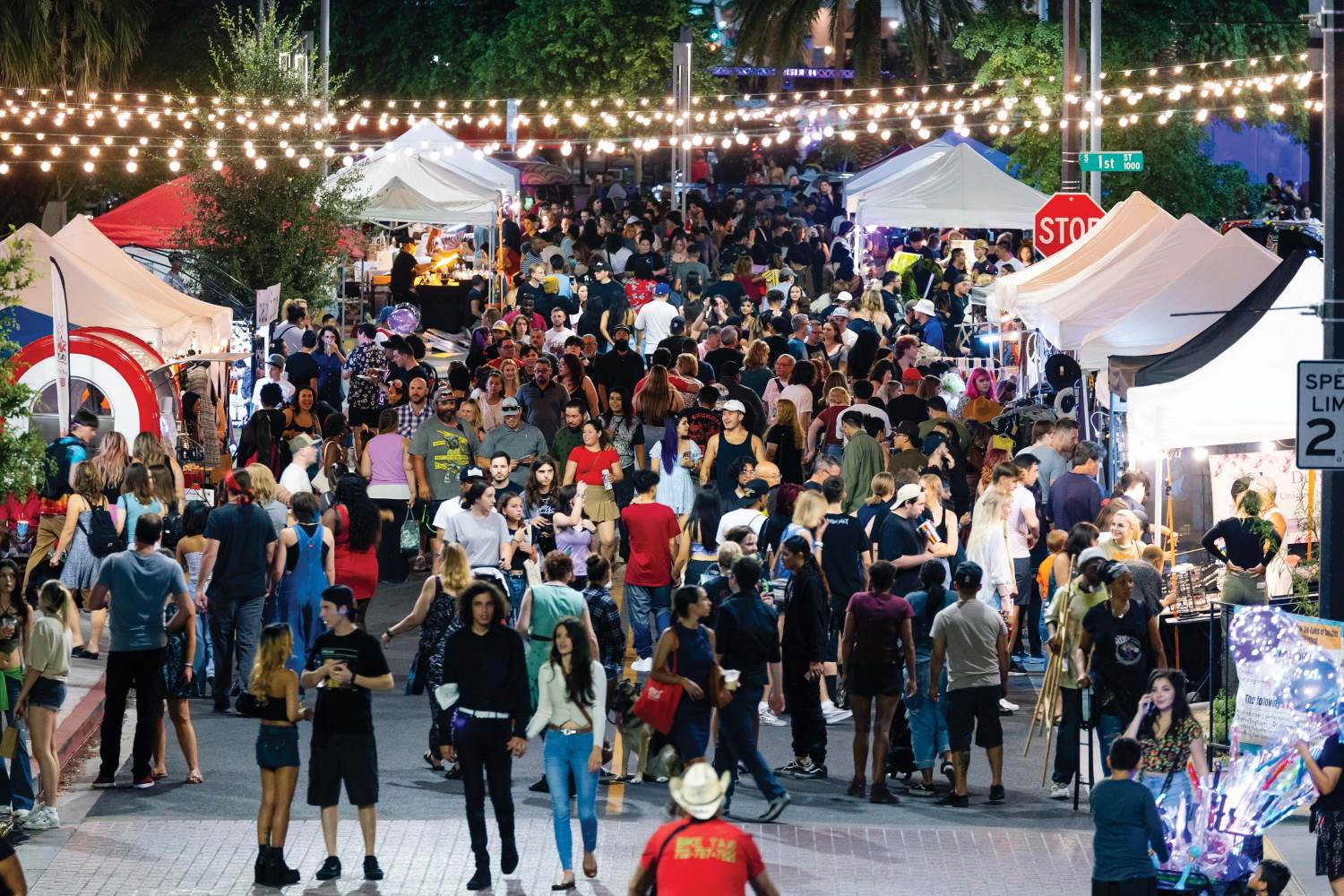
Zevalking's gallery sits inside the same Arts District that hosts First Friday, the monthly art walk that closed down blocks of Boulder Avenue and 1st Street for its 2026 season on July 3, according to the event's official listing. Recycled Propaganda was on the bill to paint live from 6 to 9:30 p.m. that night, one name among a lineup of local artists working the corridor while more than 100 vendors set up along the walk.
a shop built on a technique most people dismiss
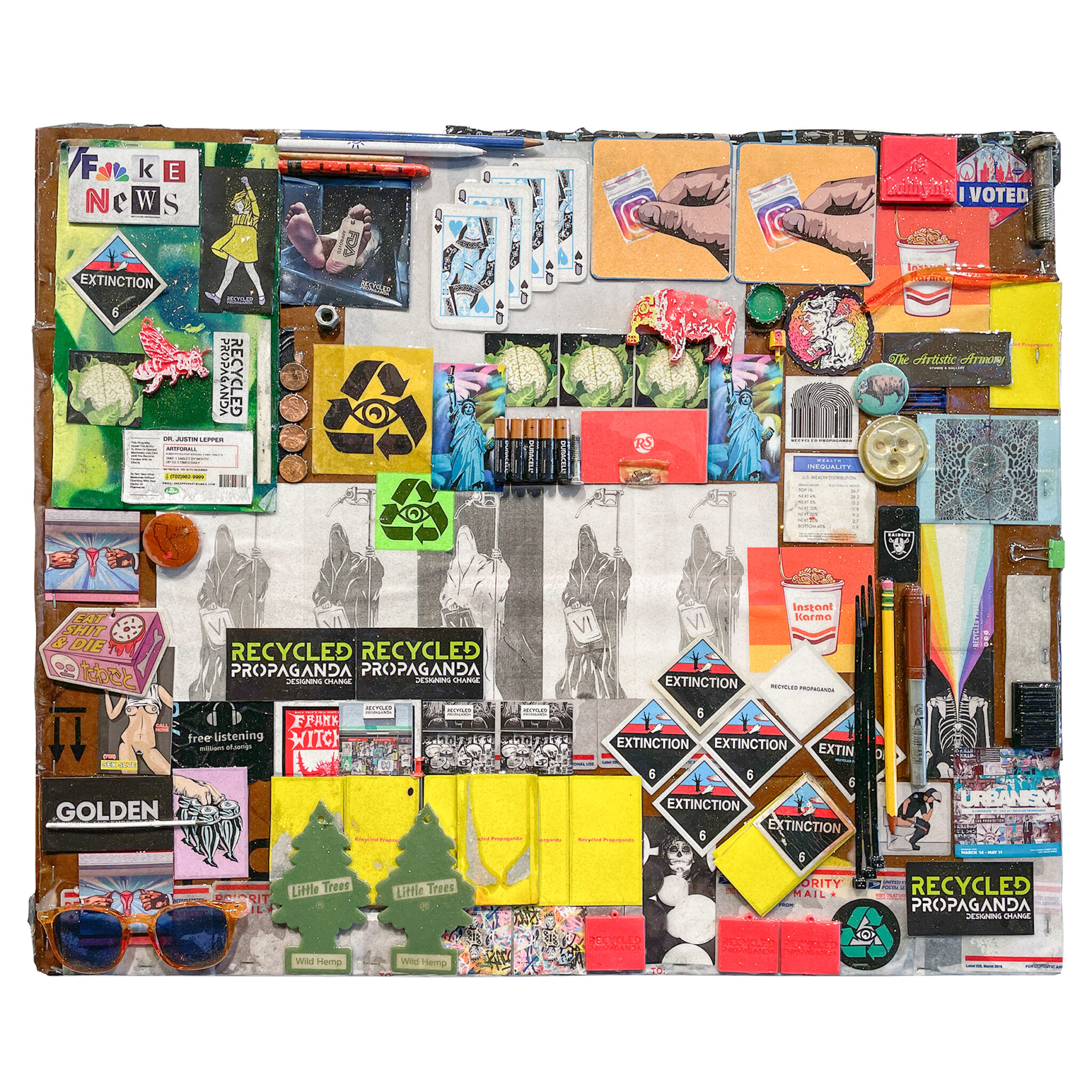
What makes the gallery notable isn't that it survived. Plenty of Arts District storefronts have opened and closed since 2018. It's that a shop built around stencil work, a technique most people still associate with quick vandalism or a kid's craft box, outlasted the neighborhood's churn and became the thing locals vote for. The gallery still sells the stickers and small-run prints that come out of the same Illustrator-to-blade process as the murals. The scale changes between a sticker and a thirty-foot wall. The method underneath doesn't.
Las Vegas has never had much of a reputation as a street art city outside the commissioned murals lining the Strip's parking garages and pedestrian bridges. A stencil shop on Main Street getting voted the city's best gallery, built entirely on a technique that starts with a computer file and ends with a blade, is a quieter kind of proof that the reputation is out of date.
0 comments