

The erasure of the "Black Artists Matter" mural from an East Austin street is not just about paint and asphalt; it's a direct strike against the city's Black community. A statewide order from TxDOT mandated the removal of artworks deemed to express political ideologies on Texas roadways, leaving little room for local discretion.
Reporting via hyperallergic.com kut.org.
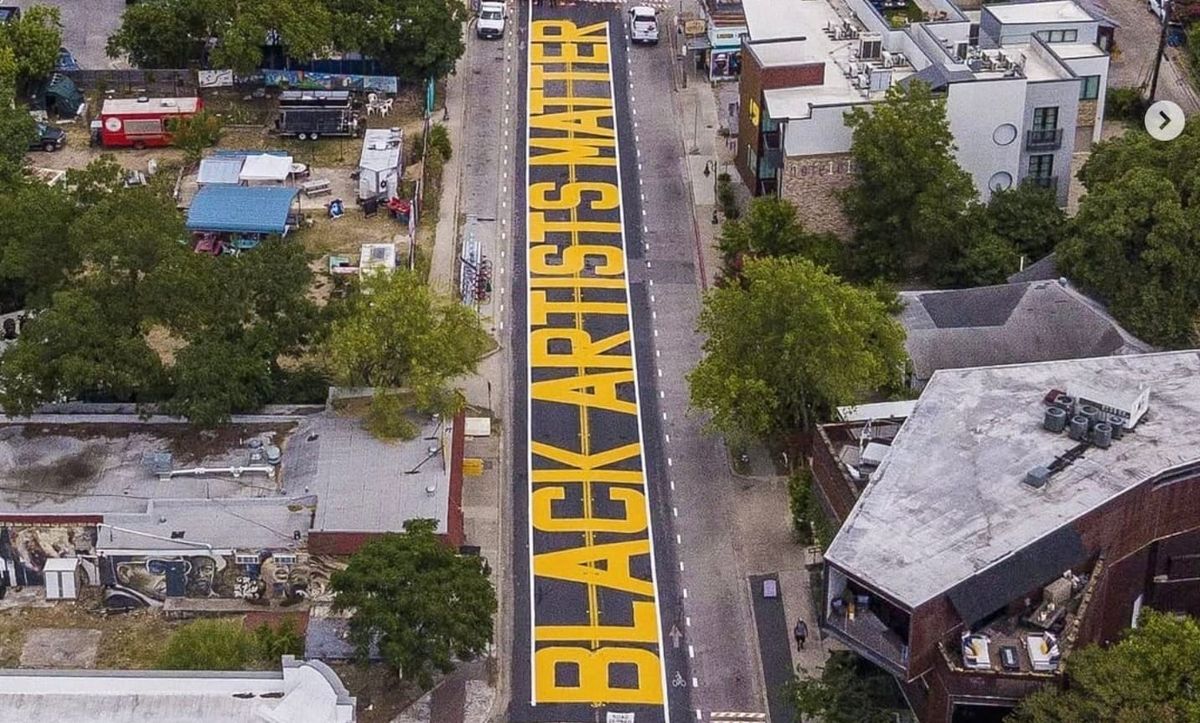
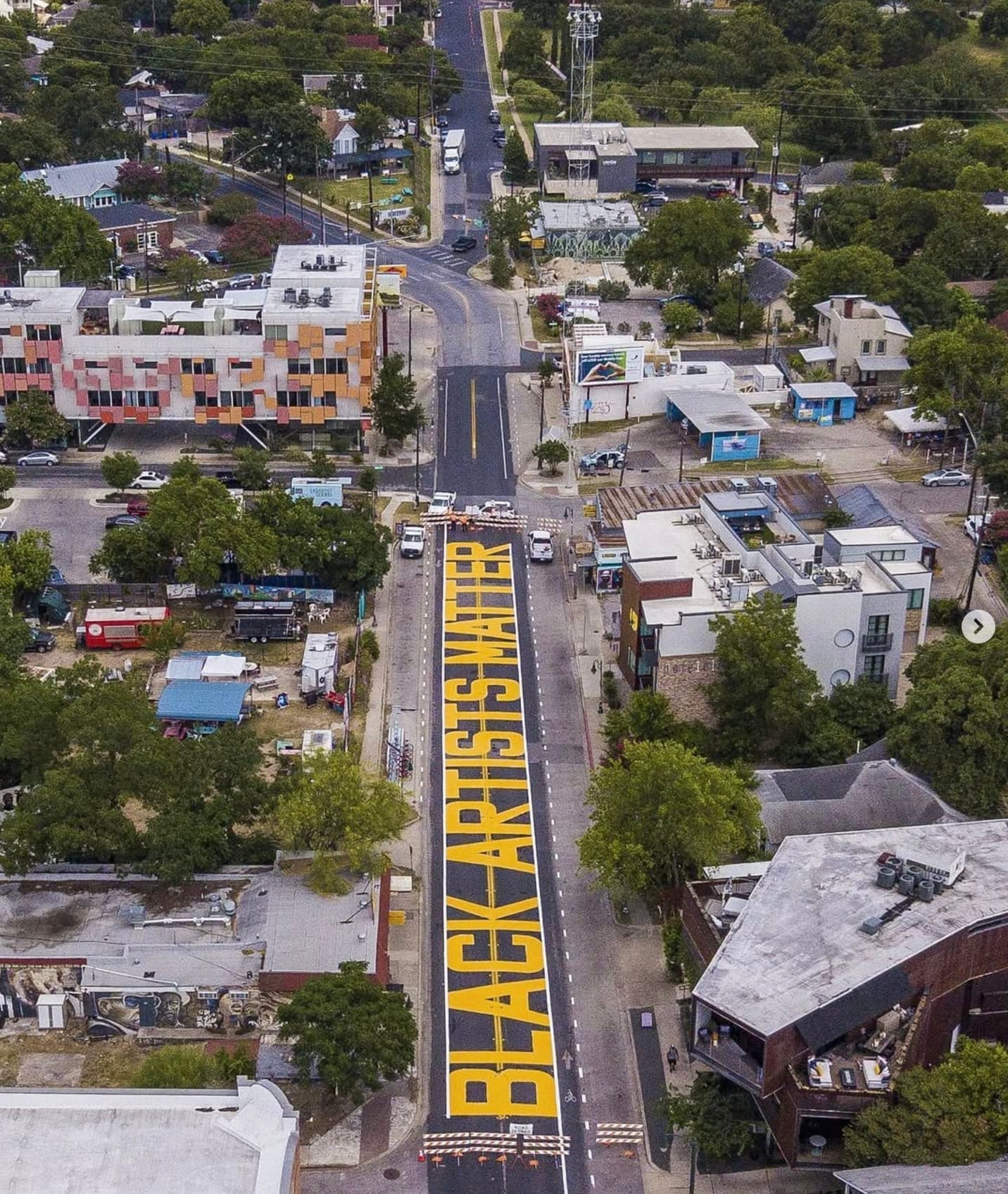
This particular mural, spanning 11th Street in East Austin, was painted as a powerful symbol during a national reckoning following George Floyd's murder. Over three days and with nearly 70 contributors, the community came together to create an outlet for grief and collective action. Now it is gone, its absence speaking volumes about the forces at play.
A Community Creation
The mural was not a solitary creation but a collective expression of shared experience and outrage. Artists and activists joined hands to paint these words on public space, transforming 11th Street into more than just a thoroughfare over three days in the summer of 2020. This communal effort provided a crucial outlet for mourning and action during a time of national unrest.
The involvement of artists from Austin's Black community underscores the mural's significance. It quickly became an immediate symbol of solidarity, resonating with both national events and the neighborhood's rich history. The creation process represents a direct form of engagement with public space, reclaiming territory and narrative for marginalized voices.
Sixth Square District Context
The location is deeply significant. Situated in Austin's Sixth Square District, formerly a site of racial segregation and now designated as the city's Black Cultural District, the mural held immense meaning. Daphne McDole, CEO of the African American Cultural Heritage District (Six Square District), articulated its importance: "This mural in this district is important because it reflects the displacement of the Black community." Her words underscore a legacy of struggle and an ongoing need for visibility.
The area's history, marked by sites like the Victory Grill, a gathering place for Black soldiers returning from World War II, is inseparable from the mural's meaning. Erasing "Black Artists Matter" diminishes this complex historical narrative, reinforcing systemic exclusion.
The State's Directive
Austin officials requested exemptions from the state directive in November, presenting crash data to demonstrate that these artworks pose no safety risk as evidence. This request was denied in May, with TxDOT asserting that several painted crosswalks and murals were unacceptable under state and federal guidelines. The decision highlights the tension between local autonomy and statewide control.
The broader implications are troubling; approximately 16 locations in Austin face potential removal. Beyond aesthetics, this directive speaks to a wider political agenda, silencing dissent and erasing visual representations of social justice movements. The threat of losing state and federal funding further underscores the coercive power at play as reported.
A Human Rights Statement
The mural wasn't merely a slogan; it was an assertion of human rights. Jean-Pierre Verdijo, artist and advocate, emphasized that public art celebrating diversity is essential for considering the rights of marginalized communities according to his view. Its removal sends a signal that certain viewpoints are unwelcome, potentially chilling artistic expression and community engagement.
This action goes beyond aesthetics; it's an attack on the very notion of public space as a platform for dialogue and social commentary. It raises questions about who gets to control narratives within a city and what message that sends to those seeking visibility and recognition.
The "Safe Haven" Paradox
Austin has often projected itself as a 'safe haven' for all, but this latest action exposes the limitations of that claim. As one anonymous source told Hyperallergic, "In a city that has said time and time again it is a 'safe haven' for all, that has never been the truth for Black folks." The statement reveals a painful disconnect between aspiration and reality.
Removing the mural doesn't erase the history of systemic inequality in Austin; it merely reinforces the perception that Black voices are unwelcome. The city's response, or lack thereof, will be crucial in determining whether it truly embraces its stated values or continues to perpetuate cycles of exclusion and erasure.

What's Next?
The city is complying with the state order, identifying 16 locations at risk. This isn't just about one mural; it represents a broader assault on public art that reflects social consciousness. The community's response will be critical in pushing back against this directive.
The removal of "Black Artists Matter" is a stark reminder of the fragility of public expression and the ongoing struggle for racial justice. It highlights the importance of continuing to create, reclaim, and defend spaces where Black voices can be heard, even if those spaces are temporarily erased.

0 comments