

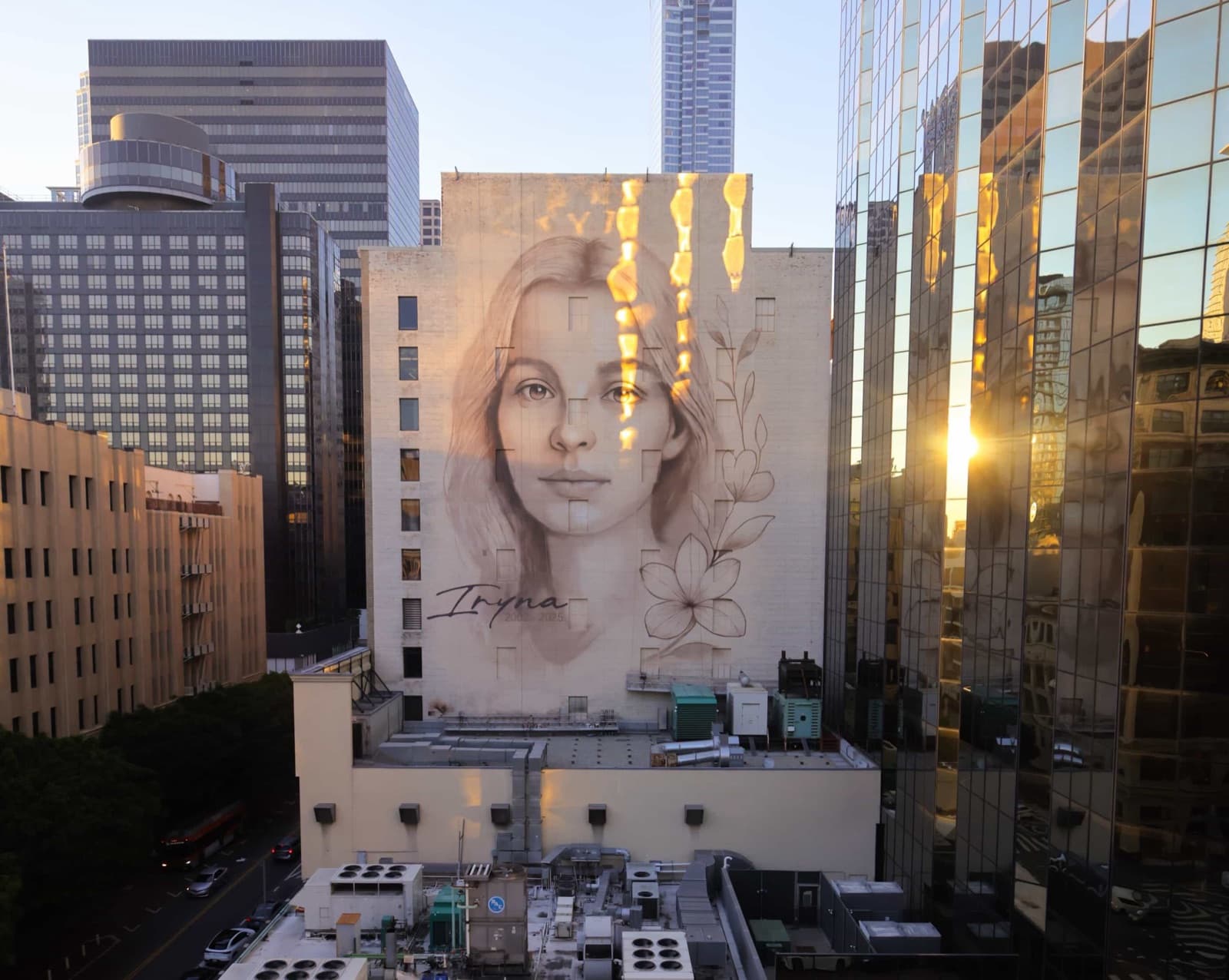
A sprawling portrait now dominates a corner of downtown Las Vegas, its scale immediately arresting. It's more than just paint on concrete; it's an intervention, a reckoning set against the city's relentless shimmer. The mural commemorates Iryna Zarutska, a Ukrainian refugee murdered in North Carolina, and its sudden appearance has ignited a complex conversation about justice, visibility, and the role of art.
Reporting via ktnv.com totalnews.com.
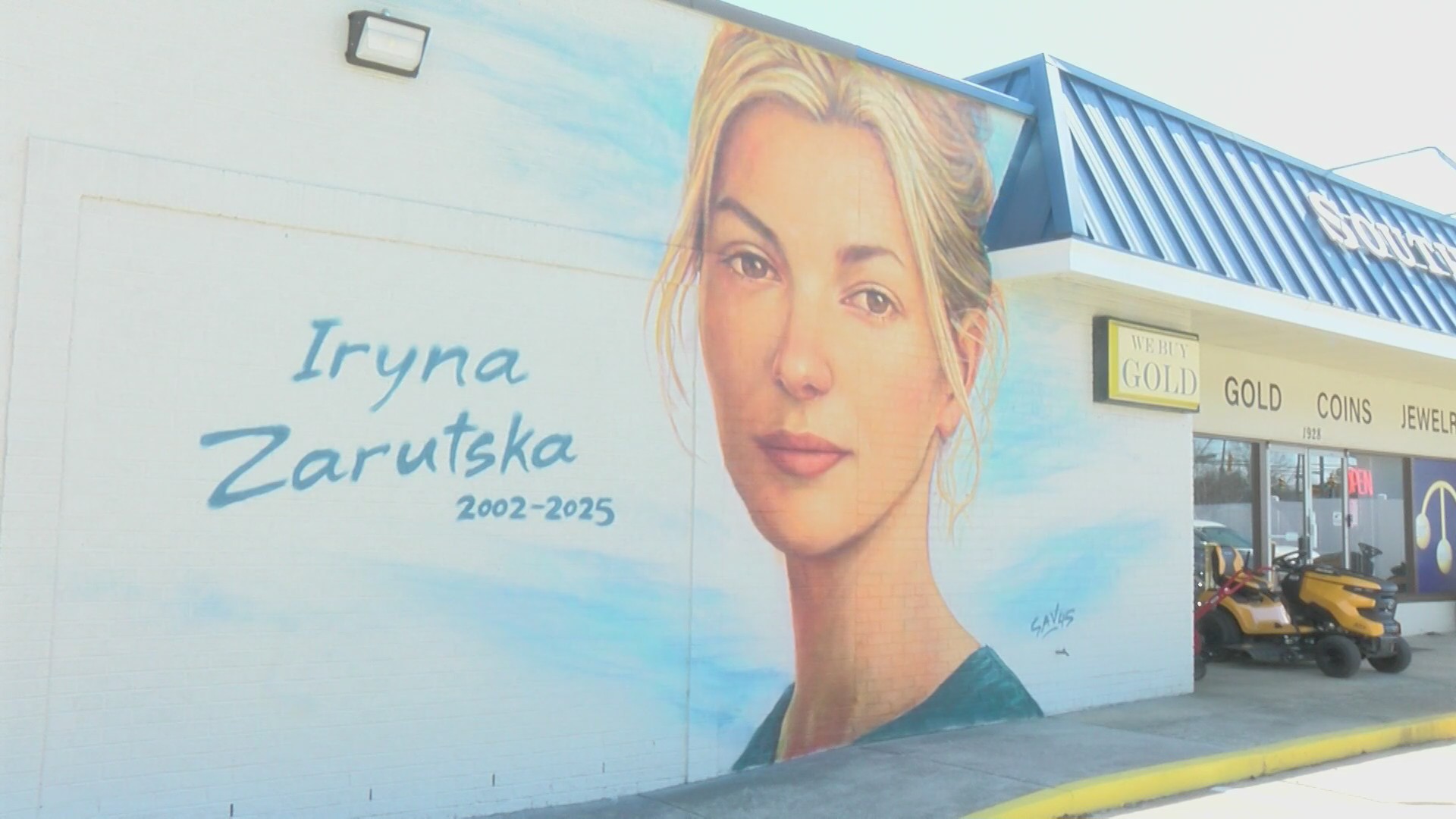
The situation is layered. A tragedy occurred far from Las Vegas, yet it's now manifested so prominently here. The mural's existence raises questions about how we memorialize victims, especially those displaced by conflict, and whether art can truly transcend political implications when its funding and message are so charged.
The Mural's Physical Presence
Located at the intersection of Charleston Boulevard and Las Vegas Boulevard, the mural commands attention. It covers a significant expanse: 147 feet wide and 20 feet tall. This monumental scale isn't accidental; it demands to be seen, forcing passersby to confront the subject matter. The size itself becomes a statement, an attempt to ensure Zarutska's name and story are not forgotten amidst the city's constant motion.
The location is strategic too. Charleston Boulevard is a thoroughfare pulsing with energy, a nexus for nightlife, commerce, and transient populations. Positioning this memorial here speaks to a desire for broad exposure, aiming beyond those already engaged in discussions surrounding Zarutska's case or the broader issues of refugee protection and criminal justice reform. It's an art piece designed to break through the noise.
The Remember Iryna Project
This mural is not an isolated act; it's part of a larger, national campaign driven by the Remember Iryna Project. The project began with a pledge of $500,000 in artist grants from Intercom's CEO and later expanded to $1 million thanks to Elon Musk as reported. The funding fueled a rapid expansion, drawing in hundreds of artists eager to contribute to the memorial effort.
The speed and scale of this response are remarkable, Elizabeth Trykin, who leads the initiative, notes over 900 artists have expressed interest in participating according to sources. This widespread enthusiasm speaks volumes about the desire to honor Zarutska and, importantly, to draw attention to what organizers perceive as inadequate responses within the criminal justice system, a point that's become a central facet of the project's message.
Guia Duran: The Artist's Perspective
The artist behind this specific mural is Guia Duran, known professionally as Gear Duran. She has emphasized that the intention was not to inject overtly political messaging into the artwork. This stance attempts to separate the artistic expression from any potential partisan interpretations, a difficult line to walk given the project's funding and underlying themes.
However, Duran's statement also highlights a common tension within street art: the desire for universal appeal versus the inevitability of political readings when addressing sensitive subjects. The mural itself, the imagery, the scale, the very act of placing it in a public space, is inherently political regardless of intention.
The Surveillance Footage and Public Response
The circumstances surrounding Zarutska's death are undeniably tragic and deeply unsettling. The attack was captured on surveillance video from the public transit system as documented, a stark reminder of the violence that can erupt in public spaces and the vulnerability faced by marginalized communities.
The release and circulation of this footage have fueled intense emotions and sparked debate online. The mural's presence amplifies these feelings, creating an environment where grief mixes with anger and demands for justice are amplified. It's a complex emotional landscape layered over a public artwork.

DeCarlos Brown and the Legal Proceedings
DeCarlos Brown faces charges in connection with Zarutska's murder and may potentially be eligible for the death penalty if found guilty according to reports. The possibility of capital punishment adds another layer of complexity to the narrative and further intensifies the calls for accountability.
The mural, therefore, functions not only as a memorial but also as a visual representation of this ongoing legal process, a constant reminder that justice remains elusive and that Zarutska's story is far from concluded. It's an assertion of presence, demanding continued attention to the case and its implications.
The Murals Polarizing Effect
The mural has become a flashpoint for debate online as noted, with some viewing it as a sincere tribute and others criticizing it as political propaganda. This polarization highlights the challenges of using art for social commentary, the potential for misinterpretation, the risk of alienating audiences, and the difficulty of achieving consensus on emotionally charged issues.
Duran's assertion about avoiding politics rings hollow when considering the funding source and the explicit aims of the Remember Iryna Project. The mural embodies a collision of art and activism, a visual statement designed to provoke thought and inspire action, regardless of whether it's embraced or rejected. Ultimately, the power of this mural lies in its ability to spark conversation, however uncomfortable that conversation might be.
0 comments