

Leonard Hilton McGurr quit painting subway cars in the mid-1970s to join the US Navy. He came home four years later and invented a kind of graffiti nobody in New York had tried: a whole subway car covered edge to edge in color, with not one letter on it. He signed it Futura 2000. Half a century later, a museum in his home borough gave that single piece a whole retrospective built around its name.
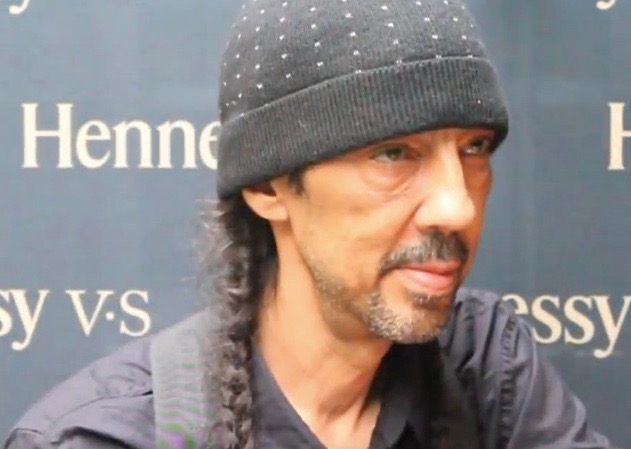
A Bronx kid who painted where the trains slowed down
McGurr grew up in the Bronx and started tagging New York's subway system in the early 1970s, working alongside other writers including a partner known as ALI, according to his Wikipedia entry. Every writer chasing a reputation in that era worked in letters: bubble tags and burners, a name repeated down the length of a train car until it was recognizable from a rooftop three blocks away.
Then, in 1974, he left it behind entirely. McGurr enlisted in the Navy and spent the next four years traveling the world, docking in ports his crew back home would never see. It's the kind of clean exit graffiti writers rarely get. Most get arrested, age out, or just stop climbing fences. McGurr shipped out instead.

He came home and painted a car with no name on it
By 1980, back in New York, Futura painted Break: a full subway car covered in sprayed color with no lettering anywhere on it. According to Juxtapoz, the piece marked "a first for the graffiti art movement," trading the name-first grammar of writing for pure abstraction, cosmic color fields and sci-fi shapes pulled from B-movies and space imagery. The Bronx Museum's account of the piece notes McGurr used to watch the trains he'd painted roll past from a spot in the South Bronx, not far from where the museum itself now stands.
Graffiti in 1980 ran almost entirely on legibility. A piece worked if it read as a name first and an image second. Futura inverted that math and got away with it, mostly because his reputation was already strong enough to survive breaking the one rule every other writer in the yard still followed.
The Clash, Comme des Garçons, and everything after
The abstraction he built in the rail yards is what carried him out of them. Futura painted the sleeve art for the Clash's "This Is Radio Clash" single and hand-lettered the sleeve notes and lyrics sheet for Combat Rock in 1982, then toured with the band, spray-painting backdrops live on stage during the Combat Rock tour, according to Wikipedia. It put a New York subway painter in front of arena crowds years before a single museum would touch graffiti.
The decades since have been a long list of names that don't usually share a sentence with "graffiti writer": Supreme, Nike, Levi's, A Bathing Ape, Medicom Toy, Undercover, and his own label, Futura Laboratories. The Bronx Museum's exhibition materials add collaborations with Virgil Abloh, Comme des Garçons designer Rei Kawakubo, and Takashi Murakami, plus a 2020 commission reworking Isamu Noguchi's Akari light sculptures for the Noguchi Museum and a site-specific installation at the Palais de Tokyo in Paris. His work now sits in the permanent collections of the New Museum, MOCA Los Angeles, the Groninger Museum in the Netherlands, and the Fondation Louis Vuitton.

The Bronx finally gave him a room of his own
None of that had happened in a museum in his own hometown until FUTURA 2000: Breaking Out opened at the Bronx Museum on September 8, 2024, running through March 30, 2025. It was, by the museum's own description, the most comprehensive look at his five-decade career ever staged in New York, pulling together sculpture, drawing, prints and archival material going back to the 1970s alongside new site-specific work built for the show.
Futura pointed to one of those new pieces, Jump Off, as a marker of something bigger. It was, he said in the museum's own materials, "one of the first paintings I made at my Hope Street studio," calling it "the 'jump off' for all future operations and the beginning of an actual studio practice." Fifty years after he stopped chasing trains through the South Bronx, the borough that watched him paint them gave his whole career a building of its own.
Related reading from TasteBueno
- A Philadelphia Teenager Tagged an Elephant to Prove He Wasn't Dead. He Also Invented Modern Graffiti.
- A Teenage Messenger's Ballpoint Tag Made the New York Times in 1971. Every Tag on Earth Still Owes Him Rent.
- A Teenager Picked Bus Shelter Locks With a Stolen Key in 1996. The Smithsonian Just Cast His Cartoon in 14 Feet of Bronze.


0 comments