

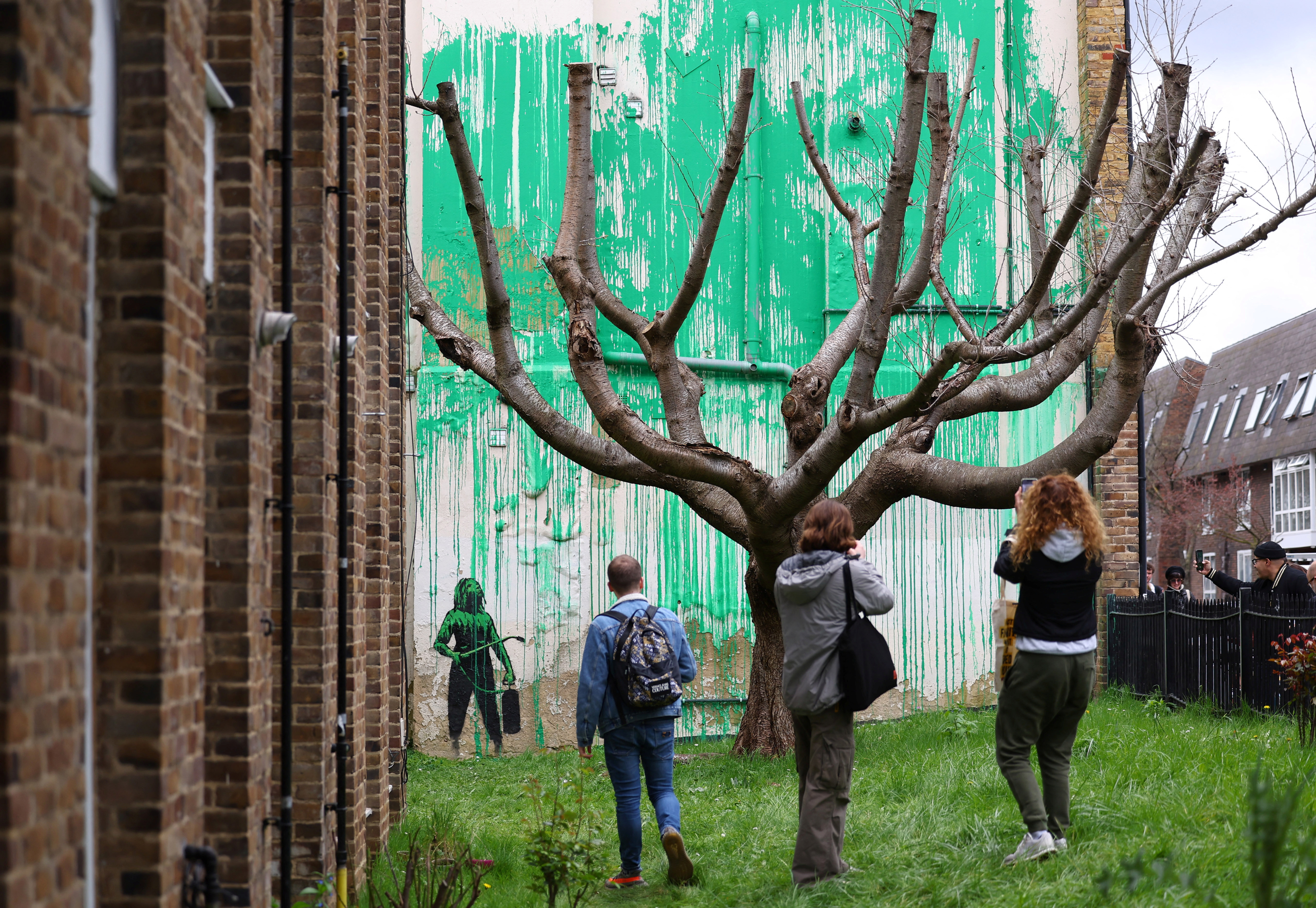
A curious green halo now surrounds a struggling cherry tree in Finsbury Park, north London. It's instantly recognizable as the handiwork of Banksy, but this time, the message feels different, less pointed satire and more like an intervention.
Reporting via bbc.co.uk bbc.com.
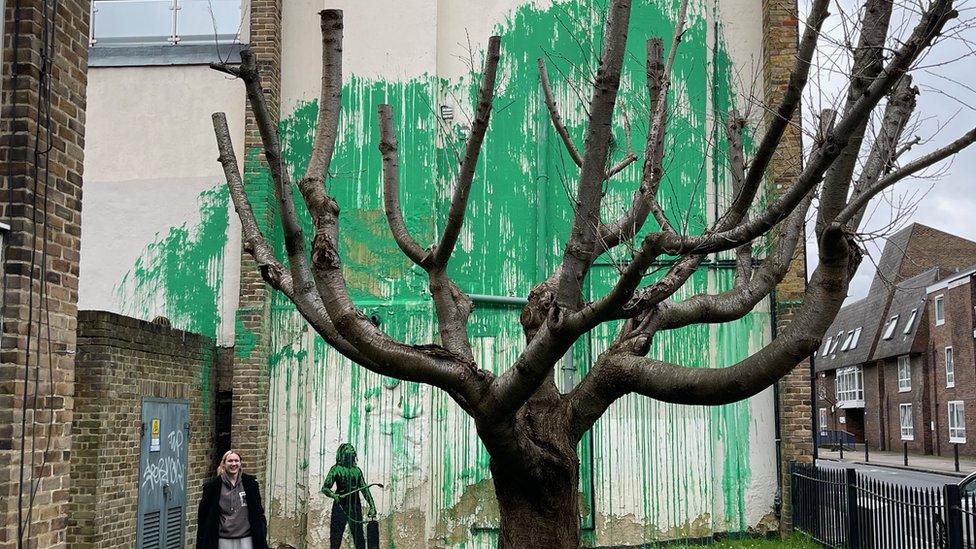
The artwork itself is deceptively simple: a wall painted with green to mimic foliage, paired with a stencil of someone holding a sprayer. This isn't just about aesthetic commentary; it's protection for something vulnerable. The situation highlights how the urban environment constantly clashes with artistic expression and the attempts to preserve both.
The Problem: Protecting Street Art from Vandalism
For years, Banksy's work has been a target. It's almost an expectation in the street art world that pieces will be defaced or removed. The recent theft of his stop sign with military drones is a stark example as noted by the BBC. This incident underscores the precariousness of public art, and how quickly something intended to be shared can become an object of acquisition, and potential loss.
The temptation to take a Banksy is driven by its notoriety and perceived value. It's a perverse form of appreciation, reducing a cultural moment to a commodity. This dynamic has long plagued the street art scene; artists have struggled with balancing accessibility and security.
A Novel Solution: Integrating Art With Nature
Banksy appears to be responding directly to this challenge. By incorporating the aging cherry tree into his mural, he's created an almost impenetrable barrier as James Peak explained. Attempting to remove the artwork would likely damage the tree, a risk no one is willing to take.
This strategy is clever and speaks volumes about Banksy's understanding of how systems operate. He has taken an issue, the theft of his art, and turned it into an integral part of the artwork itself. It's a meta-commentary on the very nature of public art, its value, and its vulnerability.
The Context: Finsbury Park and Social Housing
The mural's location is also significant. Islington councillor Flora Williamson believes it's fitting that Banksy chose to create this piece "right in the middle of social housing and one of the poorest parts of the borough" as she stated. This isn't a random placement; it's an intentional choice to bring art, intrigue, and culture into a community that might not otherwise have access.
Jeremy Corbyn, MP for Islington North, echoed this sentiment stating the mural brings "a bit of greenery" to a place that needs it. Banksy's decision to bring his art to Finsbury Park feels less like an artistic statement and more like an act of solidarity, demonstrating an awareness of social disparities.
The Details: Paint Matching and Local Knowledge
The precision evident in the mural is characteristic of Banksy's work. The green paint used perfectly matches that employed by Islington Council for its signage, a detail noticed by James Peak. This isn't just about aesthetics; it suggests an intimate familiarity with the local environment and a deliberate effort to blend in.
It's a subtle nod to the established order, using its tools against itself. The choice of paint also serves as a visual reminder that this artwork is part of the community, a citizen alongside the council's own markings on the landscape.
The Community Response: Pride and Personal Connection
The reaction from local residents has been overwhelmingly positive. One resident expressed feeling "proud" that their street had been chosen, perceiving it as a "personal message" as reported by LBC. This speaks to the power of public art to foster a sense of community and shared identity.
It's easy to see why residents feel this way, Banksy's presence elevates their neighborhood, offering a moment of collective pride and recognition. The mural becomes more than just an artwork; it is a symbol of the area's character and spirit.
The Art Itself: Synthetic Life and Impermanence
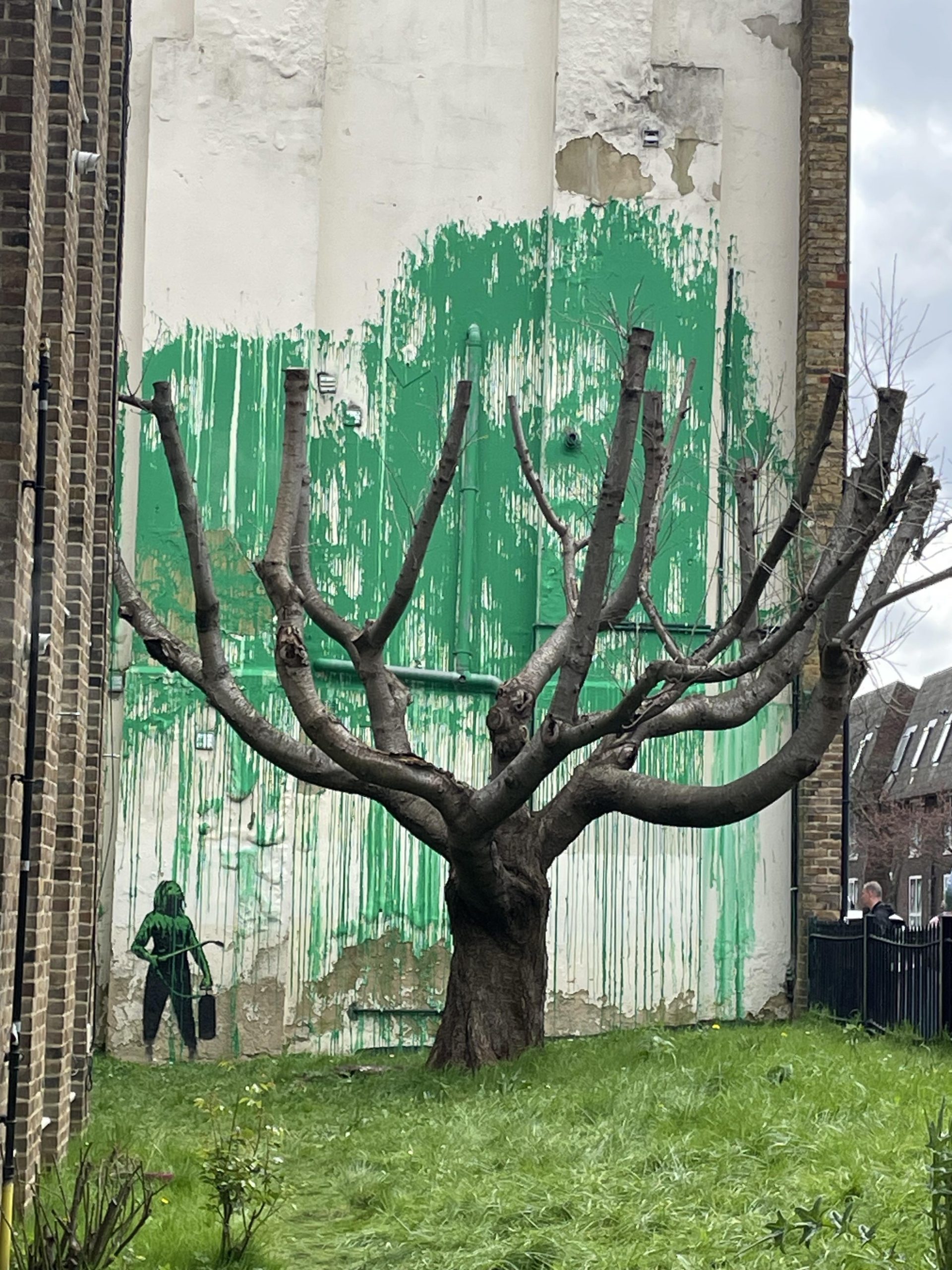
James Peak described the work as portraying a tree "bursting to life but in a noticeably fake and synthetic way" as noted by the BBC. This observation is key to understanding Banksy's message.
The artificiality highlights the precariousness of both art and nature. The tree itself, according to Islington Council, is in declining health and suffers from decay and fungi damage. The mural's vibrant green foliage stands in stark contrast to this reality, creating a poignant commentary on artificiality versus authenticity.
Protecting the Legacy: A New Approach
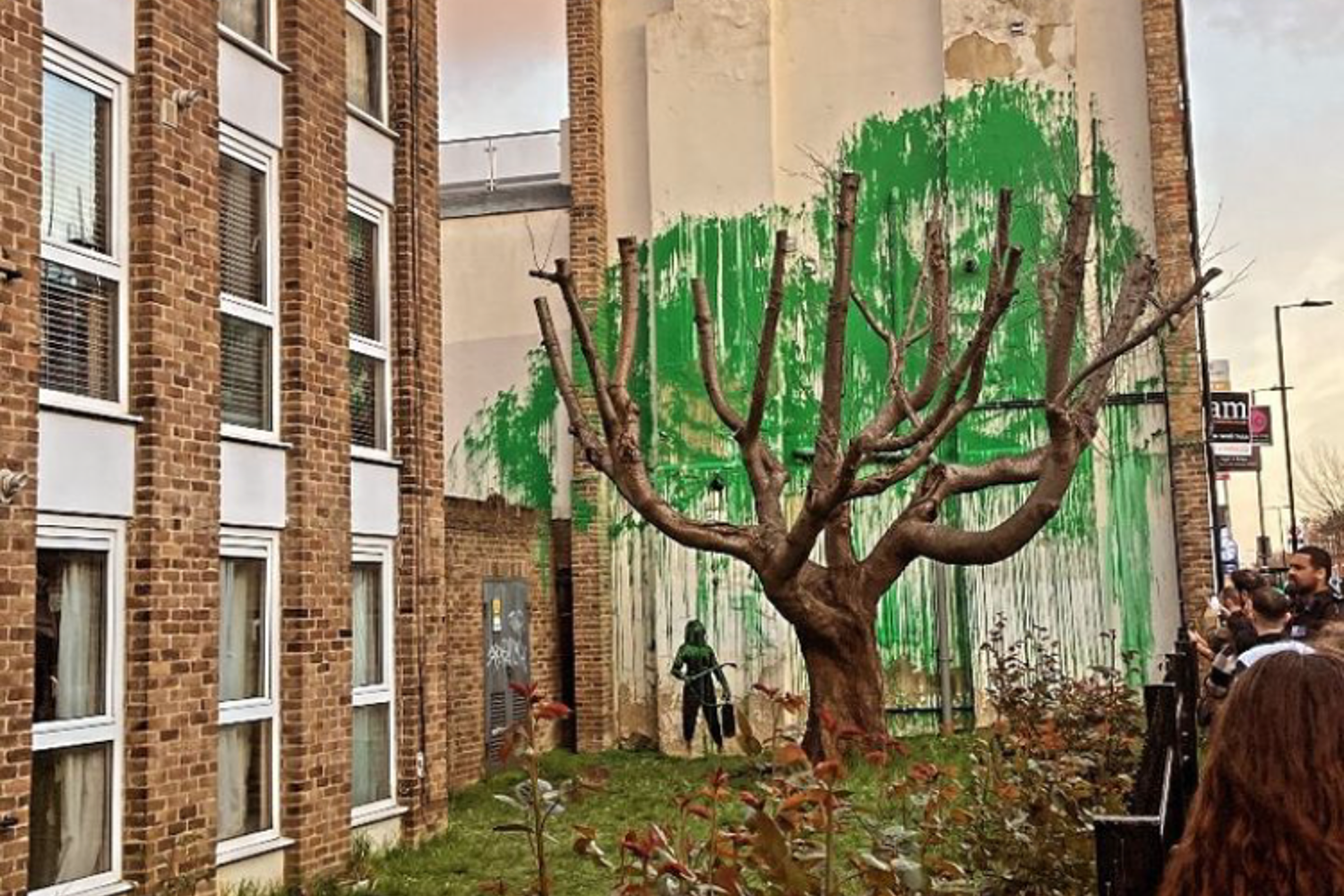
Alex Georgiou, owner of the building where the mural appeared, plans to let people enjoy it and confirmed he found out about it late Sunday night. This decision is a testament to the artwork's value as a public asset.
Banksy's approach in Finsbury Park represents a shift, a proactive response to the constant threat of vandalism and theft. It demonstrates that even the world's most anonymous artist can find creative ways to protect his legacy while bringing art to communities, safeguarding beauty, and prompting reflection.


0 comments