

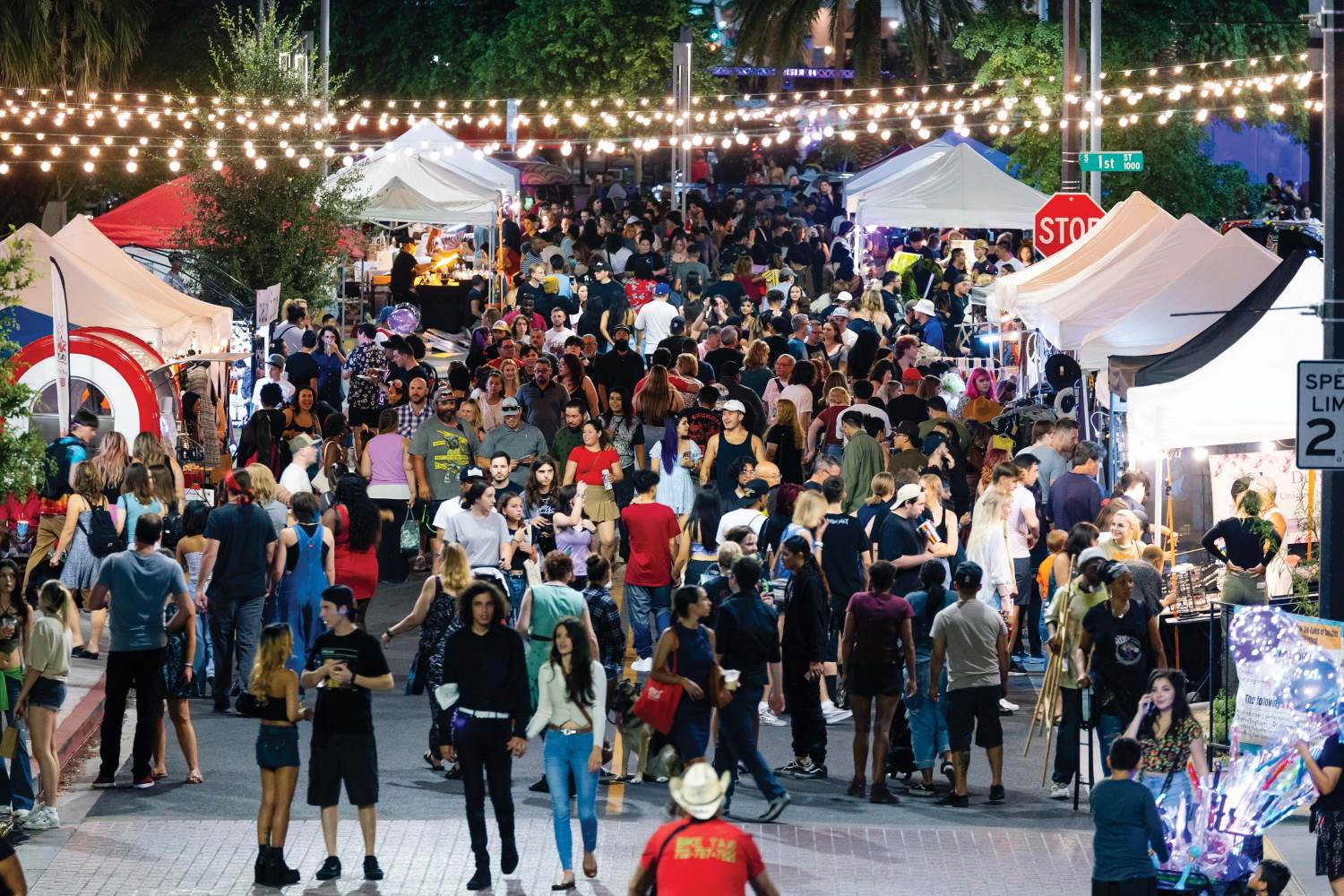
Downtown Las Vegas throws a free street festival on the first Friday of every month, and this year organizers built the whole season around getting people lost on purpose. First Friday returned to the Arts District on June 5, 2026, with a theme called "Seek and Find," meant to push visitors to explore the walk with purpose instead of just wandering it, according to FOX5 Vegas. The event ran from 5 p.m. to 11 p.m., pulled in roughly 100 local artists, and lined Main Street with more than 20 food trucks, all inside a district that has spent two decades turning itself into the one part of Las Vegas that runs on foot traffic instead of slot machines.
Twenty-four years of first fridays
First Friday has run since 2002, long enough to outlast several versions of downtown Las Vegas around it. What started as a small monthly gallery walk in the neighborhood now known as 18b has grown into a free festival that draws thousands of people to a handful of blocks near Charleston Boulevard and Main Street every month, mixing working galleries, live music, and food vendors with whatever mural or installation happens to be new that week. Two decades in, the event still resets its theme monthly rather than settling into a fixed format, which is how a scavenger-hunt concept like "Seek and Find" fits comfortably alongside past editions built around entirely different ideas, from artist takeovers to nature-themed showcases earlier in the year.
The muralist everyone comes to find
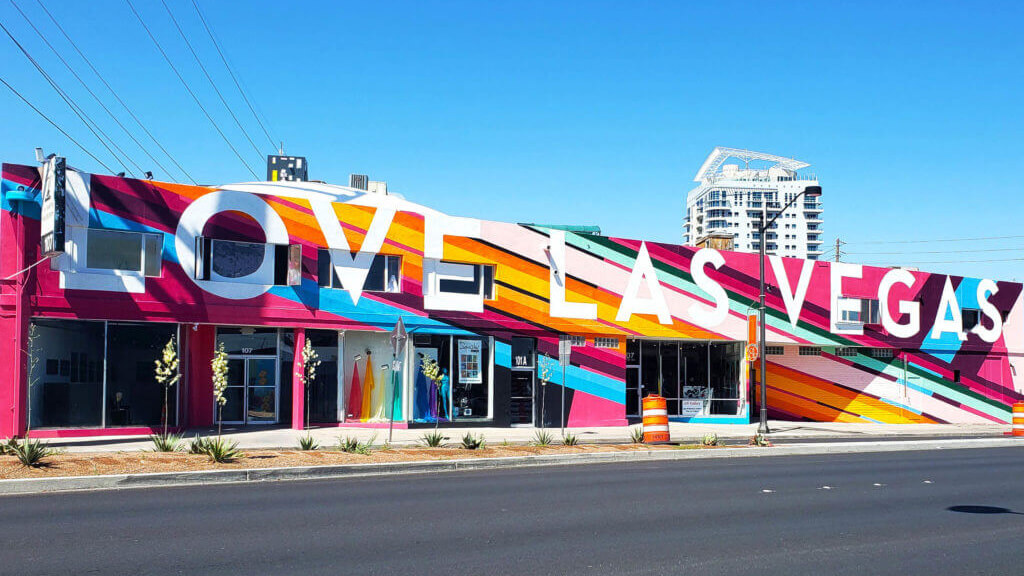
The artist organizers built the June season around is Jeff Lewis, a Las Vegas painter known for bold, large-scale murals that reimagine classical sculptures and iconic figures in bright pink, purple, and blue, according to FOX5 Vegas. Lewis is a resident artist at Screaming Demon Art Gallery on Charleston Boulevard and a First Friday regular, which makes him exactly the kind of fixture the "seek and find" theme was built to reward: an artist whose work is already scattered across downtown walls, waiting for people to notice it block by block instead of finding it all in one gallery. Organizers describe that larger-than-life color palette as the visual shorthand for the whole event's energy, the kind of work that reads from across a crowded street rather than up close in a quiet gallery.
A home base between first fridays
Screaming Demon Art Gallery anchors that stretch of Charleston Boulevard the way a handful of galleries anchor each corner of the Arts District, giving resident artists like Lewis a home base between First Fridays instead of a one-time pop-up slot. That structure, a rotating cast of galleries hosting the same working artists month after month, is part of why the Arts District draws comparisons to older gallery-crawl scenes in bigger cities, even though downtown Las Vegas's gallery footprint is a fraction of the size, built more out of converted warehouses and storefronts than purpose-built exhibition space.
More room for local creators
The June event also expanded Art Square's residency program. Its gallery-studio space featured Nancy Good and Erika Muecke, while the Cindy Funkhouser Residency featured artist Carlos Basaldua, according to FOX5 Vegas. A new 2026 sponsor, the Eric Roy Law Firm, funded additional free spaces for local creators on top of the food trucks, live music, and open galleries that have defined the event since 2002. Earlier 2026 editions ran their own themes, including an "Artist Takeover" event in April, part of a run of monthly resets that keeps the festival from feeling like the same six blocks twice, and gives working artists a reason to keep new work in rotation instead of leaving the same pieces up for a full year.
Growing pains on Main Street
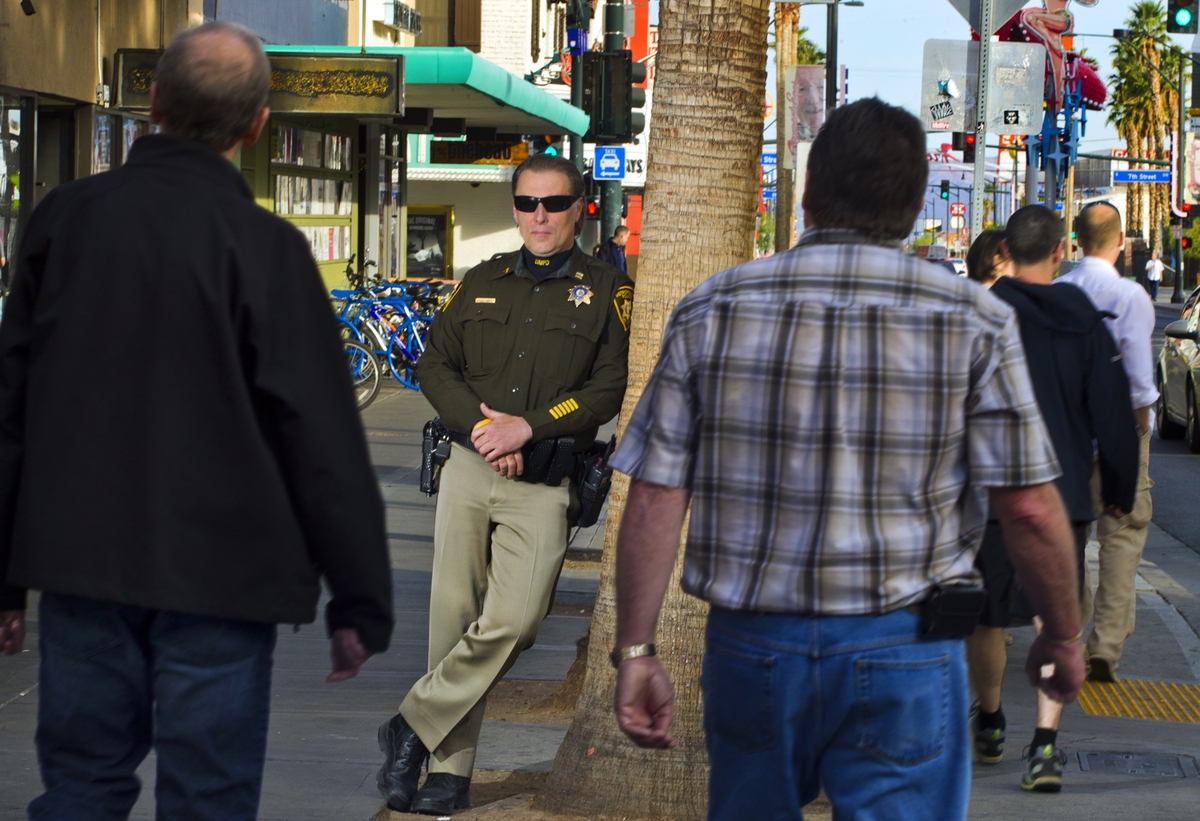
None of that growth has come free. Thousands of people now show up to a festival built for a handful of downtown blocks, and KTNV reported that the crowd size itself has become a running concern for the neighborhood. Organizers say they now coordinate directly with Metro police, city marshals, the City of Las Vegas, and a private security team to manage foot traffic, and the event has adjusted its hours and footprint for 2026 to handle the volume. The Arts District has already seen what happens when that oversight slips, after a new museum on the same street got hit with graffiti on its own opening night during a First Friday crowd. It is the tax a free monthly art festival pays for actually working: the better First Friday gets at pulling artists and crowds downtown, the more infrastructure it has to build around them just to keep the night manageable.
Why it matters beyond one Friday
First Friday is the closest thing Las Vegas has to a standing showcase for its own street art and mural scene, in a city better known for exporting neon than homegrown murals. A muralist like Lewis gets to build a body of work in public, in the same district, month after month, instead of painting one commissioned wall and moving on to the next city. That is the trade the Arts District is making as First Friday scales up: bigger crowds and tighter security in exchange for a monthly stage that keeps local painters visible instead of scattered across one-off gigs nobody outside Las Vegas ever hears about. Twenty-four years in, the format still comes down to the same bet organizers made in 2002: give artists a reliable monthly audience, and the neighborhood around them will keep growing to match it, security headaches and all.
Related reading from TasteBueno
- A Las Vegas Artist Turned Digital Files Into Spray-Paint Stencils. His Gallery Just Got Voted the City's Best.
- A Las Vegas Kid Tagged Walls Illegally at 13. Now the Palms and the Linq Pay Him to Do It
- A Las Vegas Museum Got Tagged on Opening Night. Its Fix Was to Charge Admission to the Free Street Party Next Door.
0 comments