

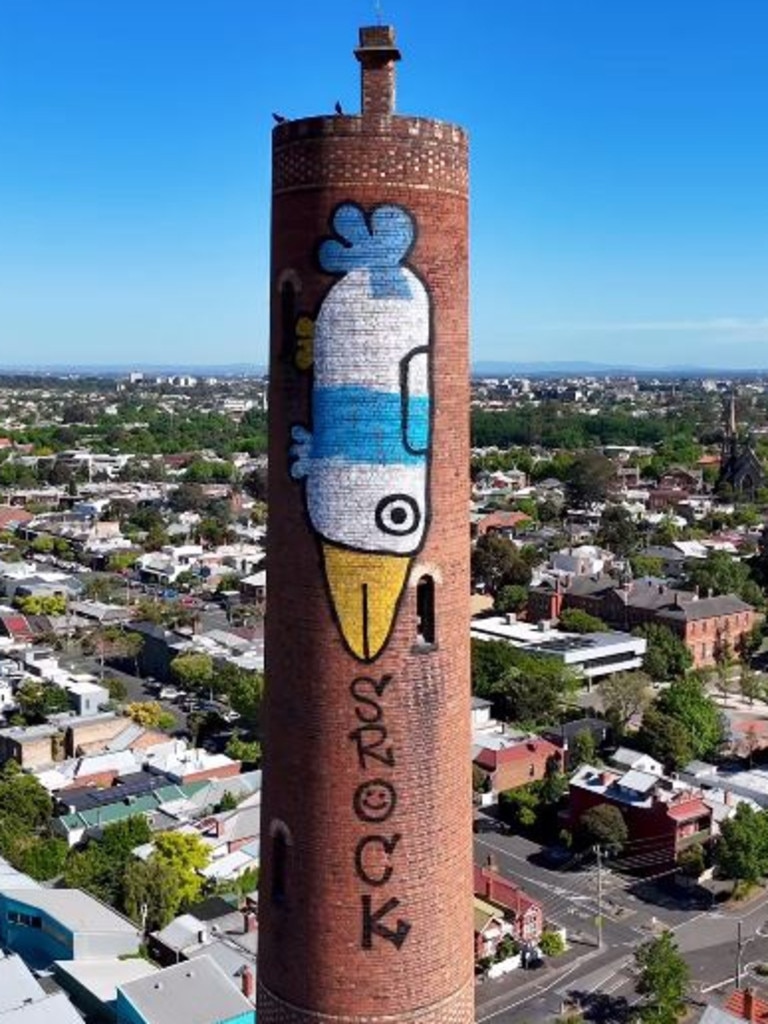
The Bolte Bridge in Melbourne became an unexpected canvas early Tuesday morning as a graffiti artist scaled its towering pillar, leaving behind a giant cartoon bird and igniting a tense standoff with authorities. This isn't some rookie error; it's the latest chapter in a saga surrounding Jack Gibson-Burrell, better known by his tag "Pam the Bird." His actions raise questions about risk, artistic expression, and the escalating response from law enforcement.
Reporting via theguardian.com 7news.com.au.
The incident unfolded at 2 am when reports of someone climbing one of the bridge's pillars reached police. The ensuing hours involved a protracted negotiation before Gibson-Burrell surrendered to officers just before midday, having descended the 140-metre-high structure. According to reports, the artist was dressed entirely in black and clearly prepared for a significant undertaking.

The Scale of the Operation
Climbing a 120-metre tower is not a casual act. It demands planning, physical capability, and a willingness to disregard personal safety, and legal boundaries. The Bolte Bridge's pillars are prominent landmarks, making them ideal for high-impact visual statements. This isn't simply about putting up a tag; it's about claiming space in a highly visible way, forcing the city to acknowledge his presence.
The choice of a cartoon bird image further complicates the narrative. It could be interpreted as whimsical or subversive depending on individual perspectives and the wider context of Gibson-Burrell's actions. The sheer audacity of the act itself overshadows any potential artistic merit for many viewers, especially given the cost and disruption involved.
A History of "Pam the Bird"
This event isn't an isolated incident; it's the culmination of a pattern of behavior. Gibson-Burrell faces 209 charges related to previous "Pam the Bird" graffiti appearances, including reckless conduct endangering life or serious injury and criminal damage. Authorities allege he has caused approximately $700,000 in damages to heritage-listed Victorian landmarks.
The recurring nature of these actions suggests a deliberate strategy. It's not simply about spraying a tag; it's about repeatedly pushing boundaries and testing the limits of what is acceptable within public space. While some may see this as an act of rebellion, law enforcement views it as a series of escalating offenses.
Beyond Graffiti: A Broader Pattern
The charges against Gibson-Burrell extend far beyond simple graffiti vandalism. He's accused of theft, aggravated burglary, punching a worker at Emporium Melbourne, stealing cars in Torquay, and even ramraiding a Nandos store in Footscray with a stolen vehicle. This paints a picture of someone involved in a complex web of criminal activity.
While it's tempting to dismiss the graffiti as mere artistic expression, the broader pattern of offenses suggests deeper issues at play. It raises questions about the underlying motivations driving his actions and whether there are systemic factors contributing to this behavior, a topic that is difficult to ignore or easily resolve.
The Financial Toll
The damage inflicted by Gibson-Burrell's actions isn't limited to aesthetic concerns; it carries a significant financial burden. Authorities estimate the total cost of the damage to be more than $100,000, with the Bolte Bridge incident contributing substantially to that figure. The cost of cleanup and repairs falls on taxpayers, diverting resources from other community needs.
This economic impact adds another layer to the controversy. While some may sympathize with Gibson-Burrell's artistic motivations, it's difficult to justify the expense incurred by his actions. The financial burden places a strain on public services and ultimately affects everyone in Melbourne.
The Legal Process
Gibson-Burrell has pleaded not guilty to the charges against him and was granted bail pending a future trial. He's facing significant legal penalties if convicted, given the severity of the offenses. The case is expected to be closely watched, particularly due to its intersection of artistic expression, criminal activity, and public safety.
The upcoming trial will likely focus on issues of intent and responsibility. It will require courts to balance concerns about freedom of expression with the need to protect public property and ensure personal safety; this is a delicate balancing act that often defines urban law enforcement challenges.

The Community Response
Reactions to Gibson-Burrell's actions have been mixed. Some view him as a rebellious figure challenging the status quo, while others condemn his behavior as criminal vandalism. The "This is my city" tag spray-painted on concrete silos in Geelong suggests a desire to assert ownership and identity within the urban landscape, a familiar sentiment among some street artists.
However, the methods employed by Gibson-Burrell have alienated many members of the community. His actions have caused disruption, damage, and fear, generating significant public outrage. The incident highlights the complex relationship between street art, vandalism, and community perception.
The Stencil Connection
While the details are scarce, "Pam the Bird" appears to utilize stencil techniques in her work, a common method within graffiti and street art culture. Stencils allow for rapid replication of imagery, allowing an artist to quickly distribute their message across multiple locations. This technique amplifies the impact and visibility of the artwork, effectively expanding its reach.
The use of stencils also lends itself to a certain degree of anonymity; allowing artists to operate with a level of separation from personal identification while still creating a recognizable style or brand. The "Pam the Bird" tag has become distinctive enough that its appearance anywhere in Melbourne or Geelong immediately connects it back to this individual, or at least, a persona.
Beyond the Arrest
The arrest of Jack Gibson-Burrell is merely one moment in an ongoing narrative. Police executed search warrants at addresses in Yarraville and Abbotsford, seizing spray paint, illegal fireworks, abseiling equipment, and suspected proceeds of crime. The investigation is likely to continue, potentially uncovering further connections and revealing the full extent of his activities.
Ultimately, this case serves as a reminder of the tensions between artistic expression, criminal activity, and urban space. It raises fundamental questions about how we define art, who gets to create it, and what boundaries should be enforced, a conversation that will continue long after Gibson-Burrell faces his day in court.
0 comments