

Oliver "Power" Grant helped build Wu-Tang Clan's business empire from Staten Island, then died before he could watch the group walk into the Rock & Roll Hall of Fame. Grant passed away on February 24, 2026, after a battle with pancreatic cancer, according to NBC News. Four months later, artists picked up spray cans on the same Staten Island corner that already carries his crew's name and painted a tribute to him on the wall, putting a specific face back at the center of a story that had started to feel like just a street sign and a genre credit.

The man behind the curtain
Grant never rapped a verse on a Wu-Tang record, but he ran the machine behind them. He executive produced the group's catalog and, in 1995, launched Wu Wear, one of the first rapper-owned clothing lines, starting out as mail-order shirts printed with the crew's bee logo, according to The Culture Crypt. Once Enter the Wu-Tang went platinum, Grant opened a Wu Wear store on Victory Boulevard back in Staten Island, then an office in Manhattan's garment district to sell wholesale, and eventually grew the brand to four stores nationally, with the line carried in Macy's, Rich's, and the now-defunct chain d.e.m.o. Annual revenue reportedly topped $25 million a year during the group's commercial peak, a number few artist-branded clothing lines from that era ever matched, according to The Culture Crypt. Grant renamed the brand Wu-Tang Brand in 2008 after years of counterfeiting, then relaunched the original Wu Wear name in 2017 alongside RZA and Live Nation Merchandise, serving as the brand's historic creative consultant, according to PR Newswire.
Shaolin, on paper now
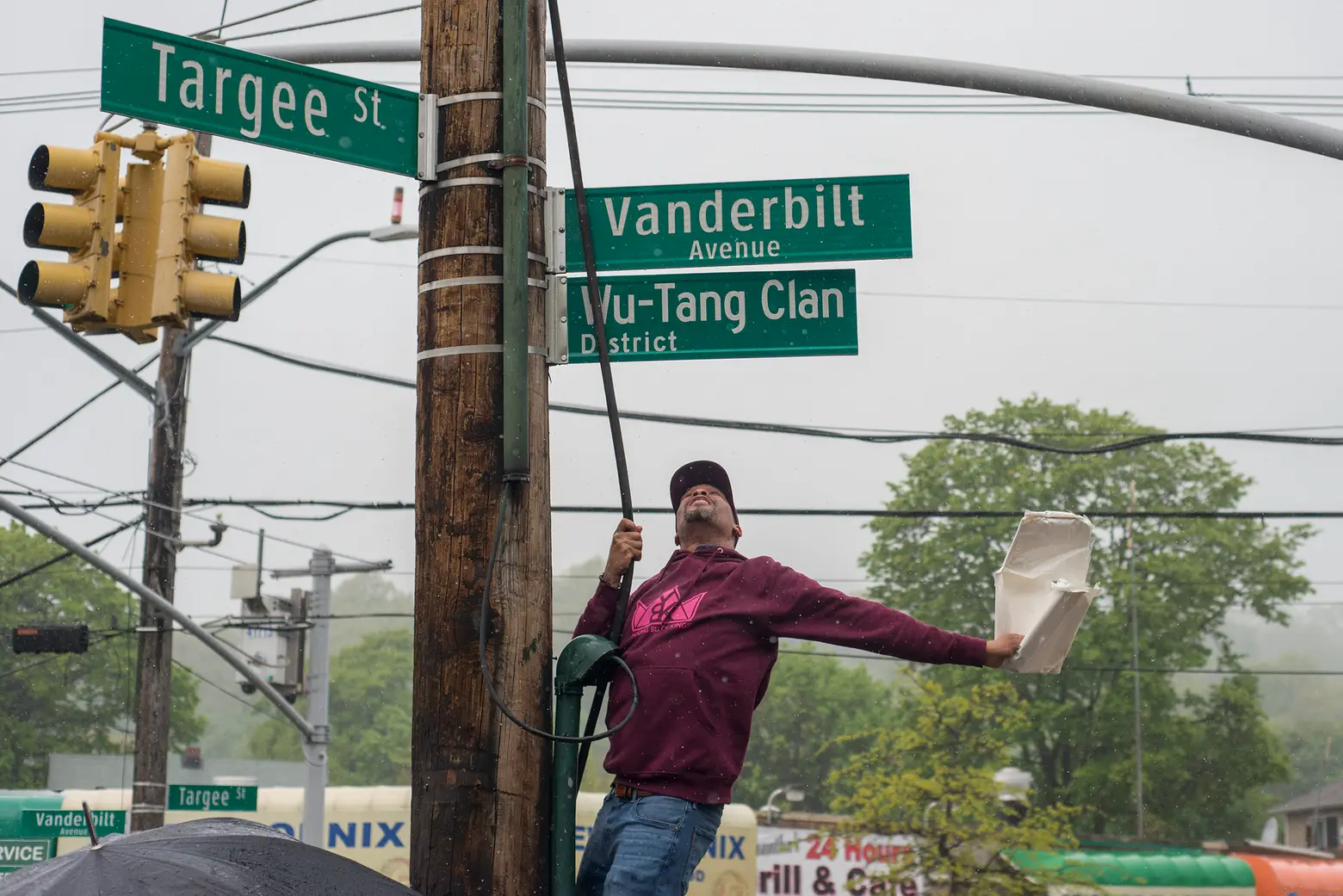
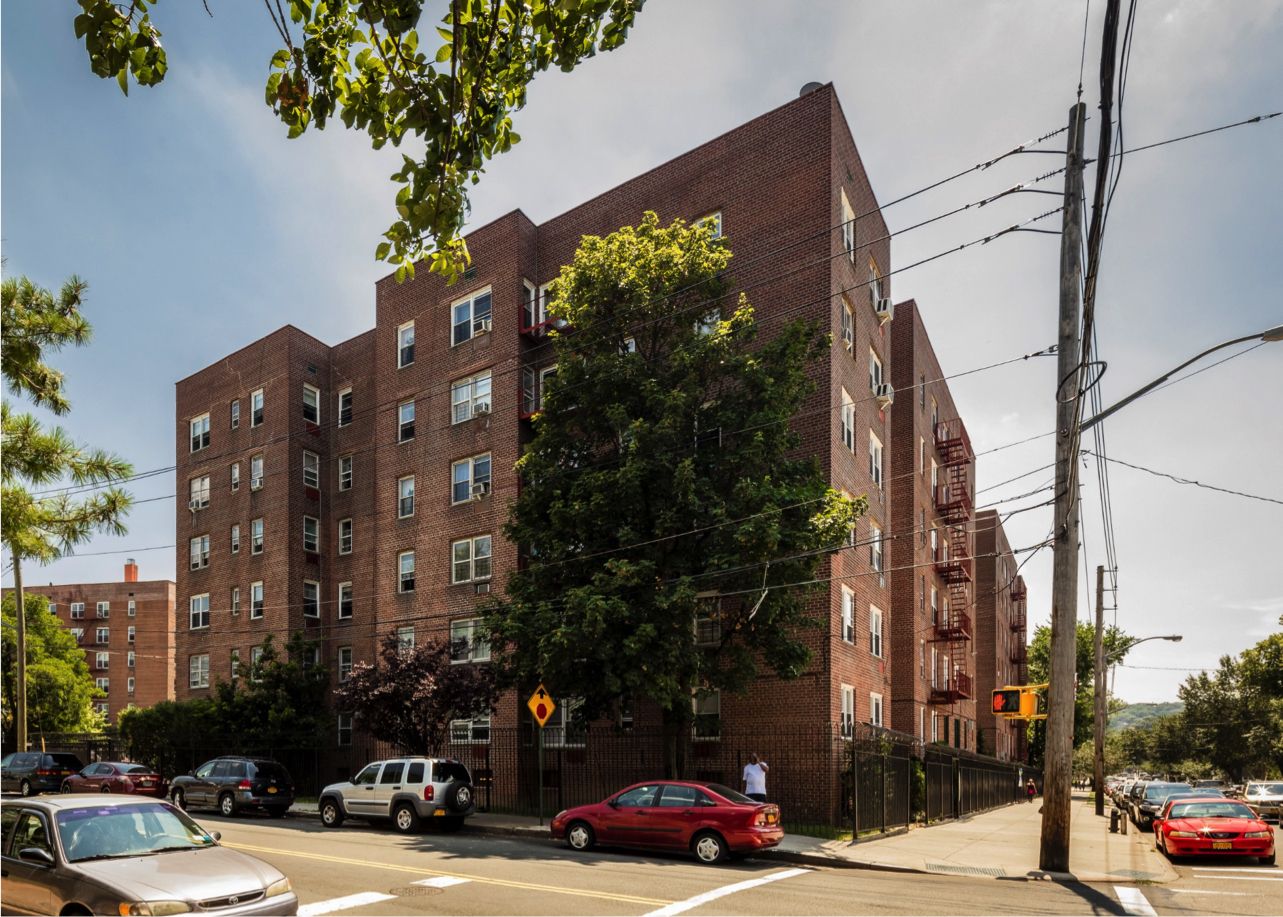
Wu-Tang built its mythology on Staten Island geography before the rest of the world could find the borough on a map. Members came out of the Stapleton, Park Hill, and West Brighton housing projects on the North Shore, and RZA has described walking the route between Stapleton and Park Hill as a kid, the same blocks that became the group's stand-in for "Shaolin" on 1993's Enter the Wu-Tang (36 Chambers). That record turned the projects into a myth. New York City eventually made the myth official: in 2019, the City Council voted unanimously to rename the intersection of Vanderbilt Avenue and Targee Street, in the Park Hill section of Clifton, the Wu-Tang Clan District, according to 6sqft. RZA, Raekwon, Ghostface Killah, and Cappadonna showed up for the street sign unveiling that May, which doubled as a celebration of the group's 25th anniversary, according to NME. The corner has been a fan pilgrimage stop ever since.
Four artists, one wall
In June 2026, that same district got a new mural aimed squarely at Grant. Staten Island-born actor, producer, and artist Gano Grills served as curatorial director on the piece, painting it alongside Austin Sepulveda, John Echo, and Will Power, according to StreetArtNYC. The production sits inside the Wu-Tang Clan District itself, a few blocks from the housing projects RZA walked as a teenager. That placement is the point. Wu-Tang spent three decades converting a specific, unglamorous patch of Staten Island into a global brand, and every piece of public art added to that patch reinforces the same claim the street sign already made in 2019: this block matters because of what came out of it, not despite it.
Staten Island doesn't wait for permission
The borough treated hometown memorials as a normal part of the group's story well before Grant's death, from the street sign in 2019 to the murals that have quietly accumulated around Park Hill and Stapleton in the years since. Murals honoring hip-hop's founding generation have become one of the more reliable ways American cities acknowledge a genre that spent its first two decades being treated as a threat rather than a civic asset. Staten Island did not wait for Rock Hall voters to catch up before it started building its own monuments, and it did not wait this time either.
The album Grant helped produce is not just a fan favorite. The Library of Congress' National Recording Preservation Board keeps a formal essay on the making of Enter the Wu-Tang (36 Chambers) in its program archive, according to a document hosted at loc.gov, the kind of institutional attention usually reserved for recordings judged culturally or historically significant. Grant's job was never the microphone. It was making sure a nine-man crew with wildly different solo ambitions stayed a business as much as a group, through Wu Wear, through the group's early independent deals, and through the merchandising infrastructure that let Wu-Tang outlast most of its 1990s peers.

A hall of fame call he didn't hear
Wu-Tang Clan's first Rock & Roll Hall of Fame nomination came through as part of the 2026 induction class, alongside Oasis, Phil Collins, Billy Idol, Lauryn Hill, and Sade, according to The Hollywood Reporter. The group is scheduled to be formally inducted at a ceremony at the Peacock Theater in Los Angeles on November 14, 2026, according to CNN. Grant died in February, months before that ceremony and before the nomination became an induction. The man who ran the business side of a group now entering rock's official record book will not be in the room when it happens. The mural in Park Hill is the closest thing Staten Island can offer instead: a permanent image on the block that already bears his crew's name, finished by people who knew him, in the same year the rest of the world finally caught up to what a street sign already said back in 2019.
Related reading from TasteBueno
- He Joined the Navy to Get Off the Subway Tracks. Futura 2000 Came Back and Painted the First Graffiti Car With No Letters On It.
- A Bronx Kid Helped Bend Graffiti Letters Into Jagged New Shapes in the 1980s. His Alphabet Just Landed on a Vape at Your Gas Station.
- The Knicks Won Their First Title in Over 50 Years. A Painted Subway Train Made Sure Nobody Missed It.


0 comments