

Somebody cuts a stencil in an alley today and calls it street art. A hundred years ago, thirty workshops in Paris cut stencils by the hundreds for a single fashion plate and called it an industry.
A magazine that sold stencils as luxury
In 1912, publisher Lucien Vogel launched the Gazette du Bon Ton, a Paris fashion magazine that ran until 1925. It signed exclusive deals with seven of the city's top couture houses: Cheruit, Doeuillet, Doucet, Paquin, Poiret, Redfern, and Worth. A subscription ran 100 francs a year, priced to keep the magazine out of ordinary hands, according to SHOWstudio's history of the title.
Each issue carried ten full-page plates. Seven reproduced actual couture gowns. Three were the illustrators' own inventions, dressed up as fashion. Every plate went through the same process: a lithograph base, then hand-mixed color pressed through a cut stencil, layer after layer, until the ink looked painted rather than printed. Georges Barbier, Paul Iribe, Erté, and Étienne Drian all drew for it. The stated goal was blunt: put fashion illustration in the same room as painting and sculpture.

Thirty workshops, six hundred artisans, one color at a time
The man behind most of that color was Jean Saudé. He trained under André Marty in the 1890s, then opened his own workshop, Ibis, and spent three decades turning stencil coloring into a trade with its own discipline, per his Wikipedia entry. In 1925 he published Traité d'enluminure d'art au pochoir, the technique's definitive manual.
At its peak between 1925 and 1930, the pochoir trade supported roughly thirty workshops across Paris, each running up to twenty employees, for a total of about six hundred artisans, according to a Rhode Island School of Design library guide to the technique. A single plate could burn through as many as a hundred separate stencils, one for every distinct color, cut from thin sheets of copper, zinc, or aluminum before cheaper celluloid took over, per Artsper's rundown of the medium. Cut one stencil wrong and the whole plate started over from the base layer.
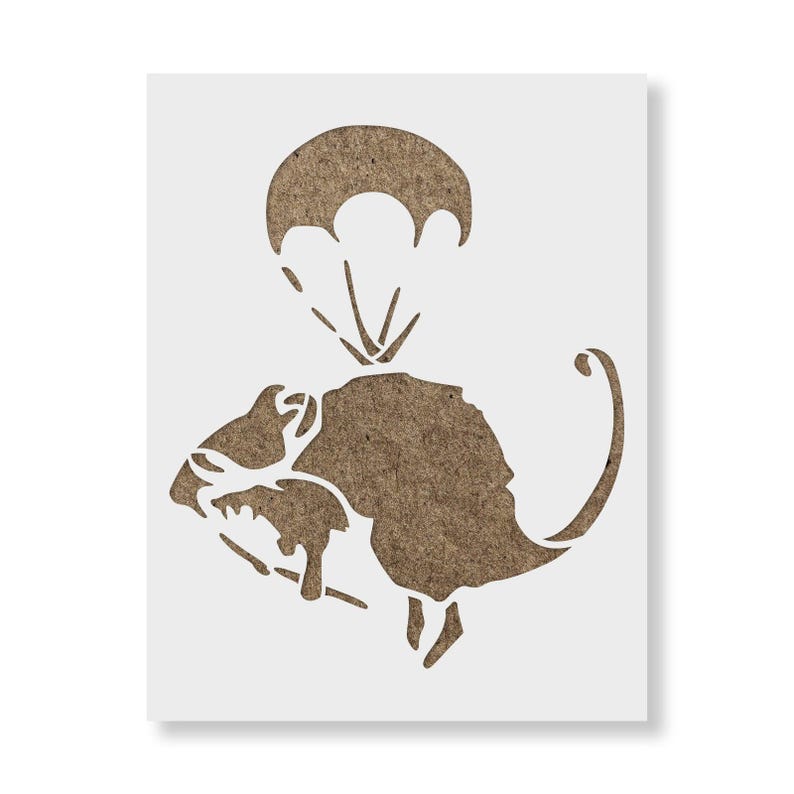
The same hole-in-a-template logic, a different century
None of that survived past 1930. Photolithography got cheap, magazines stopped paying for hand coloring, and the workshops closed one by one. But the underlying idea, cutting a shape out of something rigid and forcing color through the gap, never went anywhere. Stencil graffiti picked it up decades later for the opposite reason the pochoir houses used it: not patience, but speed. A stencil cut in the safety of a studio can go up on a wall in the time it takes to shake a can and pull the trigger.
Banksy built a career on that math. According to MyArtbroker's account of his methods, he switched from freehand painting to stencils in Bristol in the early 1990s after spotting a stencilled serial number on a bin truck while hiding from police. His rats, riot cops, and girls with balloons all run on the same multi-layer stencil principle Saudé's workshops used on silk, just with spray cans standing in for gouache and seconds standing in for days.
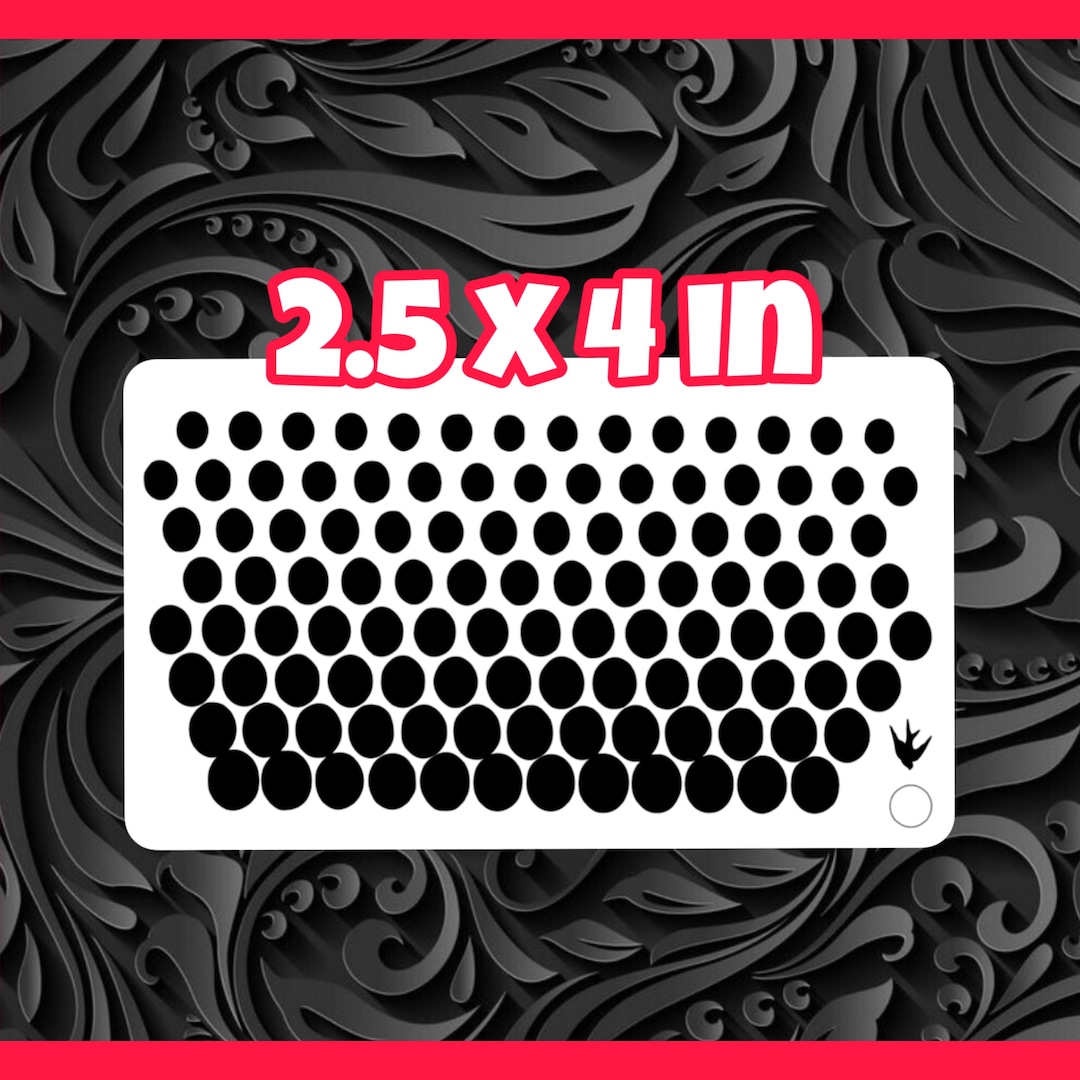
The tool didn't change. The blade did.
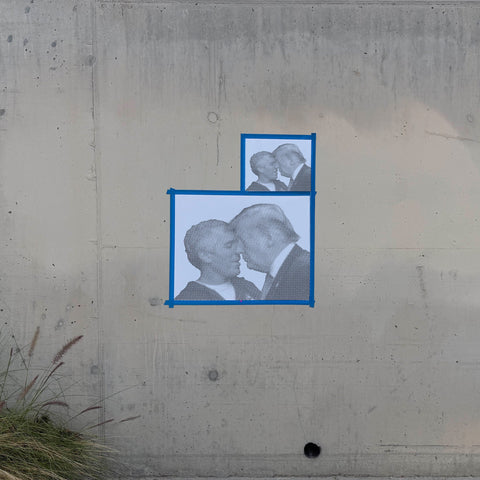
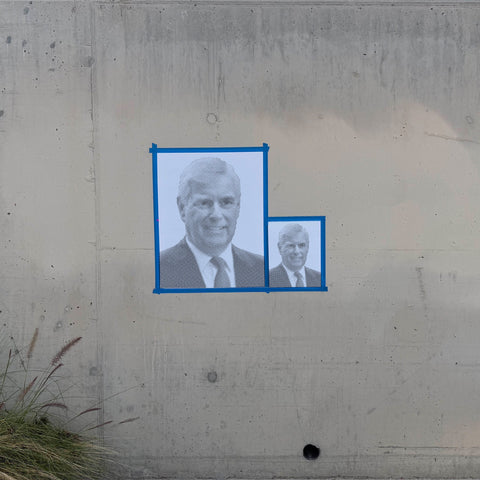
What changed is how the stencil gets cut. Saudé's artisans worked metal sheets by hand with knives built for the job, one at a time, for one client at a time. A laser now reads a digital file and cuts the same shape in a single pass, which is how one photo becomes a reusable, multi-layer, cuttable stencil in an afternoon instead of a week spent hunched over copper sheet. For anyone who wants to skip straight to that step, the Stencil Library keeps hundreds of cut-ready halftone stencil files on tap for five bucks a month.
The Gazette du Bon Ton folded in 1925 thinking it was in the business of selling fashion plates. What its workshops actually built, one hundred-stencil dress at a time, was the production logic every stencil artist since has run on without knowing it: cut once, press fast, repeat until the material runs out.


0 comments